October 15, 2026
Bonus Content: Oil Drops on Shadow Fleet Relief Talk. Tanker Stocks Face Risk.
Below is an important message from one of our highly valued sponsors. Please read it carefully as they have some special information to share with you.
Dear Reader,
You have until December 8th.
That’s when this all comes to a head.
And I believe the days before it may be the most important of your investing life.
I’ve compiled proof that Elon Musk is about to launch the biggest project of his career.
For the first time ever, Elon isn’t trying to make headlines. He’s trying to avoid them.
Forget PayPal. Forget Tesla. Forget SpaceX.
I believe this dwarfs everything he’s ever done…
And a 100x move could create 1,806,000 new millionaires over the next decade, starting December 8th.
Will you be one of them?
That’s the decision in front of you today.
Because my NEW MILLIONAIRE MAKER MASTERCLASS is live and completely FREE.
Inside, I will show you exactly what Elon filed with the government…
Why he’s working so hard to keep it quiet…
And the one move I believe you need to make before December 8th.
PLUS there’s a $1,000 gift waiting to be claimed inside for a limited number of people who act fast.
But move now.
December 8th is quickly approaching, and this masterclass is for action takers only.
If that’s you, click here.
Sincerely,
James Altucher
Oil Drops on Shadow Fleet Relief Talk. Tanker Stocks Face Risk.
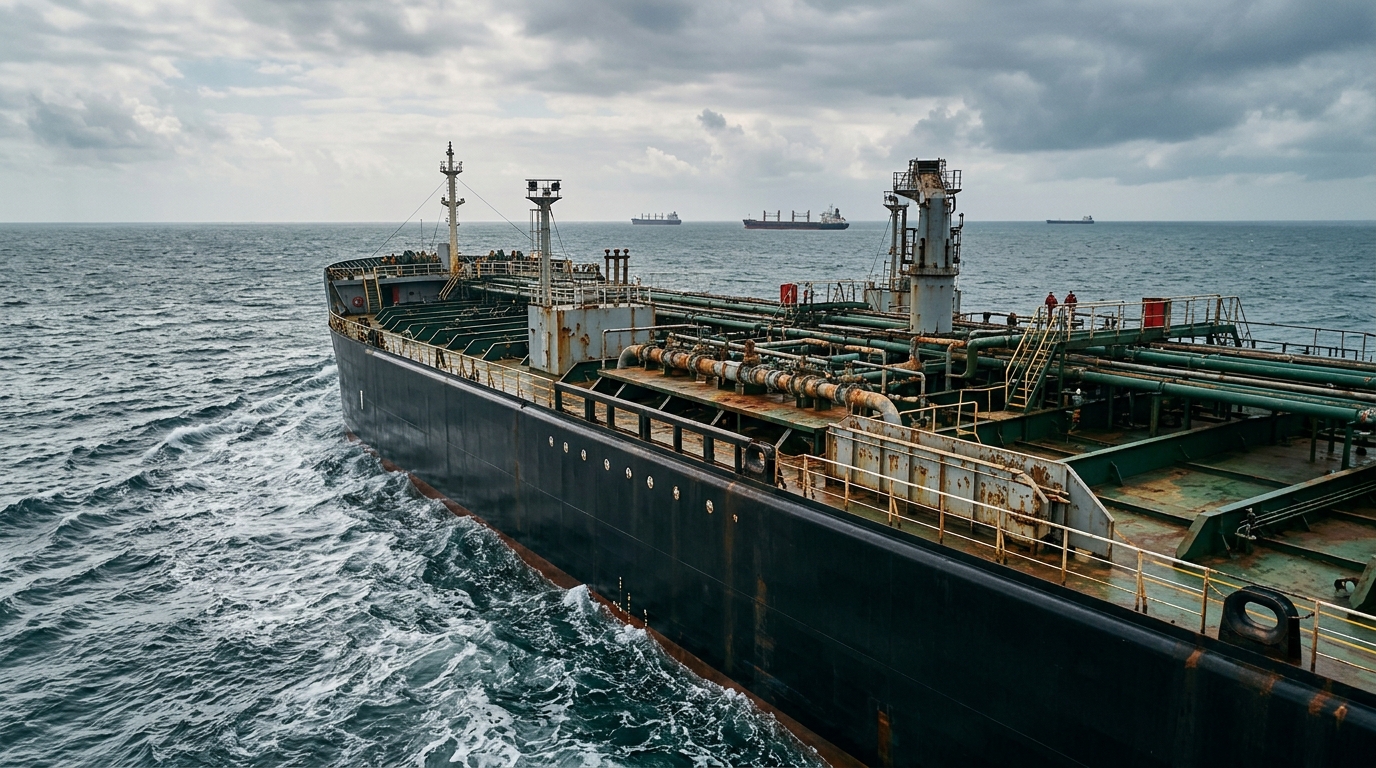
A single Reuters report late Wednesday unwound five sessions of crude gains before Thursday’s open. Brent fell 1.5% to $104.4 a barrel and WTI slid to around $93.10, after the Trump administration confirmed it is weighing a permit scheme that would allow some previously sanctioned shadow-fleet vessels to carry non-sanctioned oil. The bans on Russian, Iranian, and Venezuelan crude stay intact. What changes, if approved, is which hulls can carry legal cargoes.
That distinction is the whole trade. This is a freight story, not a supply story.
Why Freight Is the Pressure Point
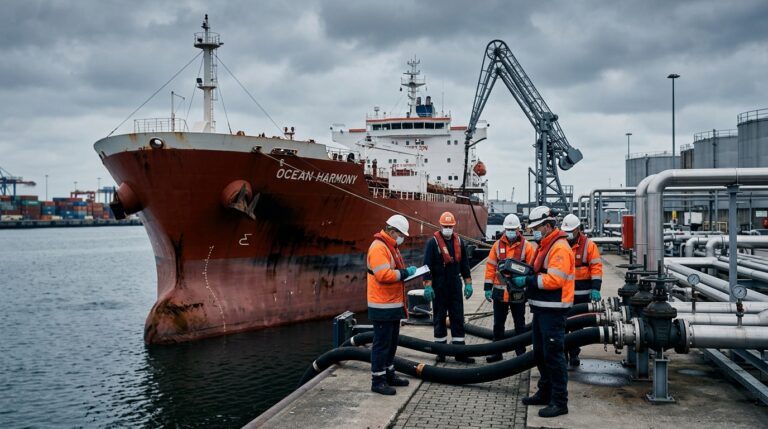
VLCC day rates reached $1.3 million per day as of early October, according to shipbroker Poten & Partners, up from roughly $30,000 per day at the start of 2026. Per barrel, freight now accounts for approximately $33, or 27% of the delivered cost of crude into Asia. Energy Secretary Chris Wright flagged those costs directly in a video address to the World Petroleum Congress in Riyadh, calling record freight rates a drag on US crude demand. That framing matters: Washington is signaling it will treat tanker capacity as an energy-price lever.
Companies would apply to the Treasury for permits, and the plan aims to move more oil out of the Gulf. But the practical impact may be limited. Energy Aspects said easing the sanctions would do little for freight rates, since most of the ageing tankers involved have already been trading in recent months, though it could free a small number of ships for shuttle runs through the Strait of Hormuz. Maritime industry sources told Reuters that ship insurers would still be bound by EU and UK rules, which would limit any broad easing in rates.
Tanker Equities: The Exposed Names
The irony for FRO, DHT, and INSW is that they built their 2026 returns entirely on the freight squeeze now under political threat. Nine of 13 US-listed tanker stocks have more than doubled this year. Per barrel, freight costs rose from $1.73 to almost $33, and freight now equals 27% of the delivered cost of crude, up from 3% in January, according to Poten.
DHT Holdings has not reported Q3 2026 results yet, so the specific claims about $141,300 per day fleet-wide TCE, $167,100 per day for spot VLCCs, and 50% of Q4 spot days booked at $509,100 per day cannot be confirmed. DHT’s most recent company updates earlier in 2026 discussed materially lower TCE levels than the figures cited here. That forward book can be a buffer, but only a partial one. Any structural compression in VLCC rates resets the unbooked half immediately.
Frontline posted record Q2 2026 results, paying a $2.61 regular dividend and an $0.80 special dividend tied to asset sales and strong tanker earnings. The analyst one-year consensus target sits at $54.25, below where FRO has been trading. INSW, up roughly 151% year to date entering this week, carries the highest beta to spot rates of the three and would face the sharpest earnings revision if the permit scheme adds meaningful tonnage.
Technical Levels to Watch
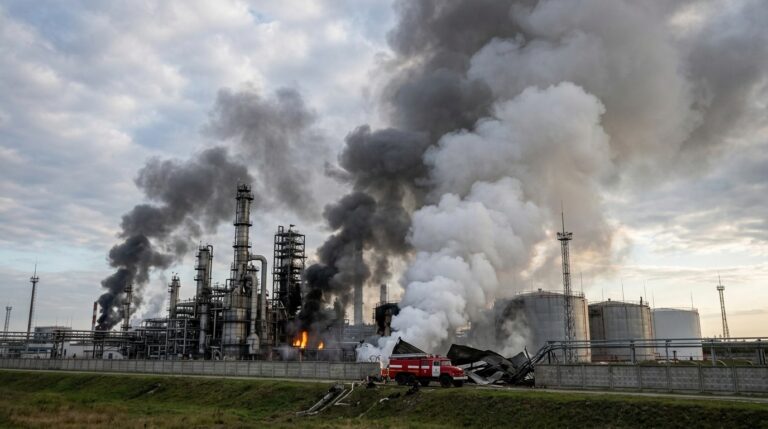
On crude, Brent settled at $106.06 on Wednesday before dropping to $104.4 Thursday, a decline of about $1.66. The $103 to $104 zone is the first structural support; a close below it opens a test of $98, the level analysts have flagged as the near-term bear case floor. The bull case requires a catalyst to push back toward $110, most likely a confirmed Hormuz supply disruption. A container ship sank near the Strait of Hormuz after a projectile attack, and Iran-backed Houthi forces maintained drone and missile strikes on Saudi Arabia. That geopolitical backdrop puts a meaningful floor under any policy-driven selloff.
The Yanbu corridor is central to that bull case. Saudi storage infrastructure at Yanbu has already been struck once, showing how quickly a single attack resets the physical supply picture.
The API reported a US crude inventory draw of 11.12 million barrels for the week ended October 9, far exceeding expectations for a 1.9 million-barrel build. That number, due for EIA confirmation Thursday morning, argues strongly against a sustained breakdown in WTI below $92.
Three Scenarios
Bull Case ($110+ Brent): The permit scheme stalls in implementation, EU and UK insurance rules effectively nullify it, and a Hormuz incident tightens physical supply. Tanker equities hold elevated multiples. Trigger: confirmed disruption to Gulf loading terminals or formal rejection by OFAC.
Base Case ($100 to $106 Brent): The proposal advances slowly through Treasury, adds limited tonnage, and freight rates ease modestly from peak levels. Brent consolidates in the low-$100s, WTI holds $92 to $96. DHT’s forward bookings insulate near-term earnings; FRO and INSW trade sideways with elevated volatility.
Bear Case (sub-$98 Brent): A full OFAC permit rollout, broader diplomatic easing, and a ceasefire in the Hormuz corridor all converge. Freight rates collapse from $1.3 million per day toward six-figure levels. Tanker equities give back a meaningful portion of their 2026 gains and analyst downgrades accelerate.
Positioning Framework
The asymmetry here favors caution on tanker longs into further policy headlines, not exit. The base case does not destroy the freight economics that drove FRO, DHT, and INSW higher. It trims them. Positions sized for the peak-rate environment need risk parameters adjusted for a world where day rates are $800,000, not $1.3 million. On crude itself, the $98 level is the line. A policy announcement with operational teeth closes that gap fast. Absent that, Hormuz risk and the inventory drawdown argue for holding long exposure with stops below $100 Brent.
Preparation here means knowing exactly which catalyst changes the scenario: an OFAC permit issuance date, an EU insurance carve-out, or a physical disruption event. Any one of them resets this market within a session. Disciplined traders define their levels now, before the next headline drops.