October 15, 2026
Bonus Content: Dow Reports in Seven Days. Its Bio-Plastics Bet Is the Question Wall Street Won’t Ask.
The Silver Institute sees just 1% mine-supply growth in 2026
The Silver Institute expects global silver mine production to increase just 1% in 2026.
Meanwhile, the overall market is expected to remain in deficit for the 6th consecutive year.
That raises a simple question:
Where does tomorrow’s silver come from?
One historic district is being put to the test with modern exploration techniques right now.
Discover the historic district with a 100+ year track record.
Dow Reports in Seven Days. Its Bio-Plastics Bet Is the Question Wall Street Won’t Ask.
Packaging and Specialty Plastics drove $6.4 billion in Q2 net sales, up 27% year over year, when Dow (NYSE: DOW) reported a sharp earnings rebound with its Q2 results on July 23, 2026. Polyethylene pricing did the heavy lifting: Dow’s filing shows local price in Packaging & Specialty Plastics up 30% year over year, helping drive companywide Operating EBITDA to $2.312 billion. Q3 results are expected October 22, with consensus EPS commonly cited around $0.33 and consensus revenue estimates clustering around roughly $11.2 billion, but no analyst note has made the parallel feedstock shift the center of the 12- to 18-month cost-structure debate.
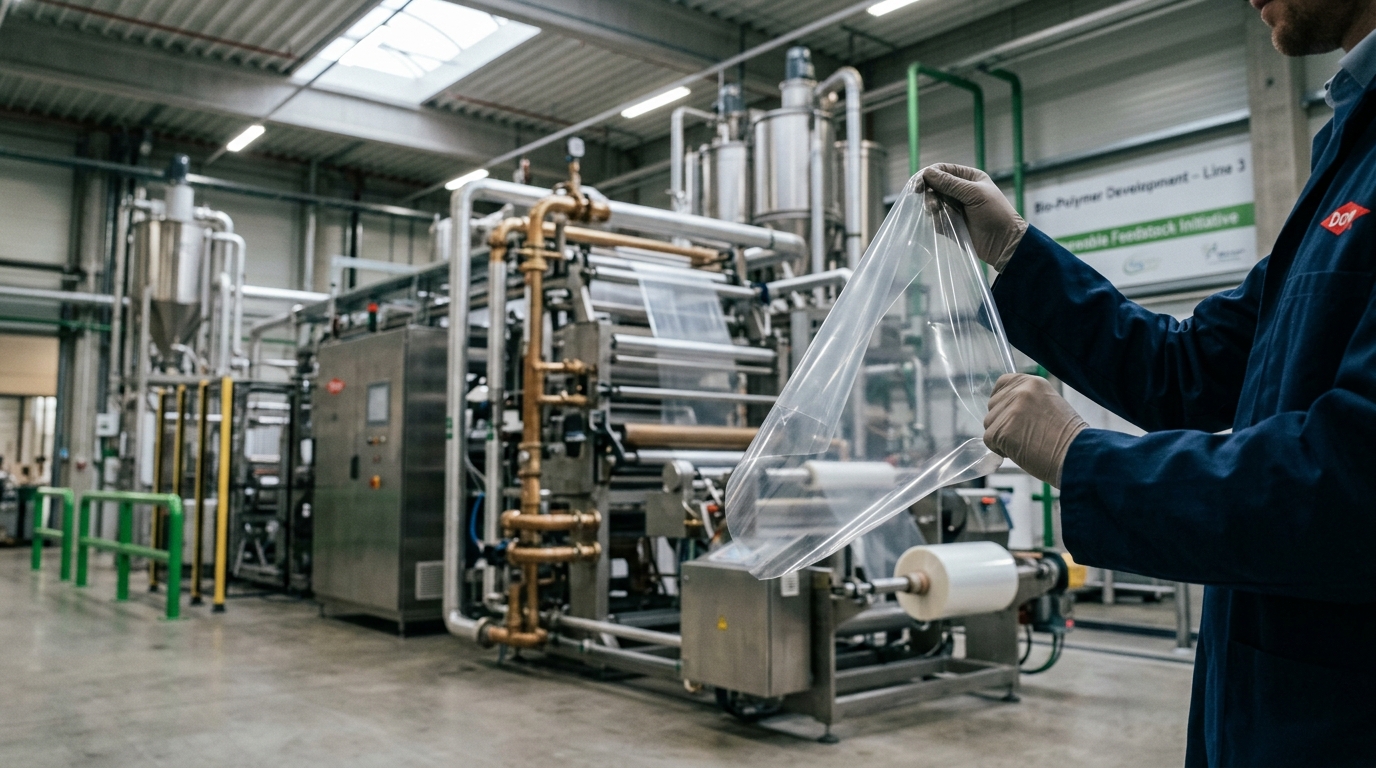
The strategic bet runs alongside the polyethylene recovery. Microbially derived polymers, principally polyhydroxyalkanoates (PHAs), are produced when engineered bacteria consume organic feedstocks and accumulate a thermoplastic polyester. Research literature and industry assessments generally frame PHAs as having the potential for lower life-cycle emissions than conventional petroleum-derived plastics, but outcomes vary materially by feedstock, energy mix, and processing assumptions. Dow is not producing PHA itself; instead, it is repositioning feedstock intake ahead of demand. The company markets ENGAGE REN polyolefin elastomers as part of its renewable and bio-based materials offerings and has disclosed a long-term supply agreement with New Energy Blue tied to a planned facility in Mason City, Iowa that is expected to process 275 kilotons of corn stover annually. That agreement gives Dow commercial supply options for that project plus four future New Energy Blue projects.
The math on scale is worth understanding. Dow’s circularity targets call for 3 million metric tons of circular and renewable solutions annually by 2030. On PHA specifically, widely cited industry estimates and academic reviews put global capacity in the low hundreds of thousands of tonnes per year by the mid-2020s, which is small relative to global plastics demand that is commonly discussed in the hundreds of millions of tonnes annually. Cost is still the constraint. One reason is that published techno-economic work and pilot-scale demonstrations frequently place PHA costs well above commodity polyolefins, with minimum-selling-price estimates often in the multi-dollar-per-kilogram range even under favorable assumptions. That cost-ceiling problem is why Dow’s advantage, with roughly $40 billion in annual net sales (2025) and a Gulf Coast asset base built for large-volume ethylene processing, is still about scale and integration more than biology.
The Path2Zero project at Fort Saskatchewan adds another layer. After Dow disclosed in April 2025 that it was delaying construction, the company indicated in January 2026 that it would proceed under a revised schedule. Phase 1 is now targeted for start-up by the end of 2029, with capital expenditures following the delay projected at around $7.5 billion. Dow continues to describe the site as the world’s first net-zero Scope 1 and 2 integrated ethylene cracker and derivatives facility, and the company says the project is expected to produce and supply approximately 3.2 million metric tonnes per year of certified low- to zero-carbon emissions polyethylene and ethylene derivatives. A decarbonized ethylene base is the logical delivery vehicle for lower-carbon resin slates as certified renewable and circular feedstocks scale.
For traders positioning ahead of October 22, the read-through cuts both ways. On the upside, any Q3 commentary expanding renewable feedstock supply agreements or signaling better-than-expected Packaging & Specialty Plastics price-cost spread could challenge a cautious consensus tape, especially with the stock trading around the high-$20s in mid-October and a market cap that has recently screened in the low-$20 billions. On the downside, Dow’s Q2 disclosures flagged higher feedstock and logistics costs as a headwind in parts of the system; if those pressures reappear in Q3 cost of sales, the renewable-feedstock angle stays a longer-dated, lower-weight input to near-term positioning.
The shift toward bio-based and circular molecules in plastics is moving faster than Dow’s stock reflects. Seven days is not much time to build a position in ambiguity. Disciplined traders watch the cost-of-sales line, the Packaging & Specialty Plastics price versus feedstock spread, and any forward language on renewable and circular feedstock procurement. The biology is not the trade. The cost structure is.