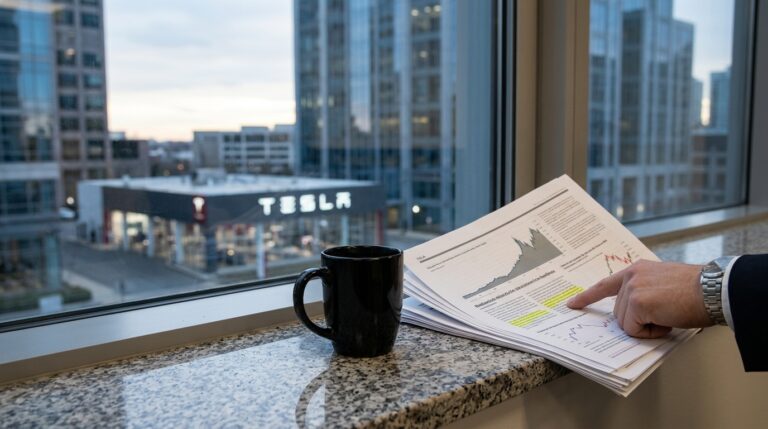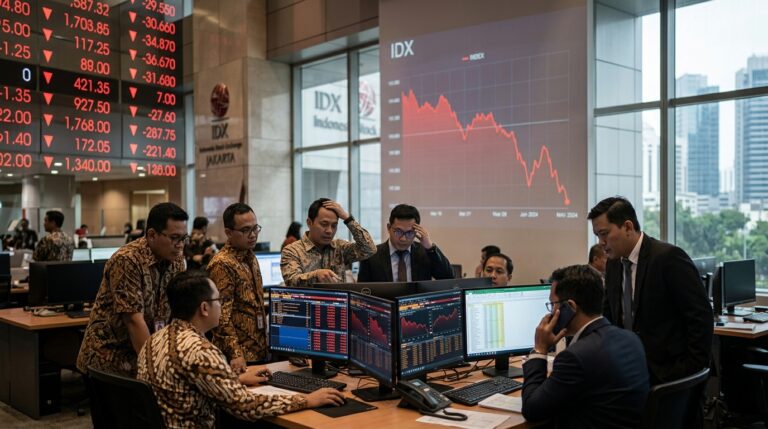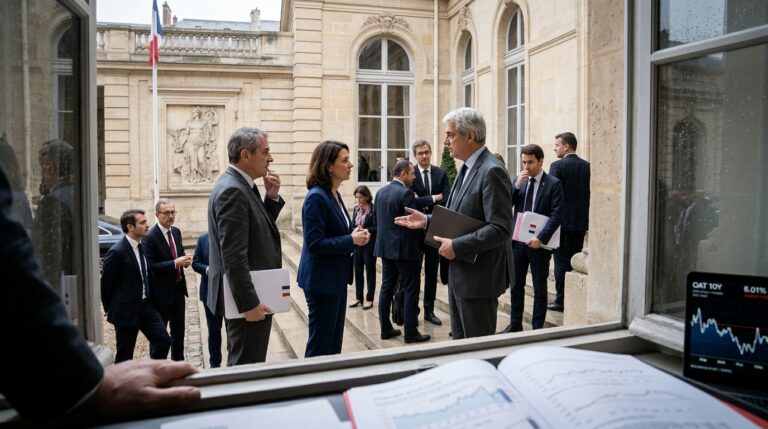
Two events landed on the same night and positioned TSLA for one of its more consequential sessions of the year. SpaceX reported a sharp third-quarter acceleration, with revenue rising 161% year over year to $14.6 billion, net income reaching $4.4 billion versus a prior-year loss, and adjusted EBITDA increasing 306% to $8.8 billion. Then, on the same call, Musk confirmed what speculation markets had been pricing for weeks.
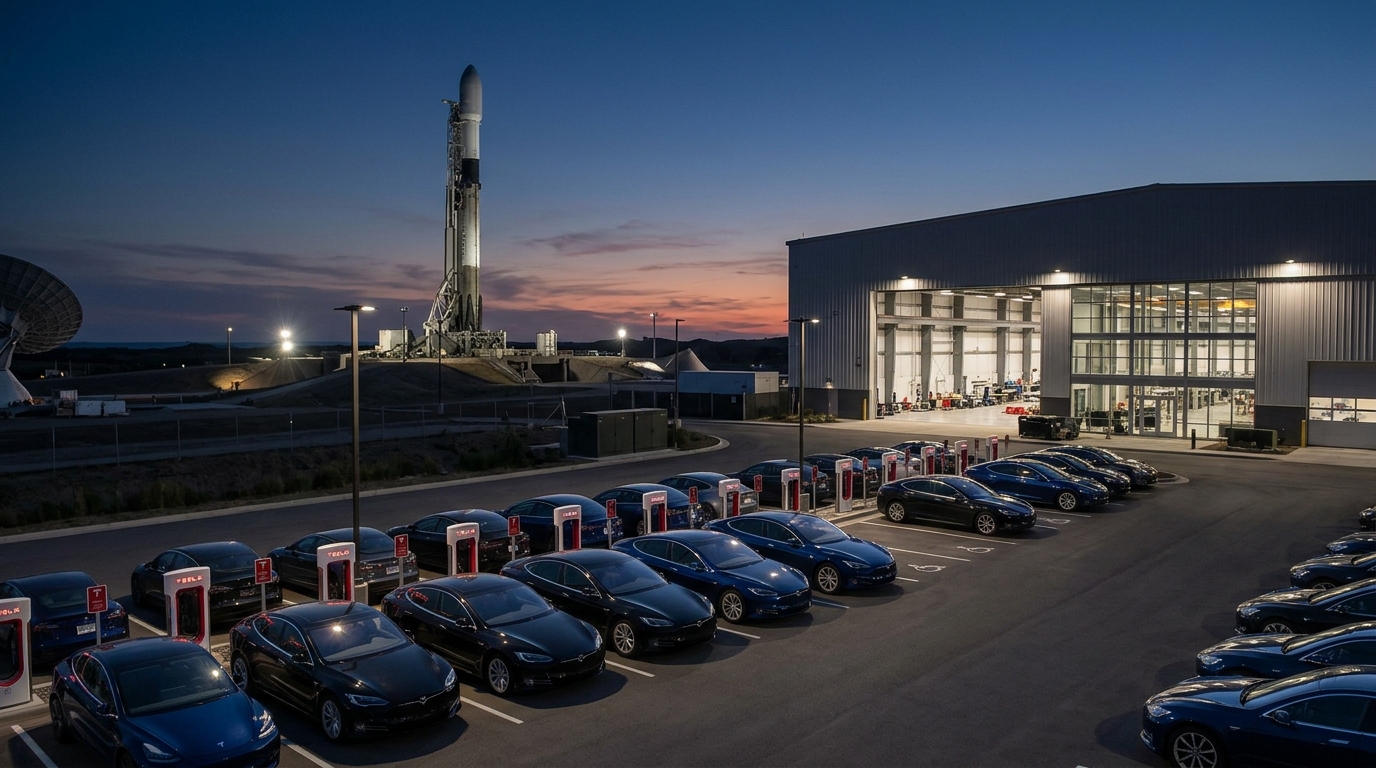
The boards of SpaceX and Tesla have each formed special committees to review a possible merger. The special committees, which consist of independent directors, were created at the request of shareholders. “Because I’m a conflicted party, I can’t actually be in the discussions of the special committees,” Musk said during SpaceX’s third-quarter earnings call. The special committees have not reached agreement on the terms of any transactions. Any deal would go to shareholders, and on the Tesla side it would need approval from 50 percent of all outstanding shares, not just the shares that are voted. Musk called that “quite a high hurdle.”
Following SpaceX’s quarterly earnings report and Musk’s comments, shares of SpaceX jumped as much as 8% in extended trading. Tesla closed at $373.71 on Tuesday, up $5.65 or 1.5 percent, and rose to $380.29 in after-hours trading after Musk confirmed both boards had formed special committees. The critical question heading into tonight: can a $28 billion earnings report sustain what a merger headline created.
What SpaceX’s Numbers Signal for TSLA Positioning
The segment detail inside SpaceX’s quarter matters beyond the headline. AI, which SpaceX now calls “Super Intelligence,” has emerged as its largest business, with revenue jumping to $7.56 billion from $813 million in the same quarter last year, ahead of the $6.47 billion analysts expected. The company’s backlog stands at $63 billion, with $42 billion expected to be recognized as revenue within the next 12 months. A rocket company generating $7.56 billion in a single quarter from compute rental reframes what a combined entity’s AI infrastructure could look like, and that is the multiple-expansion logic priced into TSLA’s after-hours move.
The problem for holders is that Tesla’s own Q3 numbers are pointed in a different direction. Tesla is expected to post earnings of $0.4481 per share on revenue of $27.94 billion, against $0.50 per share and $28.10 billion a year earlier. Tesla last reported on July 23, posting $0.33 per share and missing the $0.50 consensus estimate. The EPS consensus has held steady over the past 30 days, but the 90-day view reveals an 18.2% revision downward from $0.55, suggesting analysts have grown increasingly cautious as the quarter progressed.
Technical Framework
TSLA recently rebounded near $370 following a double-bottom pattern at the $350 support level. A breakout above the $390 to $400 resistance zone could target $450, while losing $350 risks a deeper pullback toward $300. The after-hours push to $380 places the stock directly at the lower end of that resistance band before the results even land. Volume on Tuesday came in at about 32 million shares against a 37.7 million three-month average, suggesting the pre-earnings positioning was measured rather than crowded. The options market prices roughly a 7% move either way; the merger committees have not changed the earnings math.
Three Scenarios Into the Close
Bull case: Tesla beats on EPS and shows automotive gross margin stabilization above 18%. The call provides a concrete Cybercab launch timeline and management frames the SpaceX AI infrastructure as synergistic. TSLA holds above $390, reclaiming the resistance zone with momentum. Merger optionality remains priced in.
Base case: Tesla meets the $0.45 consensus and delivers flat revenue near $28 billion. Gross margins hold but don’t expand. The merger committees get a question on the call; Musk repeats the recusal language without new detail. TSLA oscillates between $370 and $390 in after-hours trading, the merger bid providing a floor, the uninspiring quarter capping the upside.
Bear case: EPS lands at or below $0.43, auto gross margin ex-credits slips under 16 percent, free cash flow is negative again, and the call gives no Cybercab date. The merger committees become a distraction rather than a catalyst. TSLA breaks toward $347, the level where the double-bottom support cluster sits on a weekly chart.
Active Trader Framework
Two variables now govern TSLA, and they move on different timescales. The earnings release and call are scheduled for Wednesday, October 21, 2026 after the close, with the webcast at 5:30 PM ET. The merger question resolves over months, if at all. Traders who conflate the two risk holding a structurally interesting story through a tactically unfavorable earnings reaction, or vice versa.
Investors should focus on automotive gross margin trends and Q4 guidance more than headline EPS, as the former will determine Tesla’s ability to scale profitably in 2027 and beyond. Key levels to watch are $350 support, $380 as the post-hours merger bid anchor, and $400 as the technical breakout trigger. Position sizing ahead of roughly a 7% implied move demands respect for the range on both sides. The SpaceX beat confirms AI compute demand is real; whether Tesla owns a piece of that story through a merger is a separate, longer trade.