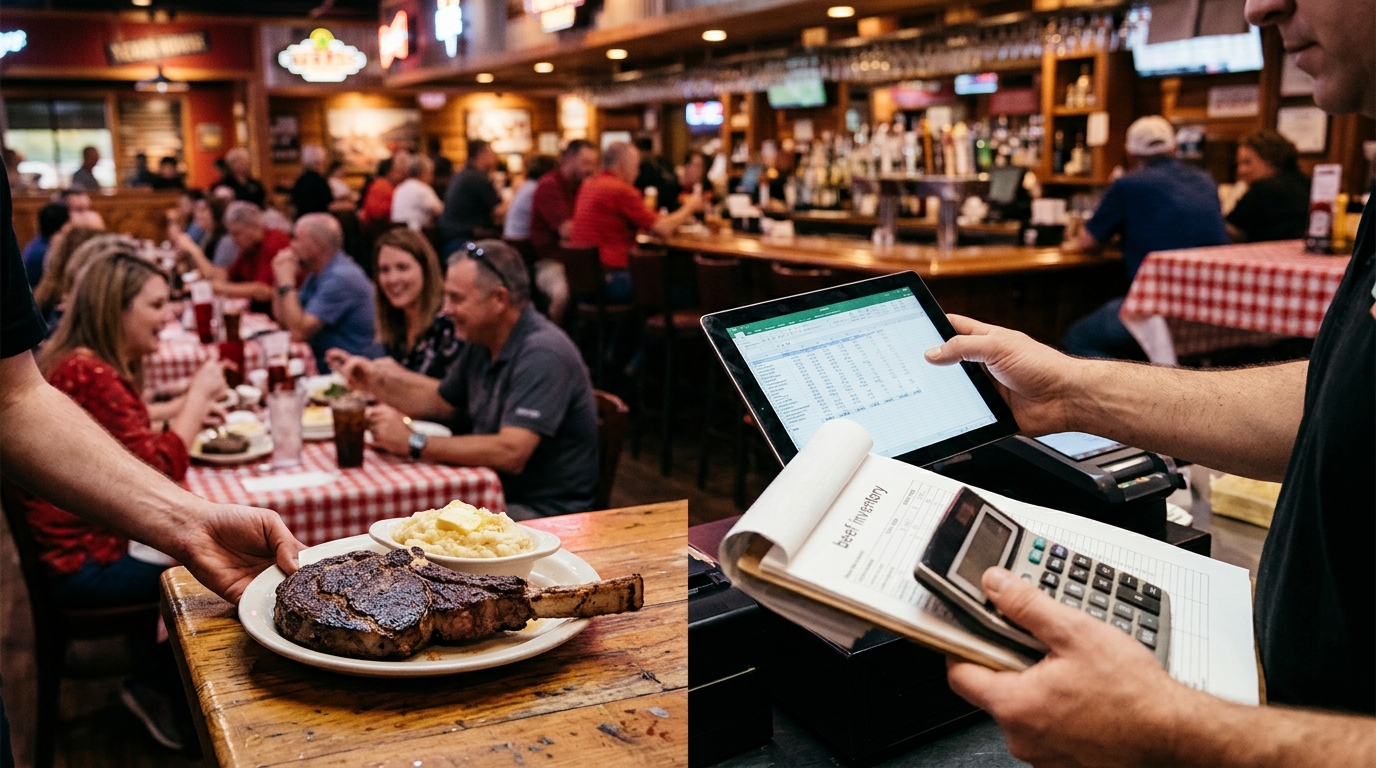
Texas Roadhouse has spent most of 2026 proving that demand is not its problem. The question heading into Thursday’s Q3 report, estimated for after the close on November 5, is whether that demand can survive the most punishing beef cost environment the chain has faced in a decade.
- Q3 consensus: $1.49 EPS on $1.59 billion in revenue, versus $1.25 per share on $1.44 billion a year ago
- Q2 comparable sales rose 6.2%, including 3% traffic growth; average weekly sales exceeded $175,000 for the first time in the company’s history
- Restaurant margin contracted to 16.4% in Q2 as 6.6% commodity inflation hit the income statement
- Shares have dropped roughly 19% since the August 6 earnings release despite the record sales figures
- Analyst consensus sits at Moderate Buy with an average price target around $206.7; UBS lifted its target to $235 in early August
- Cattle herd near multi-decade lows; retail beef prices have run near record highs in 2026, with USDA data showing average fresh beef around $9.64 per pound in April
The Traffic Case Holds. The Margin Case Is Harder.
Texas Roadhouse posted nearly $1.68 billion in Q2 revenue as same-store sales rose 6.2% on 3% traffic growth, with average weekly sales topping $175,000 for the first time in company history. That is a genuine operational achievement in a restaurant environment where most chains are fighting for flat. Comparable store sales anchored by 3% traffic growth stand as a notable outlier in the casual dining sector, where declining foot traffic has become common.
The macro current running behind those numbers is real. Casual dining is experiencing traffic growth while quick-service restaurants are seeing declines, as the price gap between the two formats narrows and consumers opt for better quality and experience. Brands stuck in the middle, not affordable enough to compete with QSRs but lacking the quality to justify spending more, are losing ground. Texas Roadhouse sits clearly above that trap.
Where the Year-End Risk Lives
Shares have fallen roughly 19% since the August 6 release despite record weekly sales and 6.2% comparable sales growth, as rising beef costs squeezed margins and pressured earnings per share. Management reduced its full-year 2026 commodity inflation guidance to approximately 5% on the Q2 call. The cattle herd sits near multi-decade lows after years of drought, and beef is by far the company’s largest input cost.
Food costs remain well above pre-pandemic levels even as retail beef prices have hovered near record highs in 2026. That stabilization is not relief. It is a ceiling the company has to grow through on price and efficiency alone. Labor hours grew at roughly 25% of the rate of comparable traffic growth in Q2, which is meaningful progress, but not enough on its own to offset the beef line.
The Number That Determines Q4 Positioning
The company trades at a P/E of roughly 28 times trailing earnings, a premium that prices in continued traffic leadership. What it does not price in is a second consecutive quarter of margin compression without a credible path to recovery. Thursday’s call needs to deliver visibility on beef costs into Q4, not just another confirmation that guests are showing up.
Traffic wins the top line. Beef determines whether 2026 closes as a year of growth or a year of expensive volume.