
The Shocking Truth about the AI Bubble
In just 48 hours, a tidal wave of bad news battered AI stocks:
- Chip giant Intel dropped 29%…
- Google had its worst day ever, losing $500 billion in value…
- And tech stocks plummeted by more than $1 trillion in one trading day…
That’s more than $153 billion vaporized each hour!
Top internet news site Drudge Report had this headline screaming at the top of the page…
“$10 trillion ‘AI Boom” starting to crack…”

So is the AI bubble finally bursting?
It sure as heck looks like it…
But here’s the shocking truth: it isn’t bursting for every stock.
On the same day Intel plunged 29%, the S&P 500 fell just 1.8%.
In other words, the stock market is splitting in two.
And the independent millionaire who recommended NVDA at $6 saw this coming.
He calls this stock market split the Great AI Shock.
On one side, the most hyped AI stocks could see a 77% meltdown…
On the other side, a little-known corner of AI that NVDA’s CEO calls a “once-in-a-generation opportunity” could produce triple digit gains over the coming months…
And the recent carnage is only the beginning – because the stock market split is just getting started…
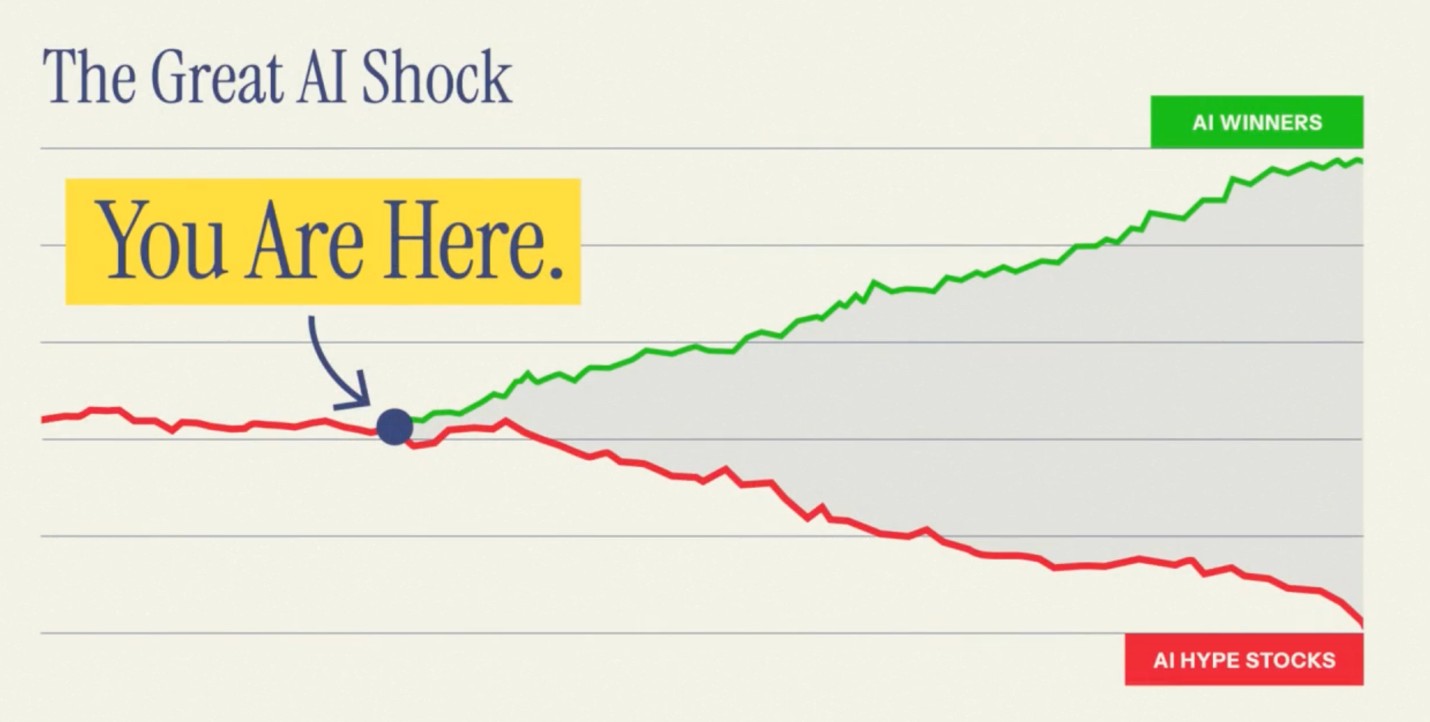
If you own any AI stocks, you need to decide which side of the split you’re on…
And you need to decide soon.
See the full story here, including details on the #1 stock on the right side of the split.
Brazil’s Real Hits a 12-Month Low, Argentina Jumps 2.7%

Friday’s Latin American close delivered two contradictory data points that the broad “emerging markets” label cannot contain. The Brazilian real traded around 5.667 per dollar, a fresh low over the past 12 months. At almost the same moment, Argentina’s MSCI Merval jumped 2.68% to 84,704, led by banks and power companies while the peso held near 1,544 per dollar. The Ibovespa, meanwhile, rose 0.66% to 172,457.76, managing a modest equity gain even as Brazil’s currency hit a fresh low. The divergence is the signal.
The Macro Backdrop
The proximate cause sits in Washington. The 10-year Treasury yield finished at 5.15% on November 13, up roughly 30 basis points on the week, with the intraday high touching 5.174%. The dollar index (DXY) closed at approximately 103.41, its highest close since April 2, 2025, as hawkish Fed commentary reinforced expectations for further tightening. Reuters reported this week that Goldman Sachs added another rate hike to its forecast, now projecting an additional 25-basis-point increase in March. CME FedWatch showed markets heavily pricing a December hike by late week, closer to roughly 90% odds than certainty.
That yield level functions as a gravitational constant for emerging market capital. At 5.15%, the risk-free dollar alternative is simply too compelling for marginal EM allocators to ignore. The question is not whether capital exits the region. It is which markets it exits hardest.
Brazil: Currency Break, Equity Resilience, Fiscal Overhang
Brazil’s real is absorbing the full weight of this dynamic. Gross general government debt reached 82.93% of GDP in September 2026, according to Brazil’s central bank fiscal statistics, the fiscal math that makes the real structurally vulnerable whenever dollar yields rise. Brazil’s central bank held the Selic at 13.75% at its November 3-4 meeting, unanimously ending five straight cuts, as September IPCA ran at 4.58% over 12 months, above the 4.50% upper tolerance band. The minutes released November 10 signaled a higher-for-longer bias. Markets leaned toward no change again at the December 9 meeting.
The Ibovespa’s ability to post a 0.66% gain while the real broke down is a dissociation worth noting. It reflects index composition: energy and commodity names with dollar-denominated revenues benefit from BRL weakness. EWZ, the iShares MSCI Brazil ETF, ended the session around $32 on November 13, with its 52-week range spanning $30.72 to $43.90. That lower bound is close, and a continued real depreciation compresses dollar-term returns for offshore holders even when the local index holds.
Argentina: Reform Premium, Bank Rally, Different Risk Set
Argentina’s Friday session was structurally different. Banks and power producers did the heavy lifting in the MSCI Merval’s 2.68% advance, with country risk easing from its early-November high. The peso held near 1,544. The session’s character, concentrated in financials and utilities rather than commodity exporters, reflects a market betting on deregulation and cheaper domestic funding rather than reacting to the same dollar-yield pressure weighing on Brazil.
ARGT, the Global X MSCI Argentina ETF, hit a 52-week low of $71.43 on Thursday before recovering. The fund’s 52-week range runs from $73.12 to $103.97, so the drawdown from the January peak is substantial. Valuation looks closer than the headline “reform premium” would suggest, so traders should treat Argentina as idiosyncratic risk with macro sensitivity, not a pure beta to EM risk-on.
Technical Framework
For EWZ, the 52-week low at $30.72 is the floor to defend. A sustained real move above 5.70 per dollar would compress that level further. For ARGT, the $73-$75 zone, tested repeatedly this month, is the base. A failure there reopens the $71.43 low from Thursday. The Ibovespa’s 170,000 round-number support in local terms translates roughly to the $30.72 floor in ETF terms.
Scenario Modeling
Bull Case
The 10-year Treasury stabilizes below 5% as the December Fed hike gets priced but not exceeded. The dollar softens, the real retraces toward 5.50, and EWZ recovers toward $34-$35. ARGT holds the $75 base and banking sector momentum extends toward $80 as reform credibility builds.
Base Case
Yields stay near 5.10-5.15% through year-end. The real trades a 5.60-5.80 range, keeping EWZ heavy in dollar terms while the Ibovespa holds 168,000-174,000 locally. ARGT oscillates in a $73-$80 range, with the split between the two markets persisting as the operative framework.
Bear Case
The 10-year breaks above 5.30%, DXY pushes above 104, and the real tests 5.90. EWZ revisits $30.72 or breaks it. Argentina is not immune: a sharp global risk-off event could pull ARGT back toward $71, particularly if domestic bank credit data disappoints.
The dollar’s strength is not only a Latin American problem. Euro shorts have reached a record extreme as sticky inflation data tests whether the ECB can hold its ground against a rising dollar.
Active Trader Considerations
The core framework here is isolation, not aggregation. EEM, the broad emerging markets ETF, blends these two stories into noise. Traders with a view on Brazil’s fiscal trajectory and BRL weakness have a cleaner expression in EWZ, where the currency translation risk is explicit and the 52-week range provides clear level structure. Those with a view on Argentina’s reform cycle have ARGT, though liquidity is thinner and the 52-week drawdown demands disciplined position sizing.
Monitoring the December 9 Copom meeting and any Federal Reserve communication before then are the two catalysts that govern these trades. Preparation, not conviction about direction, is the edge here.