August 8, 2026
Apple’s iCloud Gap Is Now a Legal Weapon.
First a note from our Sponsor
Jon Najarian just made a massive prediction about SpaceX…
He believes Elon has something even bigger planned…
An event that could soon be worth over $44 TRILLION.
And by staking a claim now, you can potentially profit from Elon’s $44 trillion wealth event.
But you’ll want to move fast…
Click here now for the full story from Jon Najarian himself.
P.S. Fact is, this event may be your last chance to profit thanks to Elon Musk.
He launched reusable rockets, internet from space, mass market EVs… And while Elon’s ultimate goal is to get to Mars, that could be decades away… Which is why this $44 trillion wealth event could be your FINAL chance to profit thanks to Elon in your lifetime.
Apple’s iCloud Gap Is Now a Legal Weapon.
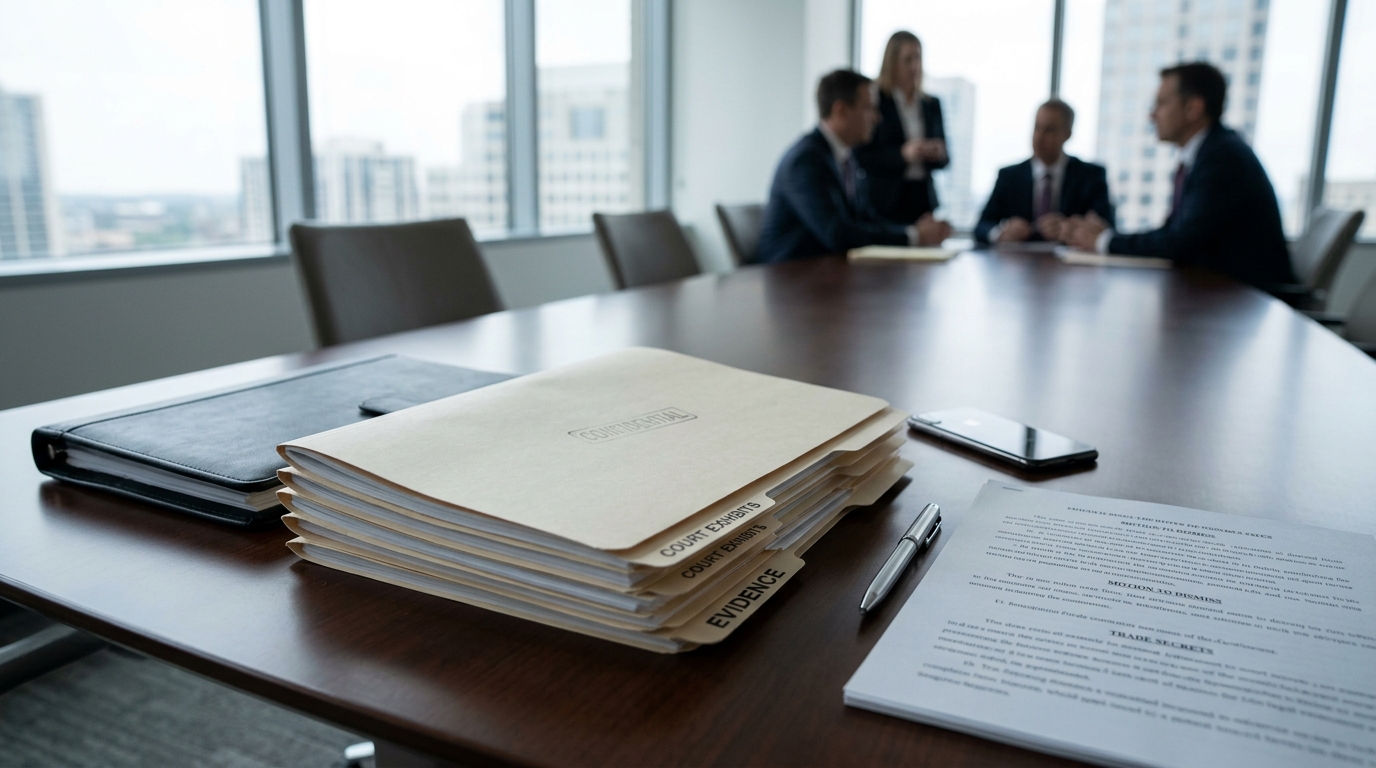
The Apple versus OpenAI trade secrets case arrived in August with a motion to dismiss that most analysts flagged as procedural noise. It is not. OpenAI’s filing, submitted August 5 and supported by newly filed court exhibits, attacks the foundational legal requirement Apple must satisfy to prevail: that it took reasonable measures to keep the information secret in the first place. If that attack holds, there is no trade secret to steal, regardless of what any former employee did or did not carry out the door.
That legal pivot has a hard deadline. Apple must respond by August 19. A hearing on both the motion to dismiss and Apple’s competing request for a preliminary injunction is scheduled for October 1, 2026, at 9:00 a.m. Pacific in San Jose federal court. Between now and that date, the case will either expose serious deficiencies in how one of the world’s most secretive companies actually manages its own secrets, or it will set the stage for the most consequential AI hardware injunction in recent memory.
Market Context: A $4.61 Trillion Company Defending Its Moat
Apple trades near $313, down roughly 10.8% over the past week against a broader technology sector that has held relatively firm. The company carries a market capitalization of approximately $4.61 trillion, with Evercore ISI maintaining an Outperform rating and a $365 price target following the complaint. KeyBanc sits at the opposite end with an Underweight and a $250 target, citing slowing iPhone builds. The consensus sits near $315.
The AI hardware arms race sits beneath the legal headlines. OpenAI’s all-stock acquisition of io Products was widely reported at about $6.4 billion to $6.5 billion, and brought roughly 55 employees in-house, including Tang Yew Tan, a longtime Apple hardware executive. OpenAI is publicly maintaining its device timeline, telling reporters it plans to announce its first consumer device in the second half of 2026 and ship it in 2027. The initial Year 1 volume target that has been reported is 40 to 50 million units, with manufacturing expected to involve Foxconn. Those ambitions now run directly through the San Jose courthouse.
For Apple, the underlying financials remain strong. In its Q2 FY2026 report filed April 30, Apple posted revenue of $111.2 billion, up about 17% year over year, with Services revenue setting an all-time record at $31 billion, and the board authorized a $100 billion buyback. The business is not in distress. But the legal risk creates execution uncertainty at a moment when Apple’s own AI strategy is being rebuilt after it announced in January 2026 that Google Gemini would power next-generation Siri capabilities.
The Legal Architecture: What “Reasonable Measures” Actually Requires
The Federal Defend Trade Secrets Act requires the trade-secret owner to take reasonable measures to maintain secrecy, and information qualifies as a trade secret only if those reasonable measures have actually been taken. Courts continue to require that companies demonstrate they have taken reasonable measures to protect their proprietary information before granting relief under the DTSA or state Uniform Trade Secrets Acts. The standard is not theoretical; it is forensic.
OpenAI filed a 31-page motion to dismiss Apple’s trade secrets lawsuit this week, making an argument that turns the case’s central logic on its head: the residual access Apple is calling theft was created not by OpenAI’s engineers but by Apple’s own policy of encouraging employees to use personal iCloud accounts for work, and by Apple’s subsequent failure to revoke that access properly when those employees left. In materials described by Axios, OpenAI argues Apple intermingled corporate and personal data and cannot treat the foreseeable consequences of its own systems and policies as evidence of theft by former employees who were not aware of their latent access.
OpenAI argues Apple hasn’t specified which trade secrets or confidential components were allegedly stolen, referring to them instead as generic categories of the product-development process, such as component manufacturing, product testing, vendor and supplier relationships, and distribution channels. Courts will not enforce vague claims; the particularity requirement exists precisely to prevent plaintiffs from using litigation to slow competitors without identifying actual harm.
Apple Price Hikes Reveal Mode’s Big Opportunity
Apple will potentially raise prices on Macs and iPads by $200 or more, another reminder that the devices we rely on keep getting more expensive.
Mode Mobile, is building the countertrend: technology that turns everyday smartphones into income-generating assets.
Its EarnOS platform has already helped users earn and save $1B+, reached 490M+ users, and powered 32,481% three-year revenue growth, earning Deloitte’s #1 fastest-growing software company ranking.
Now, Mode has secured the Nasdaq ticker $MODE, and its pre-IPO investment offering is open at $0.52/share with up to 20% bonus shares. But that window is closing fast.
Please read the offering circular at invest.modemobile.com. This is a paid advertisement for Mode Mobile’s Regulation A+ Offering.
According to offboarding and credential-reuse research often cited in security reporting, a substantial share of organizations still struggle with consistent offboarding, and former employees sometimes retain access longer than intended. Apple’s own complaint outlines several steps it says it takes to protect confidential information, including contractual, technical, physical, and procedural safeguards, ranging from recurring confidentiality training to requirements that departing employees return company devices and complete offboarding interviews. OpenAI’s exhibits are designed to show a gap between that stated posture and the actual operational reality.
The Rivos Precedent and the Corporate Imputation Problem
Judge Edward Davila found in August 2023 in the Rivos case that Apple had sufficiently identified its trade secrets for some individual-level claims to proceed, but dismissed corporate-level claims against Rivos for insufficient allegations of how individual misconduct could be imputed to the corporation. OpenAI’s motion to dismiss is making exactly that imputation argument: even if Liu or Tang Tan did something inappropriate, Apple has not adequately alleged that OpenAI as an institution directed or ratified that conduct.
Apple asked the court to expedite discovery, saying its internal investigation indicates some additional former employees may have participated in, or witnessed, the alleged theft of trade secrets. The suit includes claims alleging that a former employee who joined OpenAI took advantage of a security bug, that job candidates were encouraged to bring proprietary Apple hardware into interviews, and that OpenAI leadership effectively normalized this conduct. Apple stated in subsequent filings that it has discovered another 11 former Apple employees who might be involved in similar conduct.
That expansion of scope cuts two ways. It strengthens Apple’s institutional argument, but it also creates additional disclosure obligations and risk that OpenAI’s legal team will find further examples of access failures attributable to Apple’s own policy architecture.
Sector Breakdown: The AI Hardware Stack and Who Loses If the Injunction Lands
OpenAI plans to release its first highly anticipated AI hardware in 2027, with reporting describing an audio-first, screenless device category and multiple possible form factors still in flux. If the October 1, 2026 hearing results in a preliminary injunction, OpenAI’s hardware development could face court-imposed restrictions, which would not remove ChatGPT from your iPhone but could affect how OpenAI builds competing AI devices that might eventually shift consumer attention away from Apple’s ecosystem.
Manufacturing has been reported as a mix of possibilities, with Foxconn cited as a likely partner and earlier reports mentioning Luxshare as a candidate as well. If the October 1 hearing results in a preliminary injunction that forces a halt or major redesign, any contract of meaningful scale tied to the device program could be delayed or resized.
For Apple, the financial exposure runs in the other direction. The company’s Services line, which hit $31 billion in Q2, depends in part on maintaining control of the Siri and Apple Intelligence ecosystem on more than one billion active devices. The key risk is that the dispute adds legal and execution uncertainty around Apple’s AI plans at a time when competition and investor focus on AI capabilities are both very high. That risk is not fully reflected in current analyst targets, which cluster between $250 and $365.
Stock-Specific Financial Breakdown
Apple (AAPL): Revenue of $111.2 billion in Q2 FY2026, up about 17% year over year. Services at $31 billion, an all-time record. EPS of $2.01, the eighth consecutive consensus beat. $100 billion buyback authorized. Apple shares trade at about $313, down roughly 10.8% over the past week, a period that includes this legal development and other recent news flow. Evercore ISI reiterated an Outperform rating and $365 price target following the company’s legal action against OpenAI. KeyBanc downgraded Apple to Underweight, citing concerns over slowing iPhone builds and changing device subsidy models, with a price target of $250.
OpenAI (private): OpenAI acquired io Products in an all-stock deal widely reported at roughly $6.4 billion to $6.5 billion, its largest acquisition to date. OpenAI is targeting a first device announcement in the second half of 2026 and a 2027 consumer launch. No public equity is available. The litigation risk is an IPO timing variable; a preliminary injunction against hardware development would complicate any registration statement filed before October 1.
Foxconn (2317.TW): The manufacturing partner for the OpenAI device has diversified meaningfully beyond Apple assembly in recent years. EV components, servers, and AI hardware now represent an increasing share of revenue. A hardware development pause at OpenAI would remove a near-term order pipeline from Foxconn’s AI device segment, while simultaneously damaging a relationship being built as an alternative to Apple dependency.
Technical and Trading Framework
AAPL’s 10.8% decline over the past week has brought the stock back toward support in the $295 to $305 range. The stock’s 200-day moving average has served as a reliable reference point through the AI capex rotation of mid-2026. Volume on the selloff has been elevated relative to recent averages, suggesting institutional repositioning rather than retail reaction.
Key levels to monitor: $295 represents the next meaningful support zone, defined by the consolidation base from Q1 2026. A close below $295 on volume would indicate the market is beginning to price litigation risk as material to hardware strategy rather than merely headline noise. $315 to $320 is the resistance band where the stock has failed to hold on recent rally attempts; reclaiming that zone requires either a favorable legal development before October 1 or a broader technology sector bid.
Implied volatility on AAPL options has risen following the filing of the motion to dismiss and the competing preliminary injunction request. The court-ordered deadlines and a hearing scheduled for October 1 in San Jose federal court mean the case is entering its most consequential stretch. Traders positioned for a binary October 1 outcome should be aware that judges routinely take preliminary injunction motions under submission, issuing written rulings days or weeks after the hearing rather than announcing from the bench.
For OpenAI itself, the private market valuation has been estimated widely across funding rounds and secondary transactions, and OpenAI itself said in March 2026 that a financing round valued the company at $852 billion post-money. A hardware injunction that delayed the device timeline by 12 to 18 months would not destroy that valuation, but it would reset the revenue ramp assumptions that support it. The 40 to 50 million unit Year 1 production target is ambitious; any court-imposed constraint removes the most plausible path to that figure on schedule.
Scenario Modeling
Bull Case for AAPL: OpenAI’s Motion Is Denied, Injunction Granted
The court denies OpenAI’s motion to dismiss, finds Apple’s trade secret claims sufficiently specific, and issues a preliminary injunction pausing OpenAI’s hardware development pending trial. This scenario delays the OpenAI device by 12 to 24 months, removes the most immediate competitive threat to Apple’s hardware ecosystem, and provides Apple with forensic discovery access to OpenAI’s development environment. AAPL returns toward the $330 to $340 range as the market removes the AI hardware competitive discount. Key condition: Apple must file a convincing August 19 response that addresses the iCloud offboarding gaps with specificity.
Base Case: Partial Rulings, Extended Litigation
The most probable outcome is that the court denies OpenAI’s motion to dismiss, finds the complaint sufficient to proceed, but declines to issue a broad preliminary injunction covering all hardware development. Instead, the court issues a narrower order requiring preservation of evidence and possibly restricting the use of specific identified information while the case proceeds to discovery. OpenAI’s device timeline slips modestly as engineering teams work around the defined restriction zone. AAPL stabilizes in the $300 to $315 range. Both companies enter a discovery phase running through 2027 that surfaces additional facts about Apple’s own security posture. The legal cost to both parties is significant; for Apple, the reputational dimension of its iCloud policy exposure becomes a secondary story that complicates future trade secret enforcement.
Bear Case for AAPL: Motion to Dismiss Granted, Injunction Denied
The court grants OpenAI’s motion to dismiss in whole or in substantial part, finding Apple’s trade secret descriptions insufficiently specific under the DTSA’s particularity requirement and citing the iCloud offboarding evidence as undermining the reasonable measures standard. Apple is required to refile with greater specificity. The preliminary injunction request is denied. OpenAI’s hardware development continues unimpeded toward a late 2026 announcement. AAPL tests the $270 to $285 range as the market prices both the litigation loss and the removal of legal friction from OpenAI’s competitive hardware timeline. This scenario is unlikely given the Rivos precedent allowing certain individual-level claims, but the corporate imputation argument gives the court a narrow path to partial dismissal that would be nearly as damaging to Apple’s strategic position.
Active Trader Strategy Framework
The October 1 hearing is a defined event risk with a specific calendar date, a clear binary dimension, and meaningful price implications for AAPL. Traders considering positions around this event should account for several structural features that distinguish it from a standard earnings event.
The hearing outcome may not be immediate. Federal judges on preliminary injunctions frequently take matters under submission and issue written rulings days or weeks after the hearing. A position entered for October 1 resolution may carry uncertainty through mid-October. The implied volatility curve on AAPL already reflects some event premium in the October cycle; entering long volatility positions at current levels requires a large enough move to overcome the time decay. The legal dynamics are two-sided: a win for Apple on the injunction is a ceiling on OpenAI’s hardware ramp, while an OpenAI win removes a legal overhang and potentially accelerates its competitive threat to Apple’s ecosystem.
Key risk management considerations: Position sizing around binary legal events should be smaller than around earnings, given the unpredictability of judicial timelines. Apple must submit a written response to OpenAI’s motion to dismiss by August 19, 2026, making that filing a near-term catalyst that could move the stock well before October 1. Watch for the market’s reaction to that document for signals about institutional legal risk assessment. The $295 level on AAPL is a natural stop reference for long positions; below that zone, the market is pricing litigation risk as material rather than marginal.
Sector traders should also monitor Foxconn for indirect exposure. If AAPL falls on an OpenAI hardware injunction denial, the implied acceleration of OpenAI’s competitive timeline may benefit AI hardware supply chain names that stand to capture volume from the new device category.
Preparation Over Prediction on October 1
The case that began as a July 10 complaint about hardware secrets has evolved into something more structurally significant: a legal test of whether the world’s most valuable company maintained adequate controls over the information it now claims was stolen. OpenAI’s motion contends that Apple’s policies around personal iCloud accounts and offboarding created residual access risk, and that Apple cannot transform the foreseeable consequences of its own systems and policies into evidence of theft by former employees who were not aware of their latent access.
That argument has a specific legal predicate under the DTSA, a specific precedent in the Rivos ruling, and a specific calendar. Apple must respond by August 19. The court convenes on October 1. Between those dates, traders have an unusually clear window to assess the legal risk, map it to price levels, and size positions accordingly. The hardware war between Apple and OpenAI will not be resolved in a San Jose courtroom. But the October 1 hearing will determine whether it is fought on OpenAI’s schedule or Apple’s. That distinction is worth pricing.
For informational and educational purposes only. Not investment advice. Trading involves risk, including loss of principal.