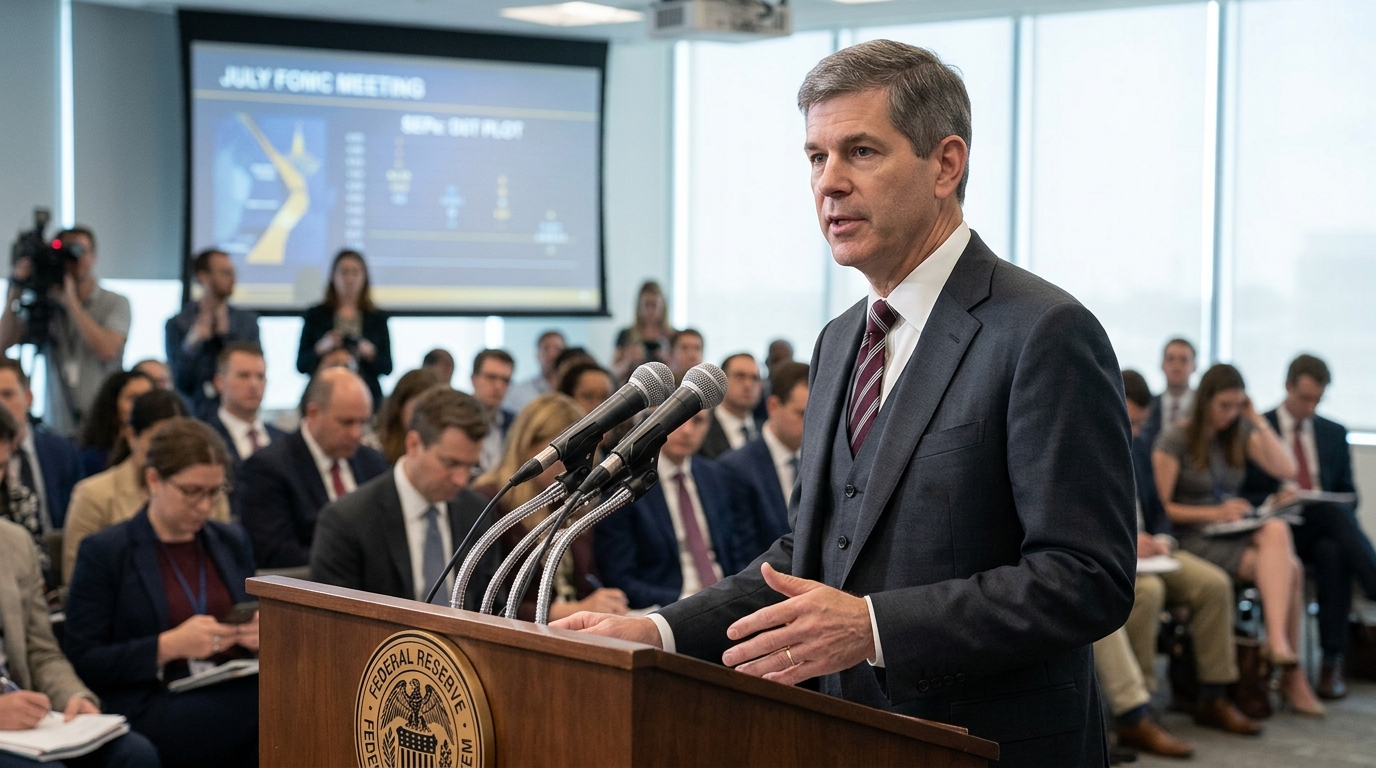
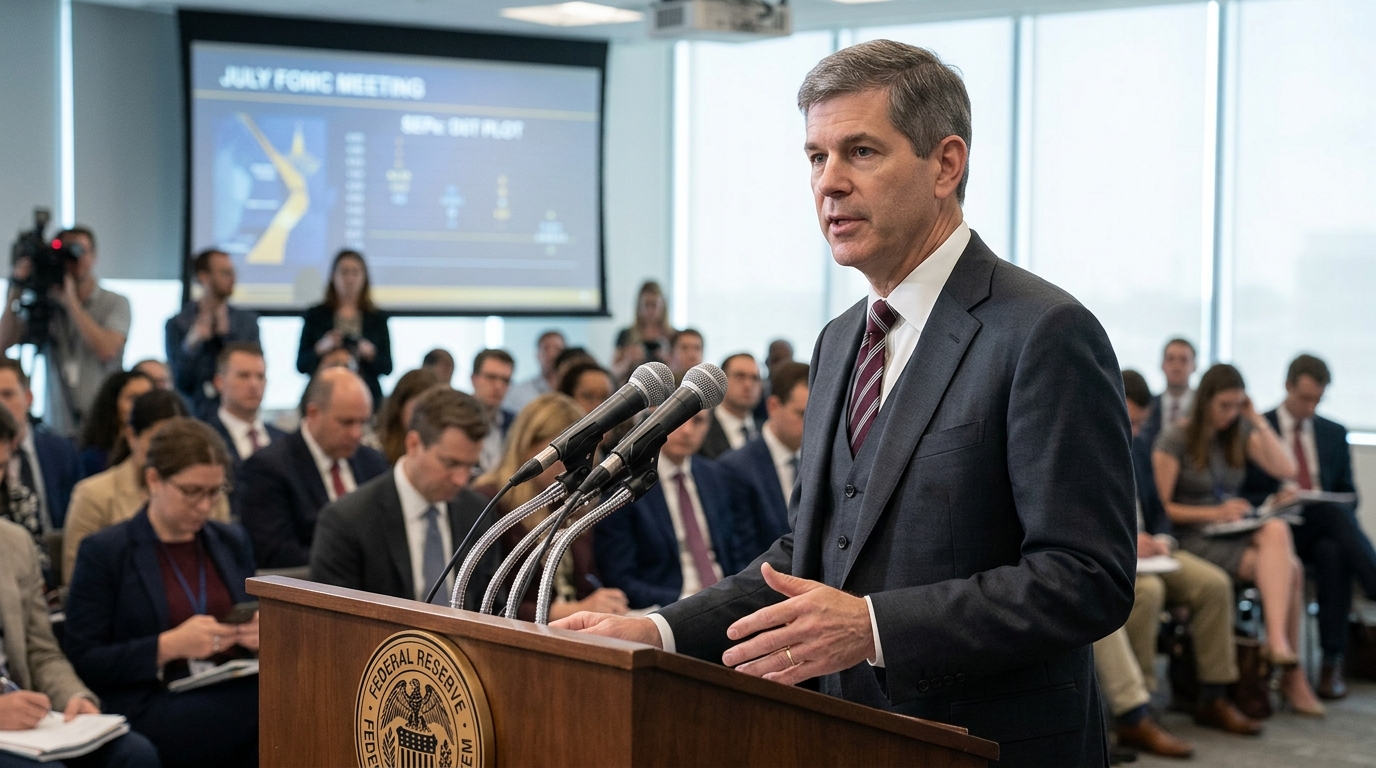
Today is June 17, 2026. The Fed announces at 2:00 PM ET, and Kevin Warsh holds his first post-meeting press conference at 2:30 PM ET. Markets have the rate decision almost fully priced — CME FedWatch puts the odds of no change at roughly 97%, keeping the federal funds rate at 3.50%–3.75% for the fourth consecutive meeting. The last actual rate move was December 2025.
So if everyone knows the decision, why does this meeting matter as much as any in the past two years?
Because the rate is the least interesting thing on the screen right now.
What’s Actually Moving Markets Today
Three things. First: the updated dot plot. In March, the median FOMC participant still projected one 25 basis point cut for 2026, with the year-end median federal funds rate sitting at 3.4%. That cut is almost certainly getting erased today. May CPI came in at 4.2% year-over-year — the highest reading since April 2023 — driven in part by the Iran energy shock that pushed crude toward $100 a barrel before the recent diplomatic de-escalation. A survey of 34 former Fed officials and staff conducted between June 5–12 found that 17 of 32 respondents who offered projections said a rate increase would likely be appropriate in 2026. Bank of America is flagging at least three current committee members projecting hikes in the new dot plot. That’s the hawkish signal that’s been quietly bid into Treasury yields all week.
Second: Warsh’s communication overhaul. He’s expected to withhold his own dot plot entry at this meeting — a deliberate signal that he intends to change how the Fed delivers forward guidance. A less predictable Fed means rate-path uncertainty becomes a recurring condition rather than an isolated event. For high-multiple technology names — Nvidia, Microsoft, Meta, Alphabet, which now collectively account for over 30% of the S&P 500 — that structural uncertainty is a persistent headwind on valuation multiples. You don’t need an actual hike for duration-sensitive assets to reprice.
Third: the easing-bias language in the post-meeting statement. Whether the Fed keeps or removes phrases signaling a lean toward future accommodation will tell traders whether this committee is formally shifting its communication posture or simply holding position.
The Macro Numbers Around This Meeting
The S&P 500 closed at 7,394 on June 11, up 1.75% on that session and up approximately 24% over the trailing 12 months. The Nasdaq has outperformed, up roughly 8.43% in May alone — though leadership has been narrow, concentrated in the AI infrastructure complex. The US market being up 24% year-over-year while CPI sits at 4.2% is the core tension the Fed is navigating. Real returns have been strong, but the inflation backdrop makes any accommodation signal politically and operationally difficult for a new chair already confirmed on a 54-45 partisan vote.
Brent crude is now trading just under $89 a barrel, having pulled back from recent highs on the US-Iran diplomatic progress. That retreat is material — it’s what’s given Warsh the room to focus on communication restructuring rather than emergency inflation management. The key level the market is watching is $100 a barrel. Stay below it and breadth can broaden away from the AI names. Break back above it and the market starts pricing in margin compression across industrials and consumer-facing companies simultaneously.
Scenario Framework for the 2:00 PM Print
Bull Case — Dovish Hold: Warsh signals patience, the dot plot removes the single projected 2026 cut but explicitly pushes hike language to a footnote. The easing-bias survives in modified form. Nasdaq rallies 1.5–2.5% on relief. Growth stocks — including the recently IPO’d SPCX — extend their recent moves. Treasury yields pull back modestly, compressing the dollar slightly.
Base Case — Hawkish Hold: The dot plot eliminates the 2026 cut entirely, two to three members project hikes, and Warsh signals reduced forward guidance frequency. Markets absorb the rotation from tech to financials and industrials that’s been underway. S&P holds its range, but Nasdaq underperforms. Rate-sensitive sectors — homebuilders, small caps, regional banks — see pressure on longer duration exposures.
Bear Case — Hawkish Surprise: Multiple members project rate hikes, the easing-bias language is dropped entirely, and Warsh uses the press conference to explicitly reframe the Fed’s tolerance for above-target inflation as zero. S&P 500 falls 2% or more in the immediate aftermath. Treasury yields spike across the curve. The dollar surges. Gold, which already sold off sharply when Warsh was nominated, faces renewed pressure.
What Traders Should Have on the Screen
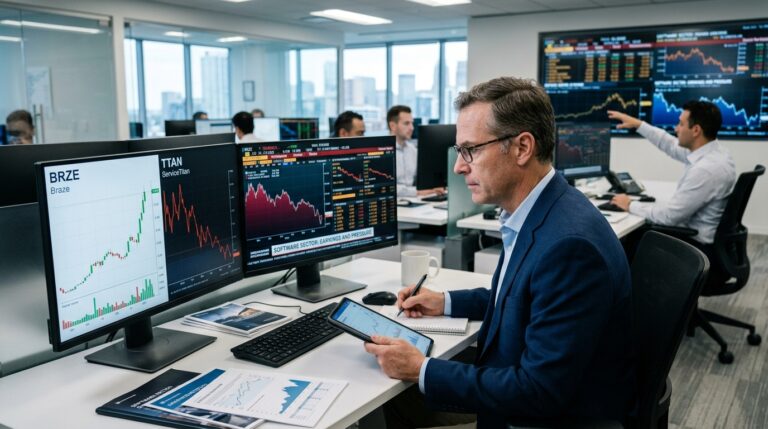
The 2-year Treasury yield is your real-time signal — it moves fastest on dot plot and statement language shifts. Watch it against the 10-year spread for curve dynamic tells. The dollar index (DXY) will confirm or contradict whatever equity is doing in the immediate 15 minutes post-announcement. For equities, the Nasdaq/Dow ratio is the cleaner read on whether this is a growth-friendly or value-rotation outcome. And don’t discount the VIX in the 30 minutes following Warsh’s first press conference. New Fed chairs historically generate outsized vol — not because of the rate itself, but because the market is trying to calibrate a communication style it has no history with.
The decision is settled. Everything else is wide open.
For informational and educational purposes only. Not investment advice. Trading involves risk, including loss of principal.