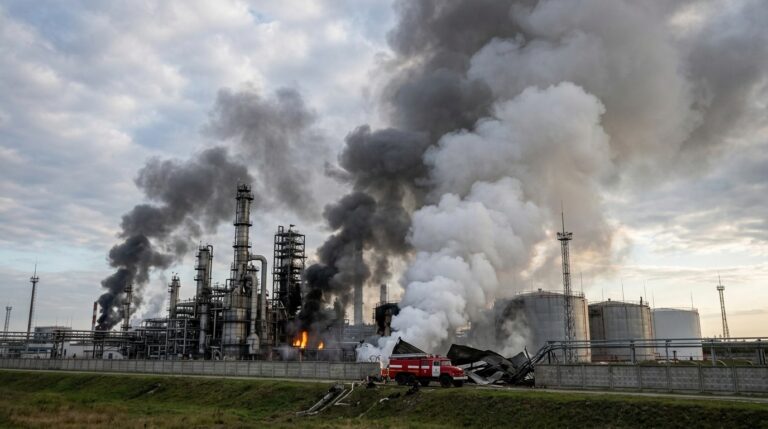
Gold was trading near $4,395 an ounce on Monday morning when President Trump told Fox News he would bomb Oman if the Gulf sultanate “gets in the way” of U.S. efforts in the Strait of Hormuz. The price barely flinched. That muted reaction is the real story for precious metals investors, and it deserves a careful explanation.
What’s Driving the Market
Today is the 60th day since the U.S. and Iran signed a memorandum of understanding, the agreed window for reaching a wider peace agreement. That window just closed without a deal. The 60-day deadline has expired and, as the Associated Press reported Monday, there are no concrete plans for a permanent agreement to end what has now become a roughly 24-week war.
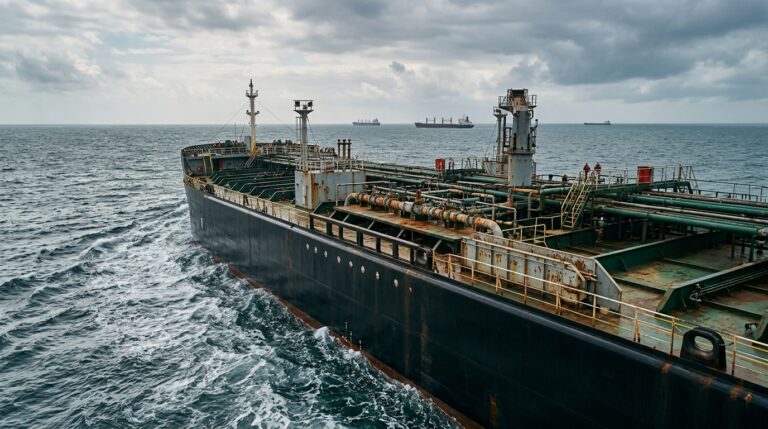
The Strait of Hormuz context matters enormously here. Shipping traffic through the waterway has at times fallen into the low double digits on recent weekends, according to MarineTraffic data cited in public reporting. Before the conflict began in late February, the strait typically processed about 130 to 140 transits per day. Analysts at the International Energy Agency have warned in recent months that the disruption has accelerated inventory drawdowns, with emergency stock releases helping to cushion the shock.
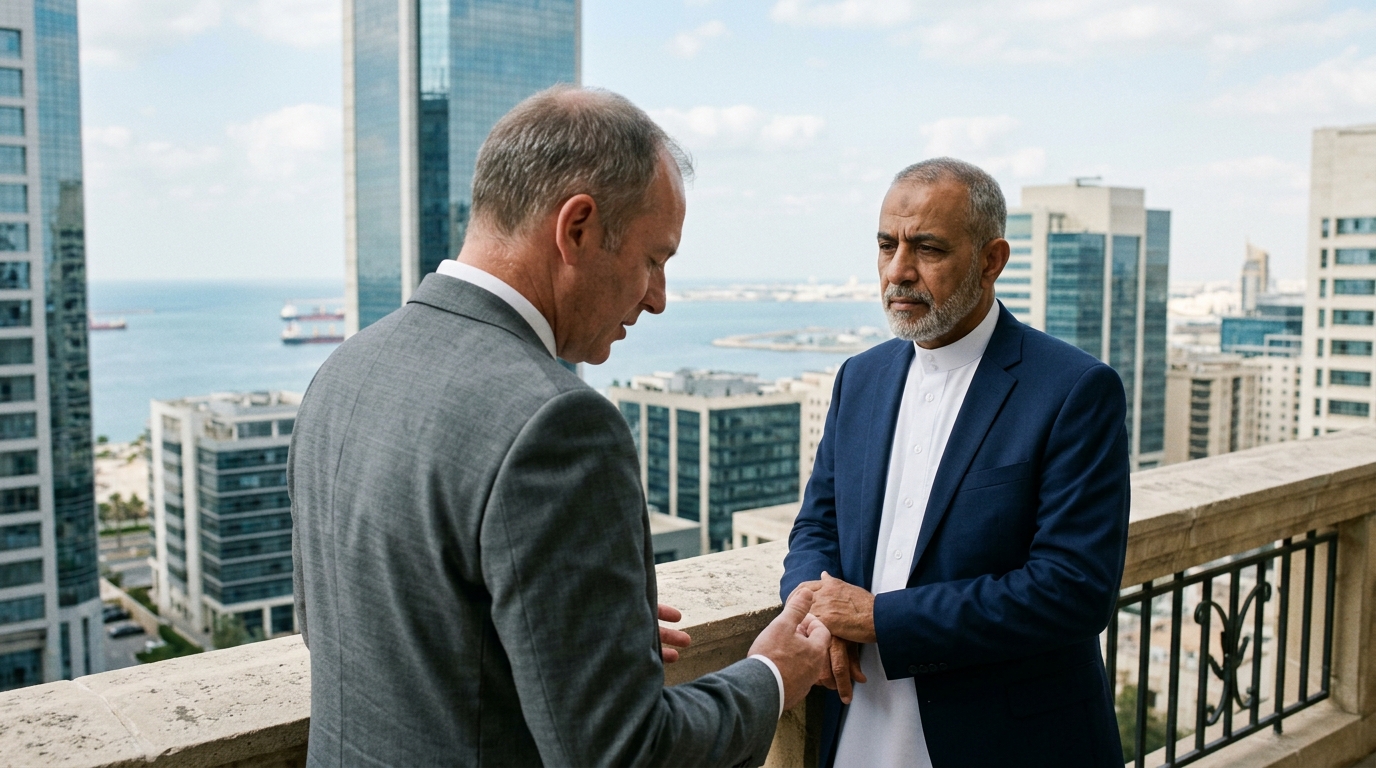
Iran’s semiofficial Mehr News Agency has said Tehran was close to an agreement with Oman on a shipping traffic plan for the waterway. That news helped prompt Trump’s threat. The logic from Washington is that any Iran-Oman bilateral arrangement cuts across the U.S. demand for a full, unconditional reopening. But the logic from a market perspective runs the other direction entirely.
Oman is not a random neutral party. It is the most durable channel through which Washington and Tehran have historically been able to communicate without escalating. Starting in 2011, Oman hosted secret meetings between U.S. and Iranian officials through what diplomats call the “Muscat Channel,” which helped pave the way to the 2015 JCPOA. In 2023, Oman helped facilitate the U.S.-Iran prisoner swap that included the release of frozen Iranian funds, and it has also been involved in regional de-escalation efforts involving Yemen. Analysts at the Royal United Services Institute have described Oman’s approach as one of keeping open channels to Tehran, Washington, and Gulf capitals simultaneously. In June, regional coverage again described Oman as a kind of “Switzerland of the Middle East” for precisely this reason.
Trump previously threatened Oman in May, warning it needed to behave “or we will have to blow them up.” Those warnings were absorbed. This time, the 60-day deadline has lapsed, Iran has emphasized that its talks with Oman are separate from U.S. demands, and the Hormuz calculus is more entrenched than at any prior point in the conflict. Tehran has repeatedly tied any durable reopening to U.S. steps on the blockade and broader terms of a wider settlement.
The Investment Opportunity
Gold’s subdued move today reflects a paradox that has defined this entire conflict. The war that should have sent bullion soaring to record highs has instead acted as a brake at times, because energy-driven inflation fears can force markets to keep Federal Reserve rate expectations higher. But some key details in that thesis have shifted recently. In its July Short-Term Energy Outlook, the EIA forecast a much lower Brent path than the high-$80s, with Brent averaging in the mid-$70s in the third quarter and trending down further into 2027.
Gold is up 0.45% today to $4,395, and up about 9.7% over the past month, as last week’s cooler CPI and PPI readings pulled September hike odds lower. Markets are now awaiting Fed Chair Kevin Warsh’s Jackson Hole speech for further guidance. That is the near-term lever. The medium-term lever is the Hormuz question, and Trump’s Oman threat just made a resolution to that question measurably less likely.
The investment case is not simply that gold will spike on escalation. It is more nuanced than that. The GDX, which holds equity stakes across major gold producers, has benefited from the broader gold upcycle, though its trailing one-year gain has been far smaller than 95% on widely followed total-return measures. Agnico Eagle and Newmont have both reported solid 2026 operating performance, reflecting not just the gold price level but expectations that the conditions keeping gold elevated will persist. Goldman Sachs has a 2026 year-end gold target of $5,400 per ounce. Bank of America has projected $6,000, with some of its commentary framing that as a spring 2026 scenario. Those forecasts require the supply constraints, central bank buying, and geopolitical risk premium to hold. Today’s events reinforce the geopolitical component, while the inflation-and-rates channel remains the swing factor.
Royalty and streaming companies deserve specific attention here. Wheaton Precious Metals and Franco-Nevada benefit from gold’s elevated price without bearing the same direct operational fuel-cost exposure as many operators, which matters when energy volatility feeds through to diesel and power costs. That operational insulation becomes a genuine differentiator when the market is still trying to handicap whether Hormuz disruption becomes episodic or structural.
Risks to Monitor
The bear case for gold remains anchored to the same dynamic that has suppressed it since February. If the Oman channel survives the threat and a Hormuz shipping agreement actually materializes, Brent could drop, inflation expectations could fall, September hike odds could crater, and gold could rally sharply from its current base, but not because of a geopolitical risk premium. Rather, it would rally because the energy inflation ceiling lifts. Paradoxically, the best near-term outcome for gold as an investment is a deal that reduces oil prices, not a continuation of the conflict.
The risk of further escalation is real but not binary. Brent in the high $80s would already price in significant Hormuz disruption, but the EIA’s latest published baseline has been notably lower than that. Some analysts have argued that prices are unlikely to move substantially higher unless there is an outright halt to remaining flows and/or a closure of the Bab el-Mandeb. Some tankers have attempted to reduce visibility by limiting transponder broadcasting in higher-risk areas, a fragile form of workaround that can keep the energy shock from becoming catastrophic. A direct strike on Oman would almost certainly end that workaround entirely.
Senator Tim Kaine said Monday he intends to introduce a resolution barring military action against Oman when the Senate returns from recess. That is a political brake on the most extreme outcome, but the damage to Omani diplomatic utility has likely already been done, regardless of whether any bombs fall.
Bottom Line
The Hormuz crisis has trapped gold between two forces: a geopolitical risk premium that supports prices and an inflation-and-rates channel that can suppress them by keeping policy tight. Trump’s threat to Oman today did not resolve that trap. It deepened it, by weakening the one diplomatic mechanism that has historically made U.S.-Iran de-escalation more feasible. Investors who understand this dynamic are not waiting for a headline escalation to act. They are positioned ahead of the one scenario the market has not yet priced: a deal that ends the war, pulls energy prices down hard, and hands the Fed room to cut. When that day comes, gold and the royalty companies that underwrite it will move faster than most portfolios can react.