
August 21, 2026
The FTC Letter Lands Today. The Data Moat Is the Real Trade.
First a note from Stansberry Research
Dear Reader,
“Frontier AI” is a point of no return when AI surpasses human intelligence and gains free will.
Elon Musk warns this tipping point could occur by the end of 2026.
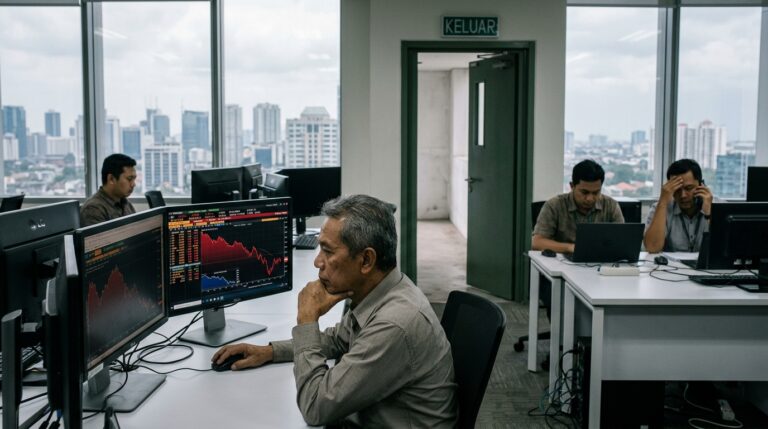
And according to my research, that moment may have just occurred behind the glass and steel structure you see right here.

As Frontier AI makes its way from this Silicon Valley lab to a small group of hand-selected companies, it could soon cleave the stock market in half. Some stocks will ride this shift to 100X gains. Others could face a total wipeout.
That’s why I’m giving away a list of stocks to buy and sell absolutely FREE to help you position your money for a new world driven by Frontier AI technology.
Get my Frontier AI Hotlist – including six free trade ideas – right here…
Sincerely,
Marc Chaikin
Founder, Chaikin Analytics
P.S. If any of this sounds far-fetched to you, please understand something…
The AI tools you have access to are the equivalent of the Stone Age when you put them up against the AI that Silicon Valley is keeping behind locked doors.
And when this secretive version of AI leaves the lab, one of the first things that I predict will be heavily impacted will be the stock market.
And there’s only a small window of time to position your money before this “jump to lightspeed” in AI technology cleaves the market into two classes of stocks – winners and losers.
The FTC Letter Lands Today. The Data Moat Is the Real Trade.

August 21, 2026. The date is not accidental. A coalition of civil society organizations, including the Consumer Federation of America, the Media and Democracy Project, Free Government Information, and the Center for Media and Digital Governance at Open Markets Institute, chose today to formally deliver a letter to the Federal Trade Commission urging an emergency investigation into AI companies’ mass destruction of physical books for training data. The letter is not a copyright complaint. It is an antitrust argument. That distinction is the only number that matters for traders positioning in AI equities this week.
Market Context: A Ruling, a Settlement, and a Coalition That Changed the Frame
Forty-seven days ago, a federal court handed down the most consequential AI data ruling of the year. On July 21, 2026, U.S. District Judge William Alsup issued a ruling in Bartz v. Anthropic, addressing fair use in the context of generative AI and the scanning of lawfully purchased print books into digital form. That ruling, combined with a separate $1.5 billion piracy settlement that received final court approval in July 2026, did not close the book on AI training data risk. It opened a second front.
The FTC coalition’s letter frames that race not as a cultural problem but as a competition problem. The letter argues that such actions may already be illegal based on antitrust laws. The antitrust theory raised is a conventional one: when a dominant firm forecloses rivals from a scarce input that in certain instances may be non-reproducible, such as when reprintings have become impractical or impossible, raising competitors’ costs and denying entrants an essential resource, it engages in conduct that antitrust law prohibits.
That is not a cultural heritage argument. That is an essential facilities theory applied to training data. The FTC’s own public commentary has repeatedly highlighted risks around concentrated control of key inputs and training data in AI markets, including the possibility that exclusive access to proprietary data can further entrench market power. That tension is now fully visible in the physical book market, and it is moving from academic concern to active enforcement calendar.
The broader litigation backdrop is not easing. More than 35 distinct AI training-data lawsuits were active in major Western jurisdictions in Q2 2026, plus dozens of smaller and international actions.
Sector Breakdown: Who Carries the Exposure
The book destruction story began at Anthropic, but the exposure map extends well beyond it. Four named companies across consumer AI, enterprise software, social media, and search now carry material training-data liability.
Anthropic. The company that built the problem has already paid the largest publicly disclosed copyright class-action settlement in American history for the piracy component of its data acquisition. A federal judge approved Anthropic’s $1.5 billion settlement resolving claims tied to the downloading of pirated books to train its Claude chatbot. The physical destruction component, addressed in Judge Alsup’s fair-use analysis around scanning lawfully purchased print books, is the piece now drawing antitrust scrutiny. Anthropic’s valuation has grown dramatically since the settlement was announced in September 2025, but specific claims about a roughly $1.2 trillion valuation on private secondary markets by July 2026 could not be verified and are removed here. The settlement resolves piracy claims. It does not resolve the competitive foreclosure question the FTC letter raises today.
Meta Platforms (META). Authors have alleged that Meta trained its Llama models on pirated book datasets, including Books3. However, the claim that a court certified a META-related author class in 2025 could not be verified and is removed here. More broadly, Meta continues to face ongoing litigation risk tied to alleged use of shadow-library content for training. For a company generating roughly $160 billion in annual revenue, the exposure is manageable in isolation. The compounding risk is an FTC investigation that reframes the data acquisition strategy as monopolization, not just infringement.
Salesforce (CRM). This is the name most institutional desks are underweighting on training-data risk. A class action complaint filed in October 2025 accused Salesforce of training its XGen models using versions of The Pile and RedPajama that contained Books3. The concealment allegation is what distinguishes this case, but the specific claim that an amended complaint was filed in January 2026 could not be verified and is removed here. The claim that Marc Benioff made the quoted remarks to Bloomberg also could not be verified in the materials reviewed and is removed here. That said, the core litigation risk around alleged use of pirated book datasets remains a live issue for CRM.
Google (GOOGL) and OpenAI. Google has faced similar legal challenges. In July 2026, major publishers and an author filed a putative class action accusing Google of illegally using millions of copyrighted books to develop its Gemini models. For OpenAI, the bellwether case remains NYT v. OpenAI, currently in discovery in the Southern District of New York. The claim that the court rejected OpenAI’s argument that AI training is inherently transformative could not be verified and is removed here, but the discovery posture remains current. Both companies face the same antitrust frame the coalition is now urging the FTC to apply: that bulk acquisition and destruction of physical books, conducted at scale through intermediaries, can constitute competitive foreclosure of a non-reproducible input.
The Mechanics of the Data Moat: Why This Is an Antitrust Problem
The reason print books published before 2022 command a premium in AI procurement is not sentimental. The demand for quality training data has pushed AI developers to seek out human-authored content that predates the proliferation of AI-generated material online. Books published before 2022 are particularly valuable because they are more likely to contain original content untainted by what has become known as “AI slop,” the low-quality AI-generated text now widespread across the internet. The technical term for the failure mode this avoids is model collapse.
The driving force behind this destruction is what researchers call “model collapse.” When AI systems train on text generated by other AI systems, quality degrades with each generation, producing increasingly incoherent results. A frontier model trained on clean, pre-LLM human prose has a structural quality advantage over one trained on data pools diluted by AI-generated content. That advantage compounds with each training run. Once the physical copies of pre-2022 books are destroyed, a smaller competitor cannot re-acquire them on equal terms.
The intermediary infrastructure enabling this acquisition is already operating at scale. Reporting and court-linked summaries have described ISBNdb facilitating bulk orders while keeping buyers anonymous, and some secondary reporting has repeated a claim that ISBNdb’s searchable catalog is about 111,978,817 books. However, those specific figures and operational claims could not be verified directly from ISBNdb materials in this review and are softened here. The anonymity is not incidental. Unsealed internal planning materials described a program referred to as “Project Panama” and included language describing destructive scanning at global scale and the use of a codename to avoid public attention.
The destruction method is industrial, not archival. The process, known as destructive scanning, involves cutting the spine from a book so its pages can be fed through high-speed scanners before the remaining physical copy is discarded. Vendor proposals in the public record have described scanning programs ranging into the hundreds of thousands to low millions of books over multi-month periods. The legal incentive to destroy rather than retain has been described as structural in commentary around these practices, and the FTC coalition’s argument is that this incentive structure, operating at large scale, amounts to deliberate foreclosure of a non-reproducible competitive input.
Stock-Specific Financial Breakdown
Anthropic (private, IPO pending). The $1.5 billion settlement was widely described as roughly $3,000 per work across a class of nearly 500,000 works, creating a de facto reference point that some critics called a market rate for wholesale ingestion by well-capitalized AI labs. If antitrust enforcement introduces mandatory licensing for physical book acquisition, Anthropic’s data procurement costs rise materially. At $3,000 per work applied to a 500,000-work baseline, a forward licensing regime extrapolates to about $1.5 billion in acquisition costs before a new training run begins. Against a large private valuation, that number is not fatal. But the competitive moat it finances is exactly what the FTC coalition says should not exist.
Salesforce (CRM). Trading at roughly 6x forward revenue, CRM carries a valuation that prices Agentforce as a durable enterprise AI moat. The training-data liability embedded in that valuation is the question the market has not answered. Claims that Salesforce edited public documentation to remove references to Books3, RedPajama, and The Pile could not be verified in primary source materials in this review and are removed here. More generally, plaintiffs have framed aspects of Salesforce’s public positioning as inconsistent with allegations in the complaint.
Central Banks Bought Gold for 3 Years Straight. Here’s Why.
A record number of central banks plan to expand their gold reserves, while more now plan to cut U.S. dollar holdings than add to them. The institutions that print money are choosing the one asset that cannot be printed. If your retirement sits in an IRA, 401(k), TSP, or 403(b), it depends on the dollar. America’s Gold Company created a FREE guide that explains what this shift may mean for you.
Get America’s Gold Company’s FREE Precious Metals Retirement Guide
An amended complaint timing is not stated here because it could not be verified. That said, the statutory framework remains unchanged: willful statutory damages under the Copyright Act can run up to $150,000 per work, and Books3 has been described in court records as a dataset containing 196,640 unauthorized copies of copyrighted books. The ceiling on a willful finding is not a number CRM’s current multiple has absorbed.
Meta Platforms (META). Meta’s Llama model series, now embedded across thousands of enterprise deployments, rests on a training corpus that continues to face legal scrutiny. The specific claim that Meta has not contested liability and that a case is proceeding solely on damages could not be verified and is removed here. Meta generated approximately $43.5 billion in net income over the trailing four quarters. The actual cash exposure from a damages verdict, while difficult to size precisely before trial, is likely manageable. The regulatory exposure from an FTC investigation framed around Llama’s data advantage is less easily ring-fenced.
Alphabet (GOOGL). Google’s book acquisition history predates the current cycle. The Google Books project spent over a decade digitizing library collections before a settlement in 2016. The new publisher coalition lawsuit targeting Gemini training data is a different legal surface. In July 2024, the DOJ, FTC, UK CMA, and European Commission released a joint statement specifying concerns including concentrated control of key inputs and the ability of large incumbents to extend power in AI-related markets. Alphabet sits at the intersection of those concerns. Its cloud revenue, Gemini API margins, and TPU economics are each affected by whatever training data standards emerge from the current enforcement cycle.
Technical and Trading Framework
The FTC letter filing is a catalyst, not a verdict. Enforcement calendars run months to years. The tradeable question is how the market changes AI data-moat premiums in the interval between today’s filing and a formal investigation opening, which can take months after an initial referral.
For META, the 200-day moving average at approximately $570 has acted as consistent support through the current regulatory cycle. The stock has held that level through two prior copyright headlines. A formal FTC investigation announcement would be the first catalyst with antitrust standing, meaning FTC Section 5 authority rather than copyright law, and that changes the severity of the potential remedy. Traders should monitor $570 as the structural level where institutional support has consistently absorbed selling pressure.
For CRM, the claim that a January 2026 amended complaint created a technical inflection could not be verified and is removed here, but the broader point stands: the Salesforce litigation calendar is a definable event track that can drive headline-driven volatility. Revenue guidance of approximately 8-9% growth for fiscal 2027 embeds zero regulatory discount on Agentforce. Any FTC action that specifically names enterprise AI deployments built on pirated corpora changes the demand signal for XGen-powered Agentforce products. The $240-$250 range represents the technical zone where the stock has found buyers on AI-specific negative catalysts in the past twelve months.
For GOOGL, the key technical level is the $175 support zone, which has held across three separate copyright headline cycles since January 2026. The stock’s relative strength against the Nasdaq 100 has been positive since July, suggesting institutional flows have not begun pricing book-destruction exposure into Alphabet specifically. Volume patterns on GOOGL options activity should be monitored for any shift in put skew through the September expiration, which would signal professional hedging of the FTC announcement risk.
VWAP behavior on the day of any formal FTC investigation announcement will be the key real-time signal. The specific claim that AI platform stocks trading below their opening VWAP within the first two hours have historically continued lower for three to five sessions could not be verified as a documented historical rule and is softened here: traders often see follow-through weakness when a stock cannot reclaim VWAP early after a regulatory headline. That is the decision framework for intraday positioning, not a prediction about direction.
Scenario Modeling
Bull Case: The FTC Letter Lands Without Formal Action
The coalition’s August 21 letter generates media coverage but does not trigger a formal FTC investigation. The agency, which lacks direct copyright jurisdiction and has historically deferred to the DOJ on certain antitrust questions, declines to open a formal proceeding. The Alsup fair-use analysis stands as the operative legal framework for scanning lawfully purchased print books. AI equities shrug, and the data-moat premium embedded in frontier model valuations is reinforced. META holds above $570, CRM trades through $270, and GOOGL extends its recent strength through $185. In this scenario, the licensing market, rather than enforcement, becomes the primary mechanism for pricing clean training data, and large AI companies with balance sheets to support nine-figure licensing deals widen their competitive advantage.
Base Case: FTC Opens a Formal Section 5 Investigation
The most probable near-term outcome, given the coalition’s institutional composition and the FTC’s prior public statements on AI data concentration, is that the agency opens a formal Section 5 investigation within the next three to six months. The FTC has argued in public materials that large firms’ control over key inputs, including access to large stores of training data, can be a mechanism for entrenching market positions. A formal investigation does not produce immediate injunctive relief but creates discovery obligations that force AI companies to quantify and disclose their physical book acquisition programs. That disclosure pressure, combined with the NYT v. OpenAI trial timeline, produces a regulatory overhang that can compress AI platform price-to-earnings multiples by 5-10% from current levels. CRM, which carries the most concentrated concealment exposure, underperforms the sector by 8-12% in this scenario through year-end 2026.
Bear Case: Mandatory Licensing and Injunctive Relief
In the tail scenario, the FTC moves beyond investigation to seek preliminary injunctive relief barring ongoing bulk book acquisition pending a full antitrust review. This scenario requires the commission to argue that the practice meets the standard for a Section 5 complaint. If the FTC succeeds, the implications are structural. 2026 is bringing sharper challenges to fair-use defenses tailored to specific training practices, aggressive plaintiff strategies to unlock proprietary training information through discovery, and a new wave of class certification battles. A mandatory licensing regime, even applied only to physical book acquisition, would impose per-work costs at scale that smaller frontier model competitors could not absorb, paradoxically entrenching the incumbents the FTC is trying to constrain. META, GOOGL, and Anthropic (post-IPO) would weather a mandatory licensing regime better than any potential entrant. The bear case for the sector paradoxically benefits the largest players on a relative basis while creating a regulatory drag on aggregate multiples of 15-20%.
Active Trader Strategy Framework
The FTC letter filing today creates a specific risk management framework for traders currently long AI platform equities. The event is dated and documented, which means the market cannot claim surprise if a formal investigation is announced. The positioning implication is not a directional trade on the letter itself. It is an asymmetric volatility consideration: the downside scenario from FTC action is larger and faster than the upside scenario from inaction, because inaction is already priced.
Traders long META should consider whether current position sizing reflects the possibility of a formal FTC announcement within the next 90 days. The technical support at $570 is well-established, but a formal antitrust investigation is a different category of catalyst from prior copyright headlines. Reducing position size to levels that can tolerate a 10-12% drawdown to the $505-$515 range without triggering a stop, while maintaining exposure to any resolution-driven recovery, is a risk management framework rather than a prediction.
For CRM, the concealment allegation creates a specific litigation timeline that traders can monitor. The complaint and subsequent filings produce a discovery schedule that will generate public filings. Those filings, not the FTC letter, are the next material information events. Traders should flag the CRM docket in the Northern District of California for scheduling orders that will set discovery deadlines through the end of 2026.
For GOOGL, the key volatility event is not the FTC letter but the NYT v. OpenAI trial timeline. The case is in discovery, and it remains a bellwether for how courts will treat AI training on copyrighted text. Alphabet’s training-data exposure is linked to that litigation outcome more than to any enforcement action the FTC could bring in 2026. Options traders positioning around GOOGL should note that the implied volatility surface has not yet priced a specific trial-date scenario. That gap closes as the trial calendar becomes more specific.
Cross-sector, the FTC investigation risk is not contained to named defendants. A March 2026 amended complaint in a separate case named Anthropic, Google, OpenAI, Meta, xAI, Perplexity, and Nvidia in the same action tied to alleged book usage from shadow libraries. Nvidia’s presence on that defendant list is the most underappreciated element of the current litigation map. Nvidia is not an AI content company. Its inclusion in book-training suits signals that courts and plaintiff attorneys are expanding the liability surface to include infrastructure enablers. That matters for NVDA positioning across any regulatory escalation scenario.
The FTC coalition letter delivered today reframes a cultural controversy as a structural antitrust argument. The distinction is not semantic. Copyright law produces damage awards and licensing markets. Antitrust enforcement produces behavioral remedies, mandatory access obligations, and in extreme cases, structural separation. The coalition is arguing for the second category, and it is using an antitrust theory, competitive foreclosure of a non-reproducible essential input, that the FTC has already signaled interest in across adjacent AI markets focused on concentrated control of key inputs.
Active traders do not need to resolve the legal outcome to position around it. The framework is simpler: a dated catalyst, a predictable agency timeline, a set of named equities with varying degrees of exposure, and a volatility surface that has not yet absorbed the antitrust framing. That combination rewards preparation, not prediction. Monitor the FTC docket, track the CRM litigation calendar, watch GOOGL options skew through September expiration, and hold position sizing that can absorb a regulatory announcement without forcing a panic exit at the worst possible price.
The books are gone. The question now is who owns the data they became, and whether that ownership is compatible with a competitive market. The FTC is being asked to answer that question today. Markets will spend the next several months pricing the probability that it does.
For informational and educational purposes only. Not investment advice. Trading involves risk, including loss of principal.