
September 4, 2026
Bonus Content: The Yen Hit 156. The Sept. 18 BOJ Decision Could Shift Everything.
Below is an important message from one of our valued sponsors. Please read it carefully.
A recently filed federal document may be the most consequential thing I’ve come across this year.

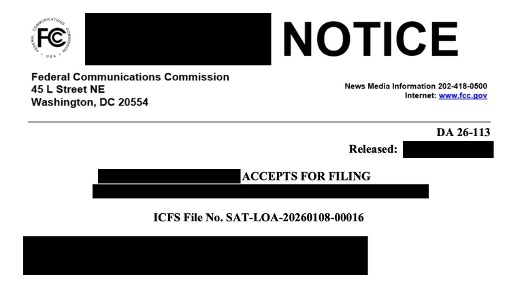
What’s under the black bars could reshape the AI investment landscape for years to come.
Elon Musk quietly submitted this document to the federal government ahead of the September 25th window.
What’s inside points to a consolidation play that could dwarf the combined market impact of Tesla, SpaceX, and xAI.
The sector in focus: Artificial Intelligence — specifically, the infrastructure layer that Bezos, Altman, and Zuckerberg are all competing to control. This filing suggests Musk is positioning for supply chain supremacy in that race.
The addressable capital flowing into this space is larger than any prior technology cycle.
For context on the analyst making this call:
NVIDIA was flagged in 2008. Bitcoin in 2013. Each represented an early-stage entry before the broader market priced in the structural shift.
This filing points to what may be the next inflection of that magnitude — and it is not yet priced in.
Early positioning windows in Tesla, Bitcoin, and NVIDIA closed quickly once institutional coverage arrived.
If you were watching from the sidelines on any of those…
Asymmetric entries at the early-disclosure stage are rare. This briefing covers the window ahead of wider analyst coverage.
One click and two minutes is all it takes to review the analysis.
Regards,
James Altucher
The Yen Hit 156. The Sept. 18 BOJ Decision Could Shift Everything.
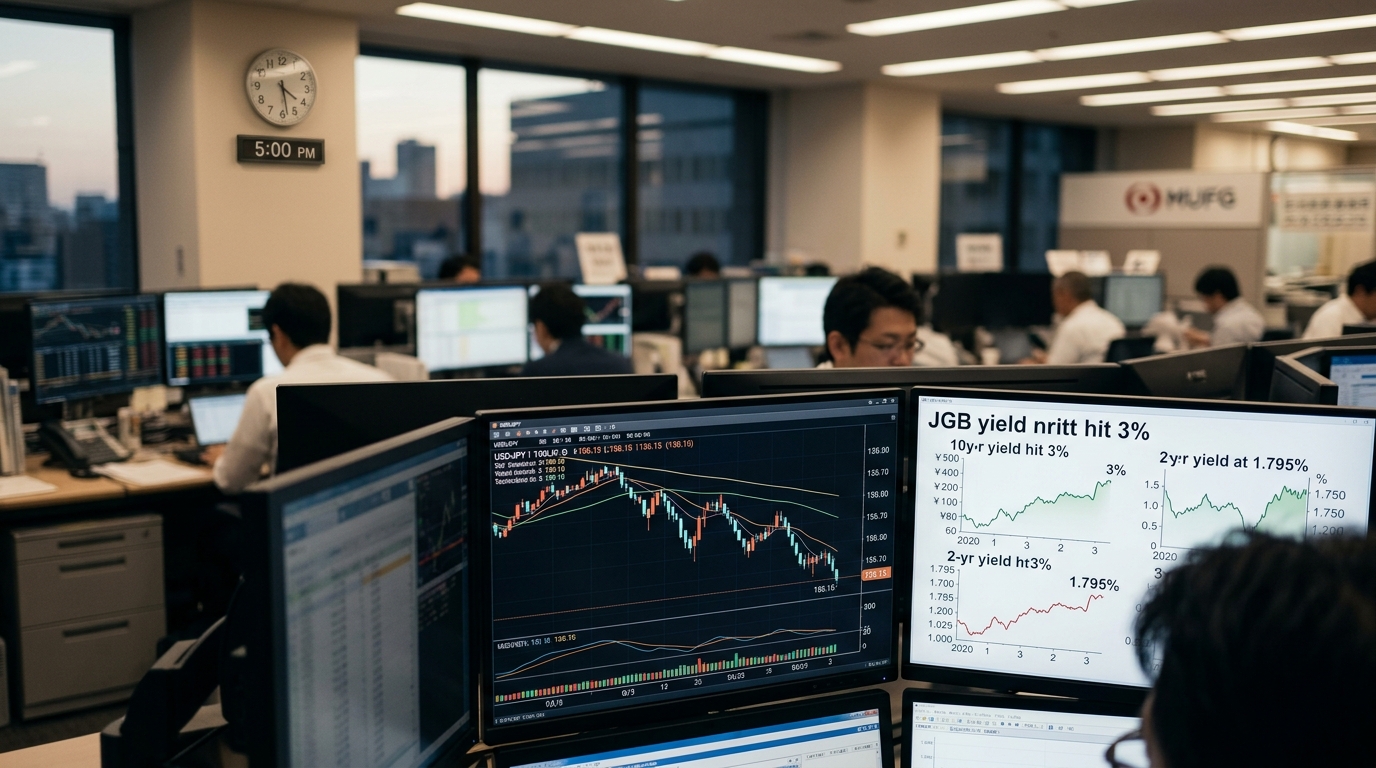
- USD/JPY traded down to 156.15 on September 3, its lowest level since August 3, after the yen gained more than 1% in a single session, its biggest daily move in over a month.
- The 10-year JGB yield hit 3% on September 1 for the first time since September 1996; the 5-year hit a record 2.265% and the 2-year reached a 31-year peak of 1.795%.
- MUFG’s Lee Hardman said a 25bp hike to 1.25% at the September 18 BOJ meeting is now fully reflected in market pricing.
- BOJ board member Hajime Takata raised the possibility of outsized or back-to-back hikes; Governor Ueda signaled heightened attention to upside price risks.
- Japanese investors have net-sold about $18.7 billion more in foreign bonds than they purchased through August 22, pointing to ongoing rotation back toward domestic bonds.
- As of late July, hedge funds held about 124,575 short-yen contracts worth roughly $9.5 billion, positioning near the largest since 2007.
- EWJ benefits from yen strength; DXJ faces a headwind as the Fed-BOJ rate gap compresses and FX-hedge carry shrinks.
Market Context
The macro backdrop entering September 18 is cleaner than it looks. The BOJ meets on the 17th and 18th. The Fed decision lands on September 16, so the sequencing forces a positioning decision this week, not next. Markets are already treating 1.25% as the near-term waypoint; the real question is whether Takata’s language about back-to-back or outsized moves shifts the terminal rate conversation before year-end. Meanwhile, the 10-year JGB at 3% is not a rounding error. Japan’s fiscal 2026 budget used a 3.0% assumed interest rate for debt-servicing calculations, so any sustained move above it adds direct pressure on government finances and can accelerate the pace of BOJ tapering of JGB holdings.
USD/JPY has traveled from above 160 to the mid-155s in under a week. That is roughly 400 to 500 pips of directional move driven by a combination of hawkish BOJ rhetoric and what ING analysts described as a near 1% fall in USD/JPY over a couple of minutes on September 3, rekindling intervention speculation. The 160 level is now acting as a practical ceiling. BNY’s Geoff Yu noted that heavy post-intervention JPY selling has largely run its course, with JPY flows on September 2 the strongest since mid-July.
Sector and ETF Breakdown
The ETF divergence here is structural. EWJ, the iShares MSCI Japan fund with about $20B-plus in assets and a 0.49% expense ratio, holds full yen exposure. Yen appreciation adds directly to dollar returns. DXJ, WisdomTree’s currency-hedged fund with about $7B-plus in assets, neutralizes that and charges a 0.48% expense ratio. As the Fed-BOJ rate differential compresses, the positive carry DXJ collects on its yen forwards can shrink. The 2022 to 2024 regime that made DXJ a standout performer is reversing.
Japanese bank stocks sit on the other side of this trade. Higher short rates and a steeper domestic curve can improve net interest income, but the path matters. The risk for banks is not the hike itself, it is a disorderly JGB selloff that marks bond portfolios lower faster than lending income improves.
Technical Framework
USD/JPY broke below its 200-day moving average during the September 2 to 3 decline. The MACD has turned negative on the daily. Immediate support clusters near 155.25; a confirmed close below that level opens the path to 154.40. Resistance lies at 157.25, then 157.85. The 14-day RSI sits near 47, neutral, not oversold, which means the pair is not yet positioned for a mechanical bounce. Traders watching for intervention signals should track intraday velocity rather than levels alone; the September 3 move was identified by the speed of the drop, not the price reached.
Scenario Modeling
Bull Case for Yen (USD/JPY lower)
BOJ delivers 25bp on September 18 and Ueda’s press conference signals October is live. USD/JPY breaks 155.25, targeting 152 to 153. EWJ outperforms; DXJ underperforms by a comparable margin. Treasury yields face upward pressure as Japanese investors accelerate foreign bond reduction, a process already underway at about $18.7 billion net through August 22.
Base Case
BOJ hikes 25bp as expected, Ueda keeps language deliberately open-ended. USD/JPY stabilizes in the 154 to 157 range. Bank stocks hold gains as net interest margins keep improving; EWJ modestly outperforms DXJ on the currency shift. Treasury yields see modest upward pressure but no disorderly move.
Bear Case for Yen (USD/JPY higher)
BOJ holds unexpectedly or Ueda walks back back-to-back hike language. USD/JPY snaps back toward 159 to 160 on short covering. The roughly $9.5 billion short-yen positioning gets rebuilt quickly. DXJ recovers its carry advantage; EWJ gives back yen-related gains. The carry trade re-engages and global risk appetite temporarily firms.
Active Trader Strategy Framework
The asymmetry favors positioning before September 16, not after. Once the Fed decision lands, the window to the BOJ is too short to establish or unwind size without slippage. Key levels to monitor: 155.25 support in USD/JPY, the 3% JGB yield as a psychological and fiscal threshold, and daily JGB auction results as the most real-time signal of whether Japanese institutional demand is absorbing supply or stepping back. Volatility expectations should reflect that two major central bank decisions arrive within about 48 hours of each other, that sequencing alone warrants wider stops and reduced position size relative to standard G10 setups. On the equity side, the EWJ versus DXJ spread is a cleaner expression of the currency thesis than individual Japanese stocks for most active traders.
Conclusion
Two meetings in about 48 hours. One market that has already moved hundreds of pips anticipating the outcome. The yen carry trade, funded by years of near-zero Japanese rates, is losing its last structural support. Preparation here means knowing your levels before the Fed speaks on September 16, not scrambling to react on the 18th. Disciplined positioning and defined risk parameters matter more than directional conviction when two central banks are moving in sequence.