September 6, 2026
Three Iranian crude carriers hit near Kharg Island after a Labor Day weekend. What energy traders need to know before the bell.
Oil traders return Tuesday morning to a market they could not react to in real time. Saturday’s strikes are categorically different from what came before.
971 Trades. One Surprisingly Simple Approach.
Five years. Bull markets, selloffs, sideways stretches – and 971 trades along the way. Dave Aquino’s Ultimate Income System focuses less on predicting the next big move and more on finding consistent trading opportunities. His new report explains the approach, why it works differently, and what most traders may be missing.
- Brent closed Friday at $96.28, up about 9% on the week, its strongest weekly performance since mid-July.
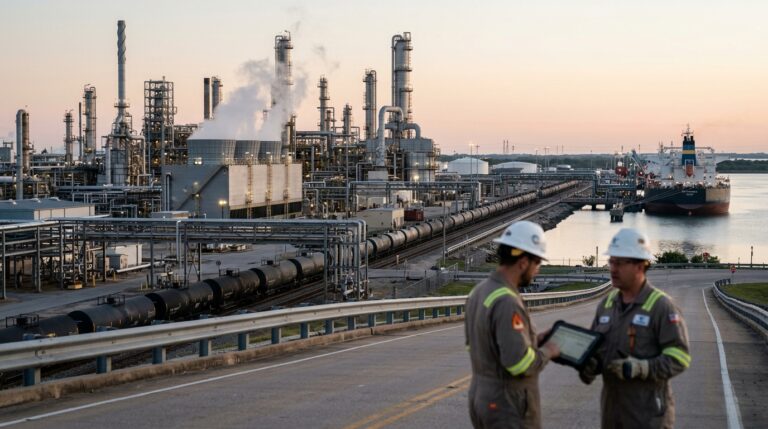
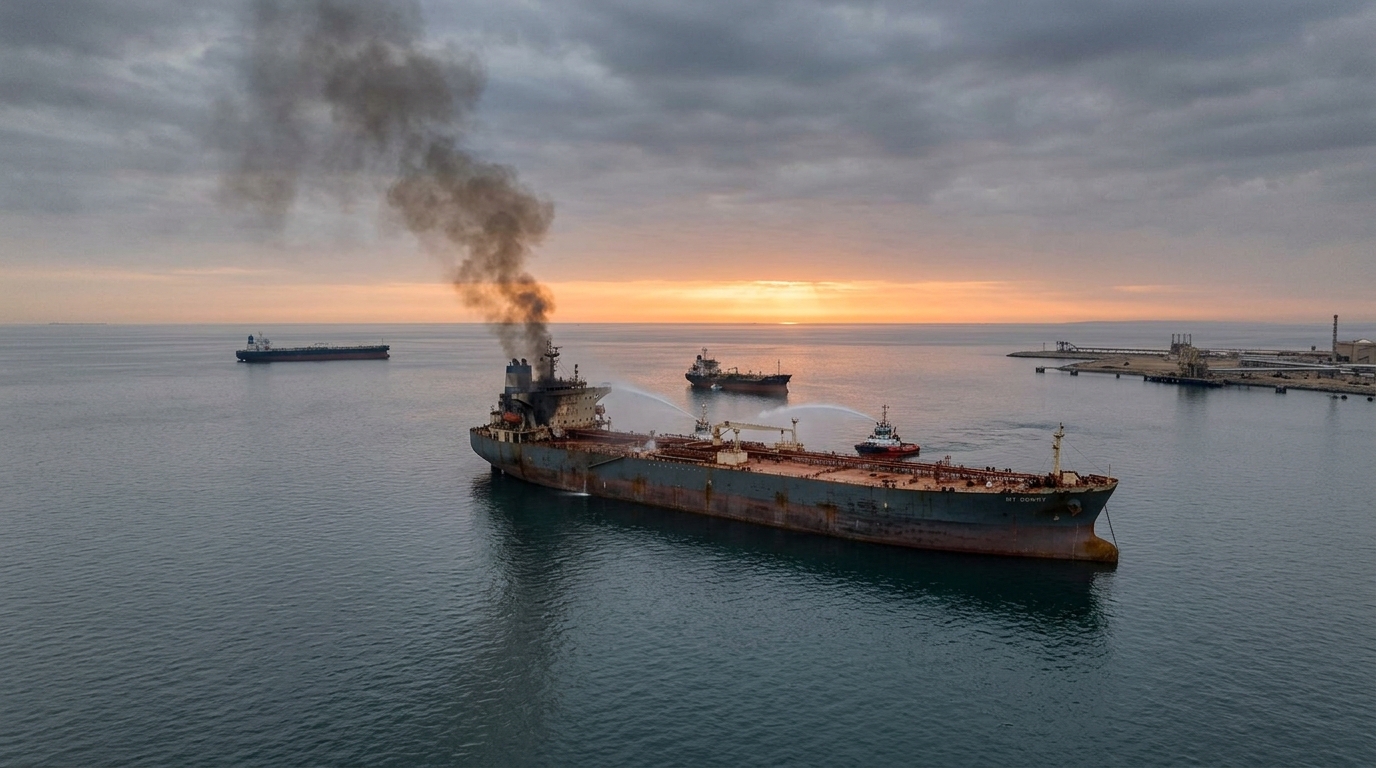
- US CENTCOM confirmed three Iranian crude carriers hit Saturday: M/T Downy off Kharg Island, M/T Stark 1 near Jask, M/T Kylo destroyed in the Gulf of Oman.
- Kharg Island handles approximately 90% of Iran’s crude oil exports, making proximity to it militarily and commercially material.
- OPEC+ signaled Sunday it is set to hold October output policy unchanged, removing any near-term counterweight to the supply shock.
- XLE holdings breadth: 67% above their 10-day SMA, about 90% above their 50-day as of Friday’s close, reflecting a sector already extended.
- US equity markets are closed Monday for Labor Day, concentrating the reaction into Tuesday’s open.
Market Context
Brent traded around $96 a barrel on Friday and was up about 9% for the week, its strongest weekly performance since mid-July, as US-Iran tensions continued to drive market sentiment. That move happened before Saturday’s escalation. US-Iran strikes resumed this week for the first time in about a month, reigniting concerns over supply disruptions. The Kharg Island tanker strikes arrived after the close, with no US equity session to absorb them.
OPEC+ is set to keep output policy unchanged for October, with the meeting occurring as the US-Iran war continues to elevate shipping and supply risk through the Strait of Hormuz. The offset that would ordinarily cap a supply spike simply does not exist at scale right now.
The Strike and What It Changes
The US military said Saturday it hit three Iranian oil tankers, including one near Kharg Island, the country’s main oil terminal, after Iran launched missiles toward two US Navy warships. CENTCOM said its strikes disabled an oil carrier off the coast of Kharg Island and another off Jask, and it destroyed a third one in the Gulf of Oman.
Iran is the third-largest producer in OPEC and exports most of its crude via Kharg Island. Striking tankers at the island’s anchorage is qualitatively different from earlier engagements: it signals willingness to degrade Iranian export capacity at its primary loading point. CENTCOM has framed the tankers as part of a multibillion-dollar shadow network that funds the IRGC and its regional proxies. The framing matters: it establishes a policy framework for further action against the export fleet.
Did Trump Draw a Red Line Around This Mystery Stock?
When a major U.S. trading partner targeted one American energy company’s profits, Trump publicly warned it was making a “big mistake.”
Why defend this company?
Sector and Stock Positioning
ExxonMobil (XOM) is the largest constituent of XLE, representing roughly 20% of the fund, and last traded at $159.47. Chevron (CVX) and Occidental (OXY) carry similar upstream leverage to a sustained Brent move above $95. As of Friday’s close, 67% of XLE and XOP holdings were above their 10-day SMA and about 90% above their 50-day. That breadth reading signals an uptrend with momentum, but a sector already pricing in considerable risk premium. The question for Tuesday is not whether XLE gaps higher; it is whether the gap holds.
Technical Framework
Brent’s weekly structure is technically constructive: nine consecutive sessions of higher closes into $96, with no overhead resistance of note until the $100 psychological level. The risk is gap-and-fade behavior as European and Asian participants who priced in Saturday’s news encounter US institutional selling into strength. XLE’s about 90% reading above the 50-day SMA is historically associated with mean-reversion risk within two to four sessions of a news catalyst, even when the fundamental case remains intact.
Scenario Modeling
Bull Case: Iran retaliates against Kharg-adjacent infrastructure or additional tankers are struck before Tuesday’s open, driving Brent through $100 and XLE 3-5% higher at the open. OXY and XOP, with purer upstream exposure, outperform XLE in this scenario. Sustained volume above Friday’s VWAP confirms institutional accumulation rather than retail gap-chasing.
Base Case: Brent opens near $98-99 in pre-market futures, XLE gaps 1.5-2.5% higher, and the sector consolidates by midday as traders assess whether Saturday’s strikes represent a ceiling or a floor in escalation. Energy equities finish the session 0.5-1% above the open. WTI tracks within $1.50 of Brent throughout.
A Forgotten Energy Source Is Powering Back Up
While investors chase the next tech story, one long-ignored sector is quietly heating up. A mix of global policy, rising demand, and tightening supply could reignite this market before 2026. See what the latest research reveals.
Bear Case: Diplomatic signals or back-channel communication suggesting a ceasefire extension emerge before Tuesday’s open, compressing the gap. XLE fades intraday, with the 10-day SMA near $91 becoming the first retest level. A Brent reversal below $93 would indicate the market is reading the strike as contained rather than escalatory.
Active Trader Framework
The three-day weekend is the structural risk here. Gap behavior on thin early volume frequently reverses. Traders considering energy exposure should identify their entry relative to Friday’s close, not Tuesday’s opening tick. Key levels: Brent $100 as the headline resistance and sentiment trigger; XLE’s 10-day SMA as the mean-reversion reference on a fade. Position sizing should reflect that implied volatility in energy options will be elevated at Tuesday’s open, making premium expensive on both sides.
The situation rewards preparation over reaction. Know your levels before the bell, not after it.