
September 6, 2026
Bonus Content: Diesel at $5.85 Is Breaking Supply Chain Budgets
Editor’s Note: With markets under pressure, one of America’s most well-connected financial analysts — who identified structural vulnerabilities ahead of the 2000 and 2008 downturns — is stepping forward with an assessment every investor should read. Click here to access it, or read more below.
Dear Reader,
A veteran Wall Street analyst has issued a pointed new briefing — and any investor with equity exposure should take a close look at it now.
After managing his own $200 million hedge fund, this analyst tracked the events of 9/11… the banking system’s stress in 2008… and the economic contraction of 2020…
Now, his assessment is this:
Whitney Tilson, who identified the Tech sector repricing in 2000, has a documented record of reading macro turning points ahead of consensus — a track record that earned him the informal label “The Prophet” from CNBC analysts who followed his work.
His appearance on 60 Minutes covering the 2008 financial crisis earned an Emmy.
He now says the structural shift underway is broader in scope than anything in his prior analysis.
He’s identifying a permanent realignment coming to the domestic economy — one he believes will have wider reach than a standard market drawdown or credit-sector repricing.
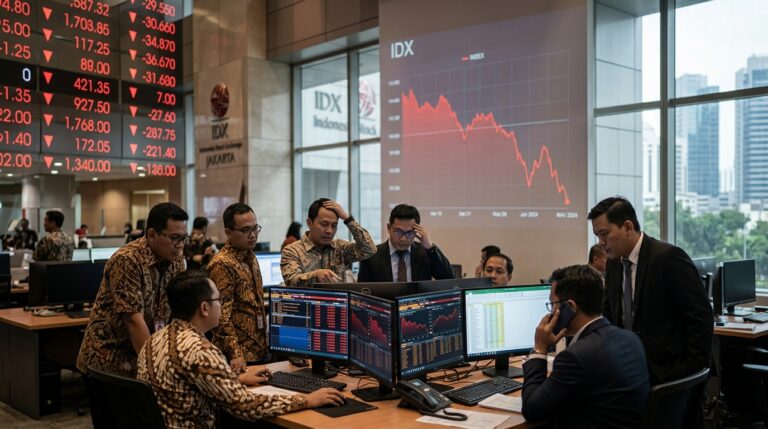
Consider what’s happening at Gartner. For decades it sat at the center of America’s knowledge economy, staffed heavily from top-tier institutions.
It should be among the country’s most durable firms…
And yet, over the past year, it has declined more than 60%.
That data point is why Tilson argues it is now worth reviewing your current allocations — because the next phase of this realignment may move quickly.
He’s agreed to detail exactly where his team sees defensible positioning today — through a new research vehicle his team spent years developing in preparation for this environment.
Regards,
Matt Weinschenk
Publisher and Director of Research, Stansberry Research
P.S. Gartner isn’t the only knowledge-economy firm showing stress fractures. The same pressure is visible across consulting, insurance analytics, and enterprise software.
Morningstar. Duolingo. Verisk. Accenture. Each has seen significant drawdowns. Duolingo has pulled back as much as 75% over the past year.
These aren’t isolated data points. They share a common cause — and understanding that cause is what this briefing is built around.
Diesel at $5.85 Is Breaking Supply Chain Budgets
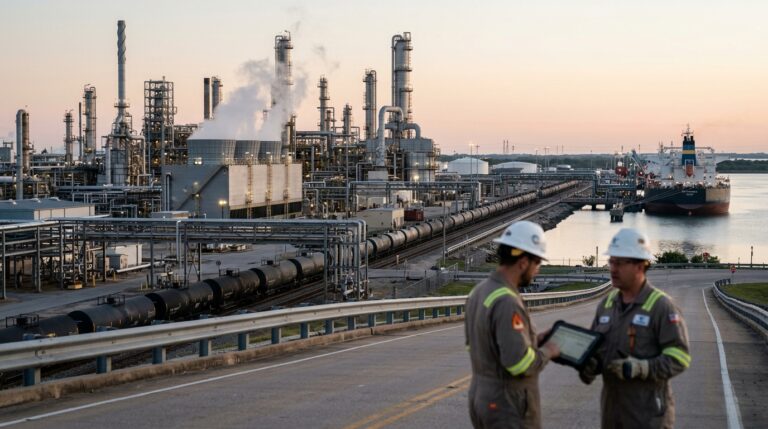
The national average price for diesel reached $5.85 a gallon on Friday, September 4, according to AAA, surpassing the previous all-time record of about $5.82 set in June 2022. The move is not inflation-adjusted nostalgia. It is a nominal record, driven by a six-month war with Iran that has strained fuel flows and raised costs across the diesel supply chain.
- National diesel average: $5.85/gal as of September 4, topping the June 2022 record of about $5.82
- U.S. distillate stocks: about 104 million barrels as of the week ending August 28; East Coast (PADD 1) inventories are under pressure
- Refining sector: Marathon Petroleum, Valero, and Phillips 66 posted $12.6 billion of combined Q2 2026 net income
- Freight names absorbing the bill: JBHT reported Q2 diluted EPS of $1.91, up 45% from $1.31 a year ago, with fuel surcharge mechanisms a roughly 100-basis-point headwind to operating margin in Dedicated Contract Services
- Union Pacific: fuel expense rose 63% year over year in Q2 on a 60% increase in average fuel price per gallon (to $3.86 from $2.42), while fuel surcharge was a key contributor to revenue growth
- Union Pacific intermodal fuel surcharge: 47.25% effective the week of August 17, 2026 (with higher levels in later weeks)
Market Context
Diesel soared to a national average of $5.85 a gallon as the six-month war with Iran disrupts the world’s flow of fuel. The price is up sharply from late February, when diesel was around the mid-$3 range nationally. Brent crude is not the whole story here. The story is in the conversion premium and the way product tightness is feeding through to diesel.
The U.S. diesel crack spread has been the pressure point, reflecting how much the market is paying for distillate relative to crude. Under normal conditions, with balanced supply and adequate inventories, diesel crack spreads tend to sit far below the extremes implied by triple-digit pricing in the conversion premium. In this environment, that premium has been the signal traders have had to respect.
According to the EIA’s Weekly Petroleum Status Report, U.S. distillate inventories were about 104.2 million barrels for the week ending August 28, 2026, after several weeks of tight levels. Refinery utilization has been running in the high 90s. The timing is unfavorable: late summer and fall is harvest season, when diesel demand rises, and it is also the window when the system tries to build inventory ahead of winter heating demand.
Sector Breakdown: Refiners Win, Freight Absorbs
U.S. refining margins helped Marathon Petroleum, Valero, and Phillips 66 post $12.6 billion in combined net income during the second quarter of 2026 (about $5.1 billion for MPC, $3.7 billion for Valero, and $3.8 billion for Phillips 66). These results reflect how tighter product markets can convert directly into earnings power for downstream operators when distillates lead.
HF Sinclair (DINO) delivered equally sharp results. Adjusted net income for Q2 came in at $960 million, or $5.31 per diluted share, compared to $322 million in Q2 2025. Adjusted refinery gross margin was $25.95 per produced barrel sold, a 57% increase from $16.50 in Q2 2025. These are not flukes of a single quarter. They reflect a bottleneck that directly converts tighter product markets into margin per barrel.
The freight side of the ledger tells the opposite story. JBHT flagged that fuel surcharge mechanisms represented approximately 100 basis points of headwind to operating margin percentage in the second quarter in Dedicated Contract Services. The company still beat year-ago EPS comparisons. J.B. Hunt reported Q2 diluted EPS of $1.91, up 45% from $1.31 a year ago, as pricing and demand dynamics helped offset part of the fuel pressure.
Union Pacific reported the same structural tension at a larger scale. In Q2, UNP said fuel price per gallon consumed rose 60% year over year, and fuel expense increased 63%, reflecting both price and activity. Fuel surcharge was a major contributor to operating revenue growth. There is generally a lag between fuel price moves and many surcharge mechanisms. With diesel elevated and surcharges resetting on published schedules, that lag can matter for how the freight complex digests the shock.
Technical Framework
XLE has trended decisively above its 50-day and 200-day moving averages throughout Q3. The refiner sub-group, MPC, VLO, PSX, sits extended: the S&P 500 Oil and Gas Refining and Marketing sub-industry group has jumped roughly 120% year-to-date and is well above intermediate-term trend measures as of late August. That extension argues for caution on fresh momentum entries without a consolidation. Key support levels to track: VLO near its prior breakout area around $280; MPC’s August swing low; PSX’s 50-day. Volume confirmation on any pullback toward those levels would define a higher-probability risk framework versus chasing the current extension.
For the freight names, JBHT, ODFL, UNP, watch how price responds if diesel pulls back even marginally from the record. Surcharge mechanisms mean these stocks can move quickly on fuel relief. JBHT’s 50-day has acted as consistent support in 2026; a break below could signal institutional trimming ahead of Q3 earnings.
Scenario Modeling
Bull Case
Geopolitical pressure holds or intensifies. East Coast distillate stocks fail to rebuild meaningfully before November, forcing regional spot diesel to premium. Crack spreads stay unusually elevated through Q4 as harvest demand and heating oil conversion accelerate simultaneously. VLO and MPC continue generating free cash flow well above consensus, driving further buyback acceleration. Price targets for VLO above $350 come into play.
Base Case
Diesel retail stays elevated, near $5.50 to $5.85, through October as the seasonal demand double, harvest plus heating build, absorbs any modest inventory recovery. Refiners sustain margins in the $25 to $35 per barrel range through Q3 but face some compression in Q4 as crude volatility introduces feedstock uncertainty. Freight names face continued fuel cost pressure but surcharge mechanics limit net margin damage. JBHT and UNP deliver in-line Q3 results.
Bear Case
A ceasefire or meaningful diplomatic de-escalation restores Gulf shipping reliability faster than the market expects. If crude normalizes and product spreads compress sharply, back toward $40 to $50/bbl, refiner stocks can reverse hard from historically extended levels. MPC and VLO have more than doubled; a 25 to 35% retracement would still leave them well above pre-war prices.
Active Trader Strategy Framework
The core tension here is duration. Refiners are producing exceptional margins today. Freight names are absorbing exceptional costs, partially offset by surcharge mechanisms. Neither condition is permanent. Extreme crack spreads have historically compressed once one of three things happens: incremental refining capacity returns, demand destruction sets in, or the geopolitical catalyst eases.
On the refiner side, traders watching MPC, VLO, and DINO should define their risk against the 50-day moving average rather than recent highs. Position sizing matters here, stocks extended 40%-plus above long-term moving averages carry asymmetric reversion risk. On the freight side, JBHT’s intermodal trends and UNP’s surcharge contribution suggest these names are managing the fuel shock better than headline cost figures imply. Volatility in diesel prices will remain elevated heading into harvest; traders should expect the same in related equity names.
The record at the pump is a signal, not a strategy. Preparation across multiple outcomes, using clearly defined levels rather than conviction bets on a single geopolitical resolution, remains the durable framework in an environment this binary.