September 9, 2026
Bonus Content: PepsiCo’s Growth Engine Has Moved Overseas. That Changes the Trade.
They Built a Lithium Winner. Now They’re Betting on Copper
Some resource stories are about the land. Some are about the timing. The best ones usually need both.
But there is another piece investors tend to watch closely: the team. And this team has a track record worth noticing.
The Chairman and CEO helped build Alpha Lithium from a $20 million market cap into a $313 million all-cash deal during the lithium boom.
Now they are turning to copper. Different metal. Different market. Different project. But the timing has a familiar feel.
Lithium had its moment when the EV boom forced investors to rethink future supply. Now AI, electrification, grid upgrades, and infrastructure are forcing a similar conversation around copper.
This copper company gives the team another shot at a major materials cycle, but this time with copper entering the spotlight. Copper has already shown a 41% year on year increase.
Past success does not guarantee a repeat.
But, when resource veterans with a prior $313 million exit step into a new metal at a moment like this, it is worth a closer look.
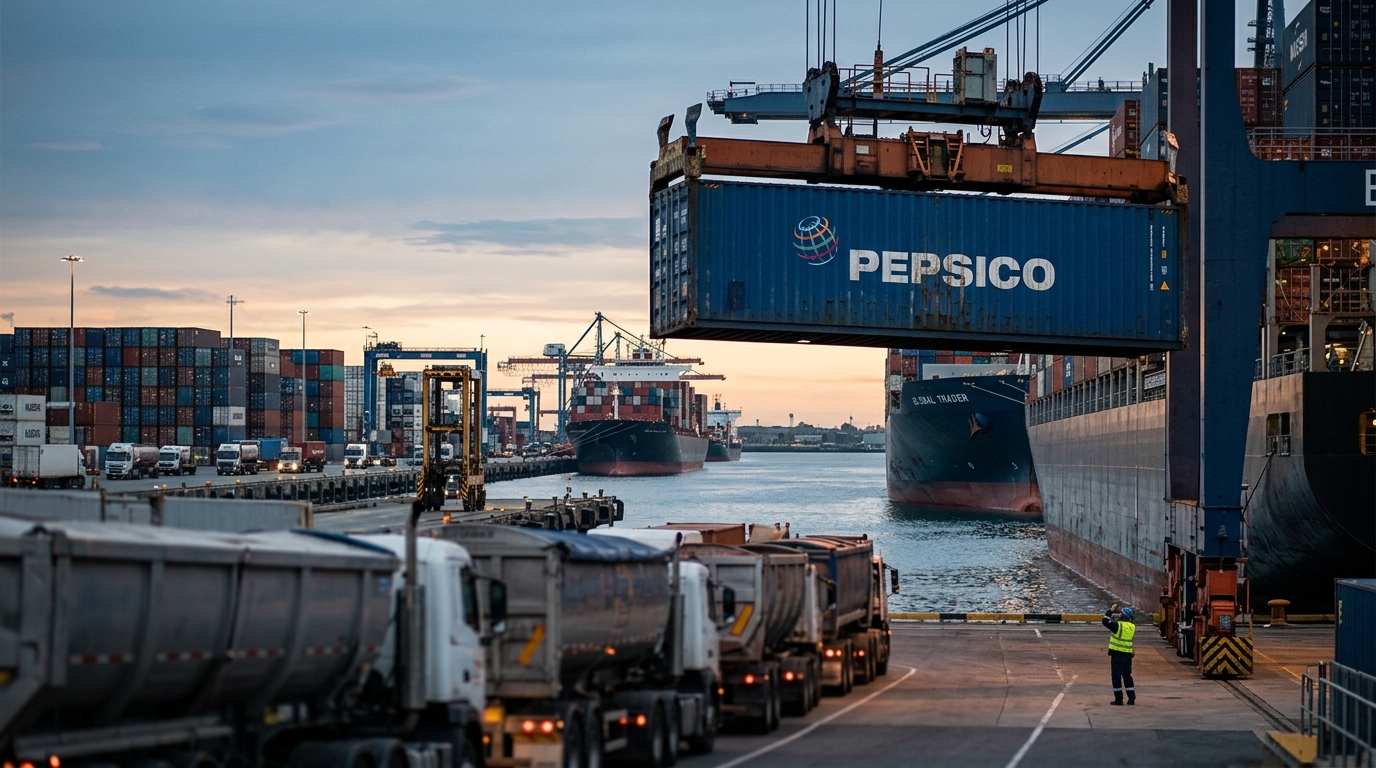
PepsiCo’s Growth Engine Has Moved Overseas. That Changes the Trade.
PepsiCo reported Q2 2026 net revenue of $24.18 billion, up 6.4% year over year, beating Wall Street’s $23.87 billion consensus. Core EPS came in at $2.20, roughly in line with estimates. Those headline figures, however, obscure a structural divergence that carries more weight for active traders than any single-quarter beat.
Two Companies Inside One Ticker
The domestic business is struggling. North American beverage volume dropped 4% in Q2, and North America organic revenue declined 0.5%. CEO Ramon Laguarta cited gas prices averaging $4.56 per gallon nationally around Memorial Day weekend, compressing consumer budgets and hitting convenience-store channel traffic particularly hard. That channel matters: it is one of PepsiCo’s highest-margin point-of-sale environments.
International is running an entirely different quarter. Organic revenue outside North America grew 7%, the 21st consecutive period of at least mid-single-digit international organic growth. Asia Pacific Foods expanded 9% organically, EMEA posted 6%, and the International Beverages Franchise advanced 9%. Management said international operations are on pace to cross $40 billion in revenue for full-year 2026. That milestone would make overseas business roughly 41% of trailing twelve-month revenue of $96.9 billion.
Where the Margin Story Lives
Gross margin reached 54.2% in Q2, and 54.7% for the first half. Operating profit surged 125% year over year in Q2, though the prior-year comparison was depressed by impairment charges. First-half free cash flow turned positive at $1.17 billion, against negative $342 million in the same period a year ago. That cash generation is funding accelerated North American advertising and marketing spending in the second half, which management flagged as a drag on near-term margins.
Frito-Lay North America continues to carry outsized weight inside the domestic portfolio, with the salty snack segment holding approximately 60% U.S. market share and operating margins above 28%. Brands including Doritos, Ruffles, and Siete delivered both volume and revenue growth in Q2. The U.S. salty-snack category has now grown for three consecutive quarters, which matters because it is the segment most exposed to GLP-1 drug adoption and private-label substitution.
Valuation and the Positioning Question
PEP trades at a forward price-to-earnings multiple of about 15.5x, below many large-cap packaged-food peers. Consensus earnings growth estimates stand at 5.3% for 2026 and 4.9% for 2027. Management reaffirmed full-year guidance of 2–4% organic revenue growth and 4–6% core constant-currency EPS growth, but guided toward the low end of the EPS range given ongoing North American softness.
The discount to peers reflects genuine risk: a majority of total revenue is still tied to North American consumers facing elevated fuel costs and tightening budgets. The opportunity in the multiple exists only if the international engine continues to offset domestic headwinds while the North American snack recovery holds.
Scenario Framework
Bull Case: North American beverage volumes stabilize in Q3 as gas prices retreat, advertising investments lift brand engagement, and international organic growth stays above 6%. PEP re-rates toward the sector’s 19x average, implying a target above $175.
Base Case: International sustains 5–7% organic growth; domestic volumes recover slowly in foods but beverages remain pressured through year-end. Full-year EPS lands at the low end of guidance. Shares trade in the $145–$158 range, reflecting a valuation discount the market is slow to close.
Bear Case: Gas prices remain elevated, convenience-store traffic deteriorates further, and GLP-1 adoption accelerates snack-volume declines beyond management’s assumed pace. EPS misses guidance and PEP retests the lower end of its 2026 range near $135.
Levels and Framework
The stock’s 15.5x forward multiple is the anchor. Traders should monitor Q3 North American beverage volume as the single most sensitive datapoint: a sequential improvement there removes the largest near-term overhang. Any deterioration in international organic growth below 5% would be the more decisive negative signal, given how much of the bull case rests on that engine. Position sizing should reflect the low-end EPS guidance risk that management has already telegraphed.
Preparation, not optimism, is what Q3 data rewards here.