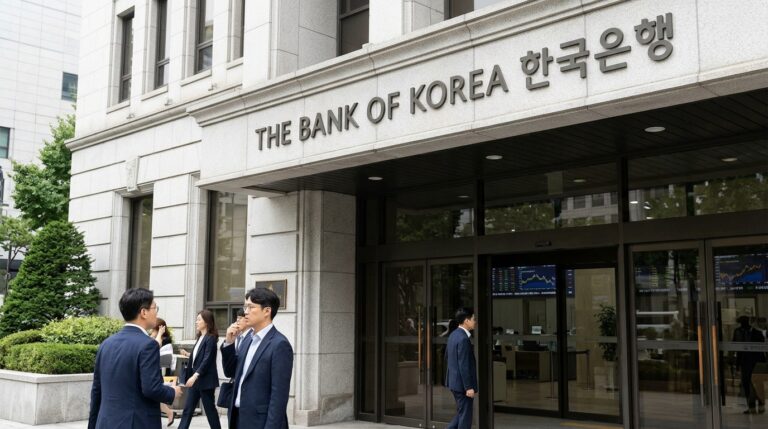

For years, the National Stock Exchange of India has been a paradox: the backbone of a country’s financial system, with a massive investor footprint, and yet unavailable to buy on a public market. That could change later this month.
Reuters reported on September 9, citing a person familiar with the matter, that NSE may price its IPO at ₹1,700 to ₹1,785 per share, implying a top-end valuation of about ₹4.4 trillion, or $46.41 billion. Reuters added that the exchange has been targeting a listing in the week starting September 21, but NSE had not publicly confirmed a final calendar in that report. The offer is structured entirely as an offer-for-sale, meaning existing shareholders would sell part of their holdings and the exchange itself receives no proceeds. One early signal on demand: ahead of the official IPO, NSE unlisted shares have recently traded around the ₹2,000 level, above the reported band.
The Toll Road Argument
Exchange businesses attract long-term investors for a simple reason: they collect fees on activity they do not themselves originate. Every futures contract, every equity trade, every index licensing agreement generates revenue whether markets are rising or falling. NSE’s version of this model is formidable by any global measure.
NSE holds roughly 93% market share in the cash equity market by turnover, approximately 99.8% in equity futures, and around 74.7% in equity options by premium turnover. It also ranks among the world’s busiest venues by trade count, and it has been the world’s largest derivatives exchange by contracts traded.
The investor base underpinning all this activity keeps widening. NSE has said its total client codes (accounts) were about 25.7 crore as of April 2026, while its registered unique investor base crossed 13 crore. More accounts, more trades, more fee revenue: the structural direction is clear.
The financial profile reflects that dominance. NSE has historically produced margins above 50% and has reported return on equity around the low-30% range. Compared to Western peers, CME Group trades around a $99 billion market cap and about 23 times earnings, a premium that reflects its near-monopoly on U.S. Treasury futures. NSE at $46 billion arrives at a meaningfully lower absolute size for a business with arguably stronger domestic market share and a faster-growing addressable pool of participants.
The Regulation Risk Is Real
The case against enthusiasm is not abstract. By FY26, options transaction charges alone contributed roughly 60% of NSE’s revenue from operations, meaning the whole company is heavily exposed to derivatives volumes. SEBI has been tightening those very markets since late 2024: true-to-label charges, fewer weekly expiries, larger lot sizes, and other measures aimed at investor protection and market stability. NSE and market participants have linked these changes to pressure on trading activity and financial results around that period.
SEBI’s own study found that over 91% of individual F&O traders lost money in FY25, with aggregate net losses of ₹1,05,603 crore, and unique F&O traders falling about 20% year on year in the study period. That is not a comfortable backdrop for a business whose largest profit pool depends on retail participation in exactly those products. Continued regulatory pressure is not a tail risk. It is an active policy trajectory.
BSE, the smaller rival, complicates the picture further. BSE reported FY26 net profit growth of about 88% year on year, helped by gains in its Sensex weekly-options franchise, while NSE, the larger incumbent, has faced more direct revenue sensitivity to the same F&O guardrails.
The Long-Term Verdict
Strip away the noise and NSE is a toll-collecting infrastructure business sitting at the intersection of India’s two most powerful secular trends: rising household wealth and deepening capital market participation. Average monthly SIP inflows have risen sharply over the past decade, reaching roughly the ₹30,000-crore range by FY26. Nifty-linked passive funds accounted for ₹8.14 trillion, or 72.53% of India’s passive fund assets as of March 31, 2026. Both of those flows run through NSE’s plumbing, regardless of which stocks individual investors choose.
The question at $46 billion is whether the price already reflects a decade of that growth, or whether it leaves enough room for the business to compound through the next phase of India’s financial deepening. At margins above 50% and a dominant competitive position, the quality is not in question. The earnings pressure and the regulatory ceiling on derivatives are. Investors who understand that the IPO transfers risk from selling shareholders to new ones, and who price that honestly, will make a more durable decision than those simply buying the biggest listing India has ever done.