
September 21, 2026
Bonus Content: FCX Is Coiling Below $72. Watch These Levels.
Dear Fellow Investor,
Mark this date:
On September 30th, 2026…
The biggest scam in the history of gold markets will be exposed…
It’s the math that keeps bankers up at night…
The gold chart that has Wall Street shaking in its loafers…
That’s the day the public will see that their gold ETFs are nothing but paper…
The rush from ETFs to real assets will be unlike anything we’ve seen in 300 years.
One stock on the receiving end of this epic transfer, is set to explode 1,000% as ETF holders could get wiped out.
This isn’t a hunch – it’s math.
See all the evidence for yourself right here and take your position before it’s too late.
“The Buck Stops Here,”
Dylan Jovine, CEO & Founder
Behind the Markets
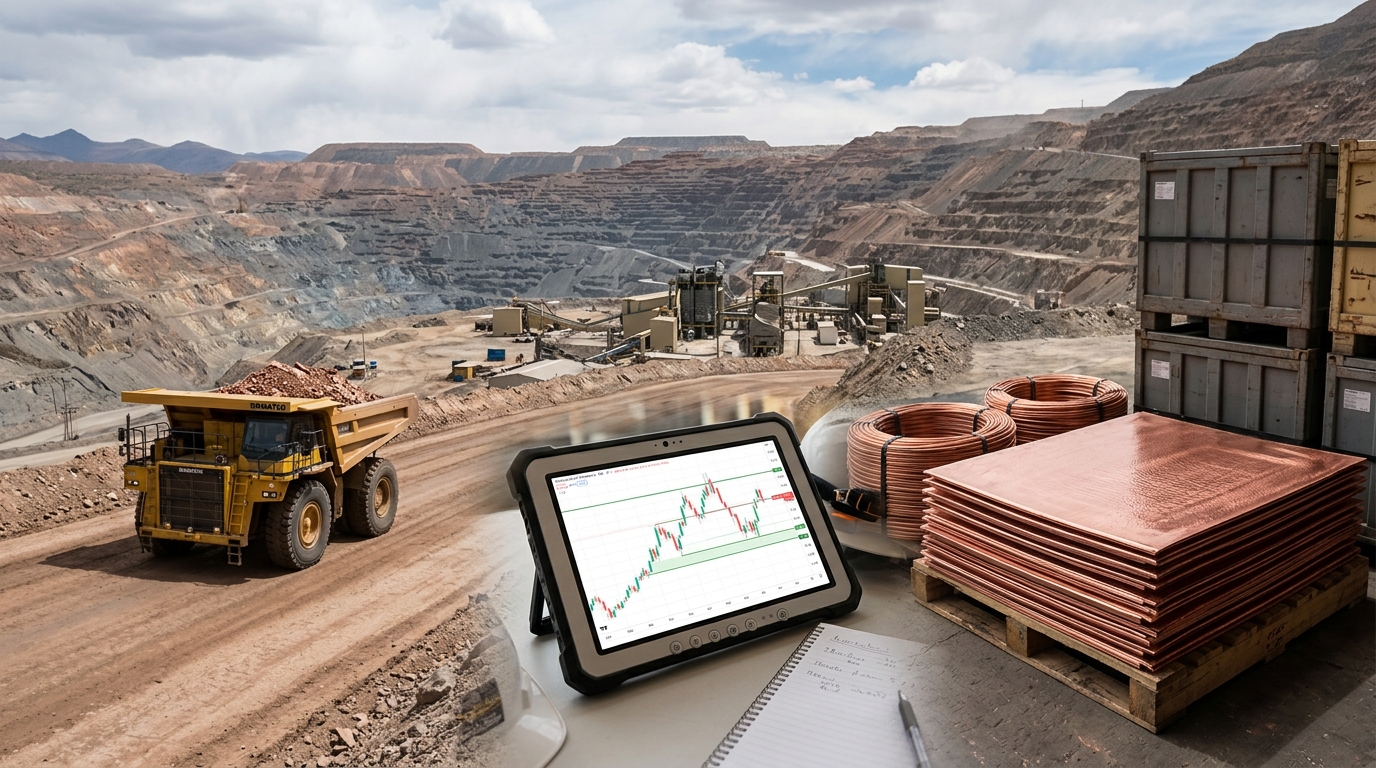
FCX Is Coiling Below $72. Watch These Levels.
Policy indecision has a cost. After Reuters reported September 9 that the White House had yet to finalize its position on refined copper tariffs, FCX dropped about 6.6% in a single session, closing at $71.21. The stock recovered modestly to close Friday at $71.54, still 10% below its August 25 peak of $79.91. Yet copper itself sits at $6.65 a pound today, up roughly 45% year over year, with LME futures hitting an all-time high near $14,697 a tonne on September 8. That dislocation between metal price and equity price is the central tension every FCX trader is working through right now.
Market Context: Metal Flying, Stock Grounded
The macro setup is unambiguous on copper’s fundamental case. China’s Yangshan copper premium climbed to $121 a tonne, its highest reading since November 2022, confirming genuine physical demand pull rather than financial speculation alone. Spot treatment and refining charges have compressed toward zero or negative in 2026, a textbook signal that mine-level concentrate supply cannot satisfy global smelting capacity. Data centers, EV grid buildout, and renewable infrastructure are competing for the same shrinking pool of deliverable metal.
On the macro side, the Federal Reserve delivered a 25-basis-point rate hike on September 16, lifting the target range to 3.75% to 4.00%. Copper climbed anyway, recovering from its post-Reuters lows to extend gains four consecutive sessions into this week. The growth-sensitive metals complex is absorbing tighter monetary conditions because the supply-demand imbalance is structural, not cyclical.
The Tariff Overhang: Asymmetric for FCX
The Section 232 tariff that took effect August 1, 2025 targeted semi-finished copper products and intensive copper derivative products but carved out refined cathodes and concentrates. In the 2025 proclamation, the administration directed the Commerce Secretary to provide a market update by June 30, 2026 so the President could determine whether a phased refined copper tariff of 15% beginning January 1, 2027, rising to 30% on January 1, 2028, is warranted. That decision remains open.
Inside the administration, officials remain split between the inflationary risk of taxing a critical manufacturing input and the industrial-policy rationale for reshoring smelting capacity. Neither camp has prevailed. What the standoff has done, as Reuters noted, is keep buyers front-running domestic supply and squeezing global inventory, which supports price regardless of the final tariff outcome.
Freeport’s structural position in this scenario is worth stating plainly. The company provides approximately 70% of total U.S. refined copper production. If cathode tariffs land, FCX is not competing against cheaper imports. It is the domestic supply. That asymmetry is why Goldman Sachs characterized the tariff uncertainty as creating an opportunity in FCX as recently as September 10.
The Financials: Operating Leverage Is Already Showing
Q2 2026 results, reported July 23, provided the clearest read on that leverage. Adjusted EPS came in at $0.74. Net income attributable to common shareholders rose to $984 million from $772 million a year earlier. Unit net cash costs averaged $1.97 per pound in Q2, with full-year guidance set at $1.90. Against the Q2 average realized copper price of $6.17 per pound, that is a gross spread of roughly $4.20. At today’s $6.65 spot, that spread widens to approximately $4.68 before Q3 numbers hit.
Management’s own EBITDA sensitivity model is equally direct: 2027-2028 annual EBITDA reaches $20 billion at $7 copper, versus $13 billion at $5. The metal is currently sitting between those benchmarks and trending higher. Each $0.10 per pound move in copper translates to roughly $390 million of annual EBITDA, per the company’s sensitivity framework.
Grasberg Block Cave production rates doubled from 34,000 tonnes per day in April to 69,000 tonnes in June 2026, recovering from the September 2025 mud rush incident. Management projects second-half 2026 copper sales running more than 20% above the first half.
Risks That Require Monitoring
The tariff may never arrive on refined metal. The Bagdad expansion is now estimated around 30% above prior cost projections. Indonesian regulatory approvals for Grasberg’s extended operating rights remain pending. And a Fed that signaled additional hikes could remain possible is a headwind for growth-sensitive metals if demand softens faster than supply contracts.
Technical and Scenario Framework
FCX closed Friday at $71.54, with the 10-day recovery off the post-Reuters low still intact. The August 25 high of $79.91 represents the nearest technical resistance and aligns with Bank of America’s $80 price target. The $47-to-$77 analyst target range, per aggregated estimates, leaves the stock near the upper-middle of fair value. Near-term support clusters around the September 9 closing low of $71.21 and the psychological $70 level below it.
- Bull case: Tariff decision on refined cathode advances toward the January 2027 timeline; Grasberg second-half volume step-up materializes; copper holds above $6.50. FCX tests the $79-$80 resistance zone.
- Base case: Tariff outcome remains unresolved through year-end; copper trades in the $6.20-$6.80 range; FCX consolidates between $68 and $76 as Q3 earnings confirm operating leverage.
- Bear case: Administration abandons refined copper tariff explicitly; macro demand signals deteriorate; copper pulls back toward $5.50. FCX retests the $60-$62 zone, where year-to-date gains shrink substantially.
Active Trader Considerations
The Q3 earnings release will be the next hard catalyst. Management’s 20%-plus second-half volume guidance, combined with a realized copper price tracking well above the Q2 average of $6.17, sets up for a material earnings beat if costs hold near the $1.90 per pound full-year target. Options markets have shown mixed sentiment in recent sessions, per Cboe data, reflecting the genuine two-way risk around the tariff headline. Traders sizing positions in FCX ahead of earnings should frame risk relative to the $71.21 September lows and calibrate for the possibility that tariff news can move the stock 6-8% in a single session, as it already has twice this quarter.
Copper’s structural bid is real. The policy timeline is uncertain. The gap between where the metal trades and where FCX sits relative to its August high is the trade the market is still pricing. Disciplined traders define the levels first, then let the catalyst confirm the direction.