September 24, 2026
Bonus Content: Burry Added to Chip Shorts. Micron Reports September 30.

Secure Your Place in Trump’s Economic Comeback
Trump says “America is Building Wealth Again”, but you must protect yours first.
President Trump recently declared:
“We will make America wealthy again. We’re right on our way to doing that.”
The U.S. Department of the Treasury seems to agree,
“The economy under the Trump Administration is strong”
That is an optimistic outlook for America.
Markets still fluctuate.
Companies still miss expectations.
Rising debt is becoming insurmountable for millions.
And a major loss in your 401(k)/IRA when you’re so close to retirement can be much harder to recover from than one suffered at age 40.
So it’s important to remember…
National prosperity and personal wealth preservation exist as neighbors, not family.
Physical gold provides wealth protection that stocks and bonds cannot replicate. Gold acts as a safe haven for wealth, where its value does not depend on market momentum, corporate earnings, or consumer spending.
While President Trump paves a way for America’s resurgence, remember that prosperity isn’t promised.
Download our 2026 Wealth Preservation Guide Now!
Inside you’ll learn the legal IRS loophole to legally transfer your vulnerable retirement savings account into physical gold and silver, without taxes or additional penalties.
>>Get Your Free 2026 WEALTH PRESERVATION GUIDE<<

| GET THE FREE GUIDE |
Burry Added to Chip Shorts. Micron Reports September 30.
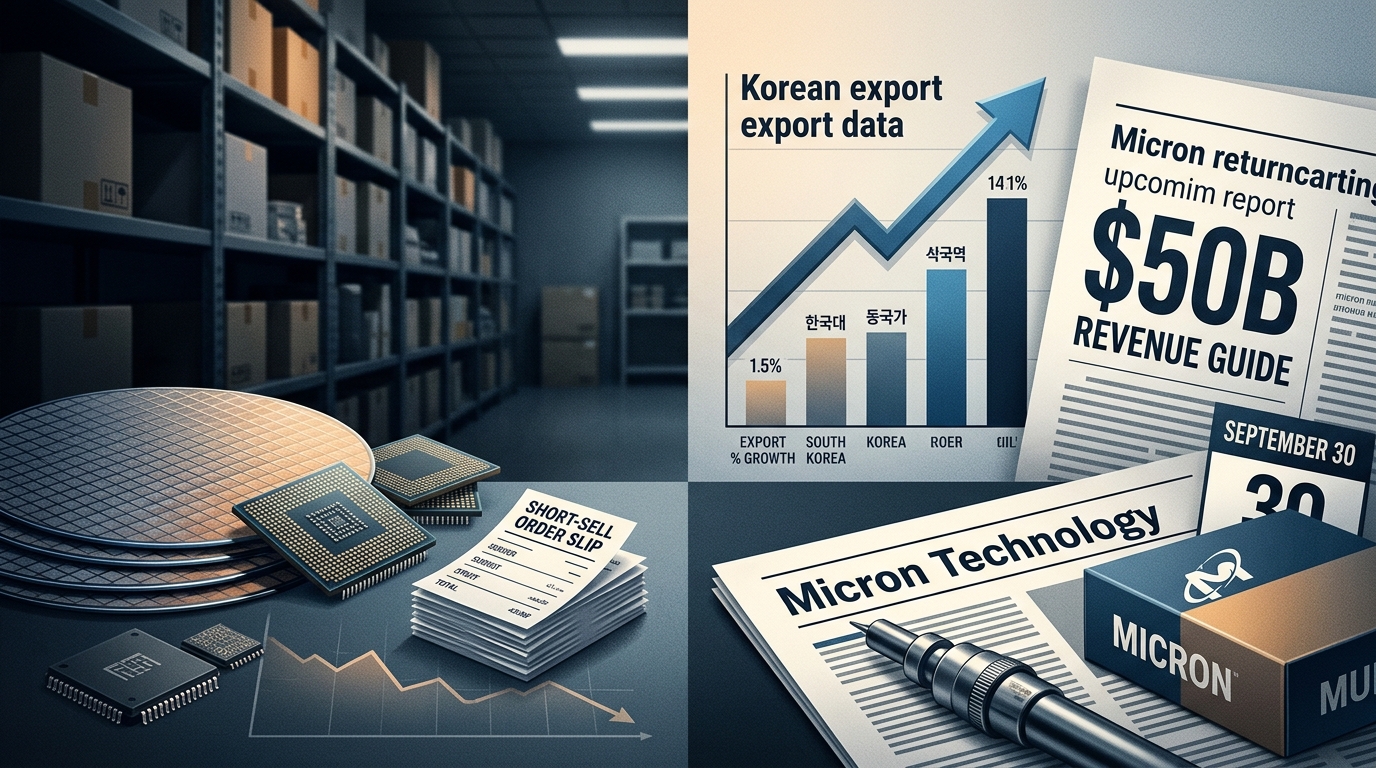
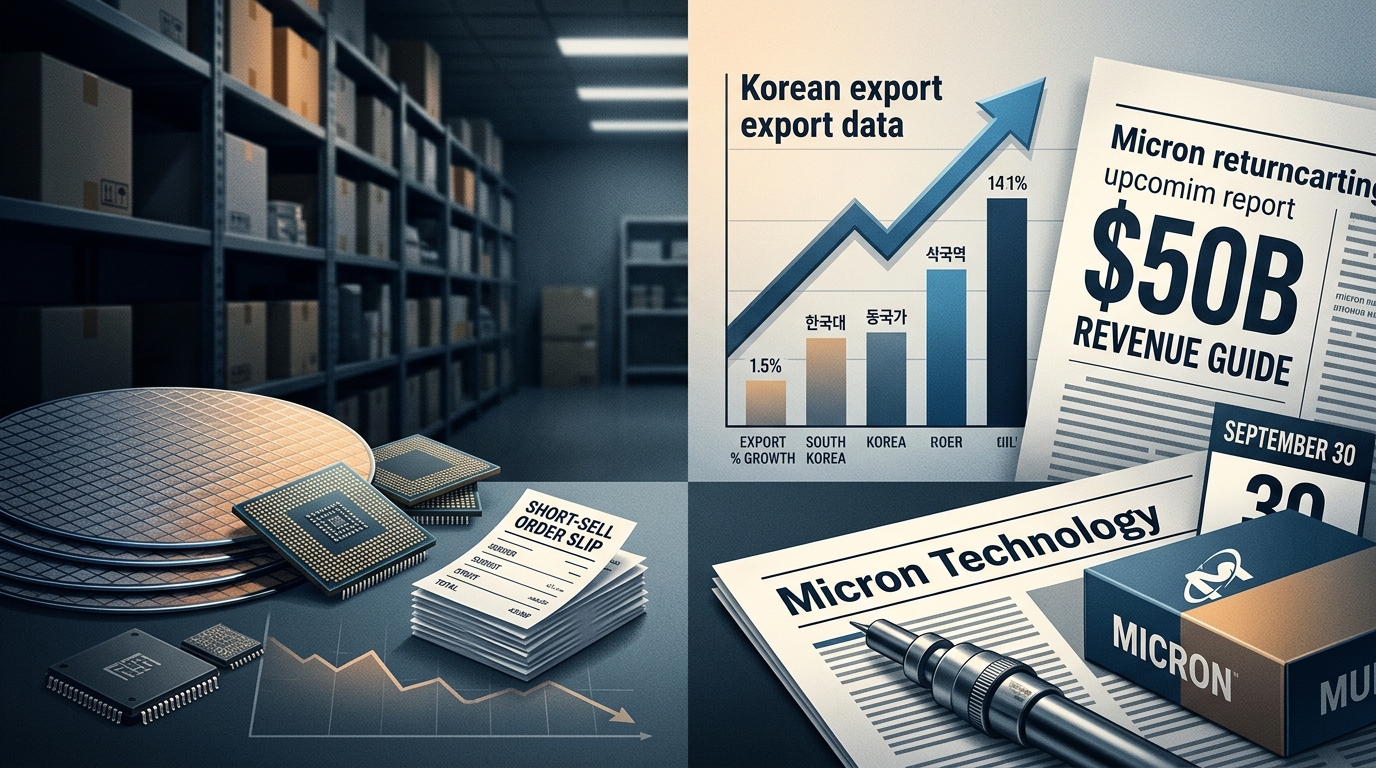
Michael Burry does not move quietly. On Tuesday, September 22, he wrote on Substack that he had increased bearish positions tied to Micron Technology (MU), Nebius Group (NBIS), the iShares Semiconductor ETF (SOXX), and Palantir Technologies (PLTR), writing that “I did this in some size.” He simultaneously added to long positions in five consumer and retail names, including Sprouts Farmers Market, Birkenstock, and MercadoLibre. That is not a defensive repositioning. It is a directional rotation bet: short AI infrastructure, long the consumer recovery he thinks the market is ignoring.
The Thesis and Its Friction
Burry’s core argument is that the structural shortage of memory chips underpinning today’s AI build-out is temporary. “Over the next two years this shortage will blow off as production catches up, and memory will have a down cycle again,” he wrote. He points specifically to Chinese manufacturers. ChangXin Memory Technologies and Yangtze Memory Technologies are both expanding production, adding supply to a market currently constrained by the AI boom.
The friction: Korea just delivered data that cuts in the opposite direction. Reported South Korean trade data showed semiconductor exports of about $34.13 billion in the first 20 days of September, up about 259% year-over-year, with total exports for the period reported at $71.4 billion and semiconductors taking a record share. Demand, at least as measured by what is actually shipping, is still accelerating. Burry’s thesis is about what happens in 2027 and beyond. The market is pricing what is happening right now.
What Micron Has to Clear
Micron reports fiscal Q4 results on September 30, after the close, with its earnings call scheduled for 4:30 p.m. ET. Micron’s June guidance called for $50.0 billion (plus or minus $1.0 billion) in revenue and $31.00 (plus or minus $1.00) in non-GAAP EPS. Some widely circulated third-party consensus estimates and options-implied moves have been volatile into the event, so traders should treat point estimates as ranges and confirm current pricing directly in their own terminals.
MU did not close Wednesday at $1,096. The stock finished Wednesday, September 23 at roughly $1,072, depending on the data source and timestamp conventions. That is still a price level that makes positioning sensitive to even small changes in forward margin language and supply commentary.
That valuation compression is precisely what makes this trade complicated for bears. Burry’s thesis centers on the belief that the current memory shortage is driven by capacity reallocation toward High Bandwidth Memory rather than structural demand, and that as manufacturers resume standard DRAM production, supply normalization will pressure margins. It is broadly reported that Micron’s HBM output is sold out through calendar 2026, and that a significant portion of 2027 supply is already being committed early across the industry. The question for September 30 is how much of that visibility is contractual volume at firm pricing, and how much is still contingent on customer digestion and end-demand.
The Rotation’s Other Legs
Palantir and Nebius are different exposures with different logic. Palantir’s latest reported quarter showed very strong year-over-year revenue growth, but the exact valuation multiple investors are paying for that growth has been moving rapidly with the stock. Burry’s short here reads as a bet on multiple compression, not necessarily business deterioration.
Nebius is the higher-risk limb of the trade. There has been aggressive growth and heavy infrastructure spend associated with the GPU build-out, with widely circulated Q2 2026 figures pointing to triple-digit-plus growth alongside multi-billion-dollar capital outlays. Those specific numbers vary by source and summary, and traders should anchor on the company’s own filings and shareholder materials. The core point remains: a business burning that level of capital to capture a GPU infrastructure boom is exactly the kind of name that can reset hard if sentiment on AI spending shifts.
Scenario Framework
Bull Case: Micron reports September 30 revenue above the top end of its June guide, guides fiscal 2027 with confidence, and HBM pricing remains firm. MU reclaims $1,200 and SOXX holds above its 50-day moving average. Burry’s shorts face accelerating losses heading into year-end.
Base Case: Micron lands near the midpoint of its June ranges, management language around 2027 DRAM pricing is cautious, and the stock reacts mildly, remaining range-bound between $1,000 and $1,150. SOXX consolidates. Burry’s position becomes a 2027 story, not a September catalyst.
Bear Case: Micron guides Q1 fiscal 2027 below prevailing expectations, citing standard DRAM softness or customer inventory builds. MU breaks below $950, SOXX drops 5% to 8%, and Burry’s supply-glut thesis gains credibility earlier than the market is positioned for.
What Traders Should Monitor
Six trading days is a short window. The key level on MU is $1,030, the lower bound of this week’s intraday range. A break there before earnings would signal institutional distribution, not just Burry-driven volatility. On SOXX, watch the spread between it and QQQ: if semis continue to underperform on down tape days, that is information about positioning and risk appetite, not just beta.
Burry has been early before, sometimes by years. The memory cycle he is describing may be real. But the September 30 release will tell traders whether the next leg is his or the bulls’. Position sizing and defined risk levels matter more than conviction this close to the report.