Hey there, bargain hunter. Everyone is watching the permit. Almost nobody is reading the engineering contract behind it.
Scoreboard
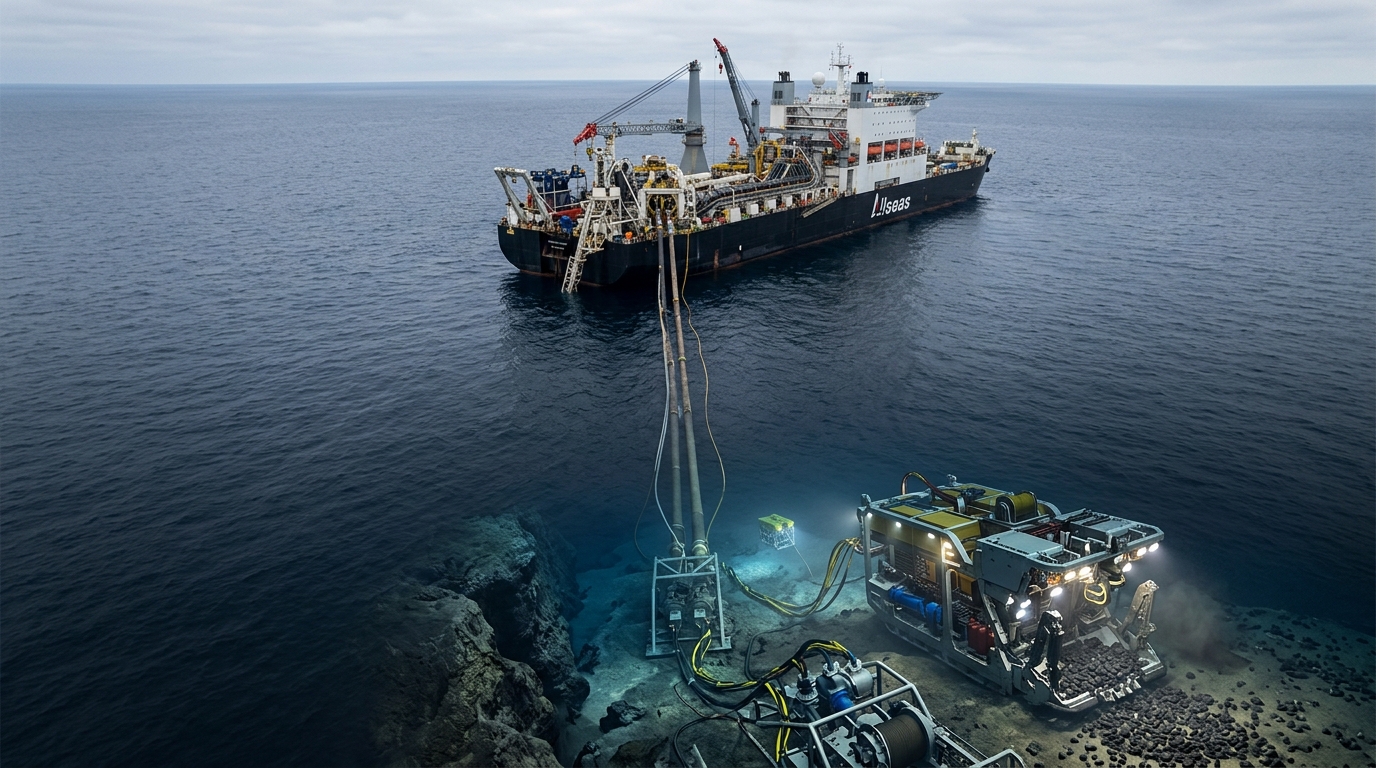
On May 11, 2026, The Metals Company signed a Contract for Development Work and Commercial Production with Allseas, a global leader in offshore pipeline installation, heavy lift, and subsea construction, for the development, commissioning, and operation of the first commercial polymetallic nodule collection system. The commercial system targets a nameplate production capacity of 3.0 million wet tonnes of nodules per annum, with commissioning targeted to begin in Q4 2027, subject to regulatory approvals. TMC’s stock was down 37% year to date as of July 7, 2026, closing near $4.24.
What Actually Happened
TMC’s consolidated application covers a commercial recovery area of roughly 65,000 km2, with an estimated resource of 619 million tonnes of wet nodules. NOAA confirmed the application met the information requirements under its review process on April 28, 2026. That sounds like a green light. It is not one yet.
TMC has said it expects the permitting process to conclude before the end of Q1 2027. In other words, the company signed a commercial production contract before it has a commercial permit. Commissioning in Q4 2027 requires a permit by Q1 2027. That is a tight window with no buffer built in for regulatory slippage.
The Real Reason This Matters
The seabed is not the bottleneck. The engineering bill is. Under the Allseas agreement, TMC is required to reimburse 50% of eligible development work costs as they are incurred, with the remaining 50% deferred and repaid based on future production volumes. That deferred liability only converts to value if the riser actually lifts nodules at commercial scale, something no one has done before.
No commercial-scale system exists yet, although TMC successfully tested a pilot system in 2022, lifting more than 3,000 wet tonnes of nodules to the surface. That amount was only a fraction of the 3.0 million wet tonnes per year nameplate capacity being targeted for the commercial system. The gap between a prototype test and 3 million tonnes per year is enormous.
Is It Cheap?
One widely circulated valuation write-up pegs fair value at $11.20, versus a recent close near $4.24. That gap is real only if the NPV assumptions hold: fast scaling revenues, a swing from heavy losses to meaningful earnings, and a production timeline that does not slip past 2028. Bulls view Allseas doubling down on TMC as a vote of confidence, while bears point to zero revenue and ongoing losses. Both are right. The question is which one prices the stock today.
Bull / Base / Bear
- Bull: NOAA permit lands in Q1 2027, commissioning starts on schedule, cobalt and manganese prices firm as Chinese land supply tightens. TMC approaches $8 to $10.
- Base: Permit delayed to mid-2027, commissioning slips to 2028, cash burn forces another equity raise. Stock stays range-bound between $3 and $6.
- Bear: Permit denied or materially conditioned. TMC expects to incur significant expenses and operating losses for the foreseeable future. At zero revenue, the credit facility becomes the only lifeline.
Cheap Investor Scorecard
- NOAA commercial permit: expected Q1 2027. Watch the actual date.
- Production target: 3 million wet tonnes per year. Current proof: 3,000 tonnes in a single test.
- Cost structure: 50% of Allseas development costs payable in cash upfront before one tonne ships commercially.
- Policy tailwind: Reuters reported on August 7, 2026 that the U.S. government said it would invest $3 billion in critical minerals and battery projects.
- Competing model: Impossible Metals’ Eureka III is designed to hover above the ocean floor and select nodules individually with robotic arms, a different risk profile but an even earlier commercial stage.
Bottom Line
If NOAA issues the permit on schedule and Allseas hits commissioning in late 2027, TMC at $4 is a deep discount to a resource with real strategic value. If either slips, the deferred cost structure converts from feature to trap. Buy only if you price the permit as probable, not certain, and size accordingly.