October 17, 2026
Bonus Content: United, Southwest, and American Report Next Week. Delta Already Told You What to Expect.
Ian Cooper here,
Alert!
If you still haven’t saved your copy of “The $50-to–$500 Options Strategy”…
… do it right now before the download link expires.
We’ll be moving this book behind a paywall in the near future so grab it now while you still can.
You’ll thank me.
FREE: The $50-to–$500 Options Strategy
To your success,
Ian Cooper
Tradewins
Reminder: Grab your copy of “The $50-to–$500 Options Strategy” before we move it behind a paywall.

United, Southwest, and American Report Next Week. Delta Already Told You What to Expect.
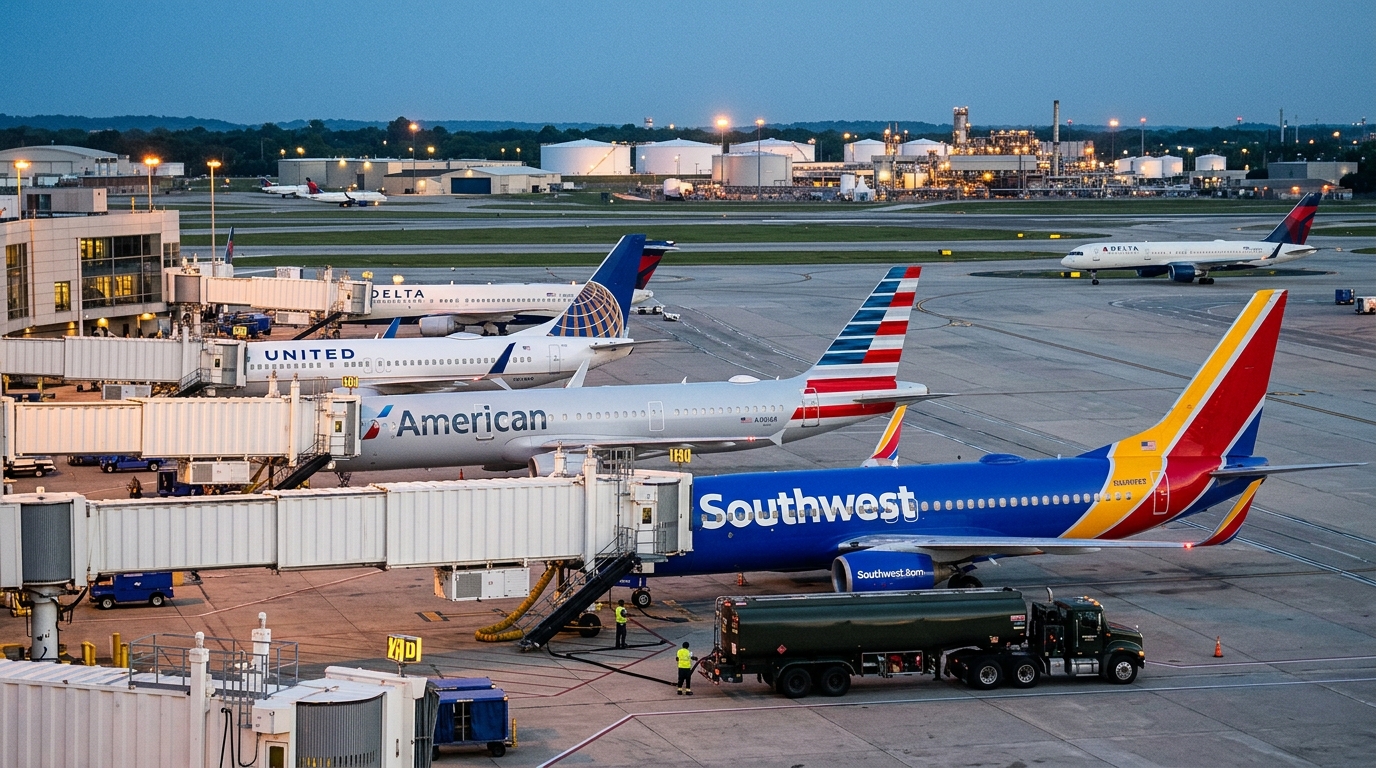
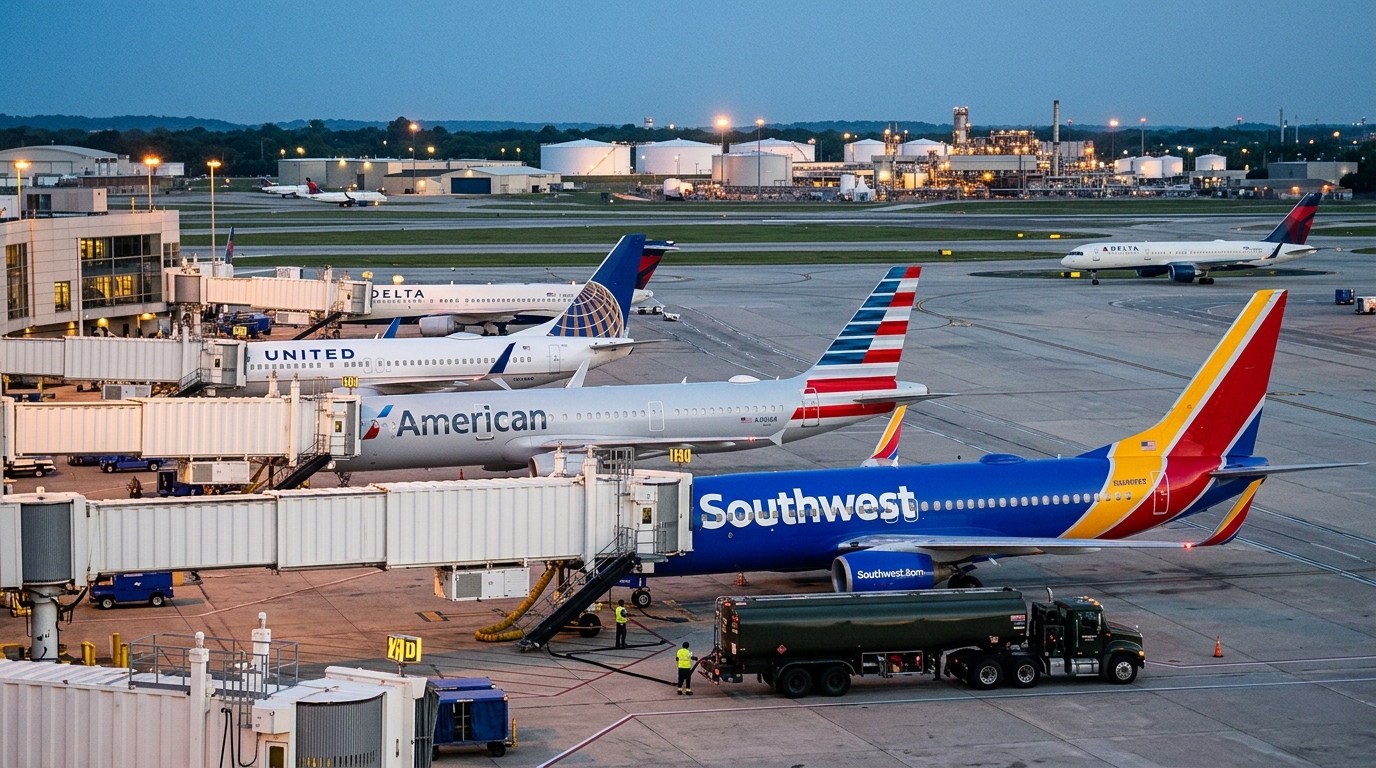
Delta Air Lines set the table on October 9. It cut its annual profit forecast by nearly a quarter, as surging fuel costs expected to add $6 billion to its bill in 2026 overwhelmed resilient travel demand and higher ticket prices. “All of it’s fuel,” Delta CFO Erik Snell told reporters, citing increases in both crude oil and refined jet fuel prices since the summer. Now United reports Tuesday after the close, Southwest follows Wednesday, and American opens Thursday morning. Traders have three days and a live fuel market to work with.
The Macro Environment
Brent rose to $109.69 per barrel on October 16, up 3.56% from the prior day, and is up about 79% compared to the same time last year. The distillate market is the sharper problem. The Gulf Coast ULSD crack versus WTI climbed to $104.45 per barrel in the week ending October 9, while the jet fuel crack reached $96.81 per barrel, both above their September averages. Refiners cannot close the gap: U.S. refineries running near maximum capacity have limited ability to adjust their refining mix toward diesel and jet fuel.
On the demand side, fares are still climbing. U.S. airline fares rose 22.4% in September from a year earlier, far exceeding the 3.7% increase in overall consumer prices. Fuel expenses now consume 31.4% of total airline operating expenditures, up six percentage points year over year, while collective global industry net profits are forecast to drop 49% from $45 billion to $23 billion.
The Three-Day Sequence
United Airlines (UAL) — Tuesday, October 20, after close. Wall Street expects earnings of about $2.6 per share on revenue of $17.89 billion for the quarter. United’s full-year earnings guidance stands at $9 to $11 per share. United carries no refinery offset. Every cent the crack spread stays above the forward curve it guided on in July is a direct earnings drag.
Southwest Airlines (LUV) — Wednesday, October 21, after close. Wall Street expects non-GAAP EPS of $0.57 and revenue of $8.24 billion, but earnings expectations have weakened, with 16 downward EPS revisions versus two upward revisions. With jet fuel now running above $4 per gallon in spot markets, the forward-curve-based assumptions from mid-summer look increasingly stale. With most U.S. carriers having abandoned fuel hedging strategies, the oil supply disruption has left them fully exposed to price spikes. Southwest is no exception, and its domestic-only model gives it no international premium traffic to cushion the blow.
American Airlines (AAL) — Thursday, October 22, before open. This is the most structurally impaired name in the sequence. American has guided to year-over-year revenue growth between 16% and 19%, but it also anticipates an adjusted loss ranging from $0.70 to $0.10 per share, with pressure from higher costs alongside higher fuel.
American’s structural disadvantage runs deeper than a single quarter’s guidance. American Airlines faces roughly $1 billion in added fourth-quarter fuel costs from a one-dollar-per-gallon increase since July, a bill its revenue mix is poorly positioned to absorb.
Scenario Modeling
Bull Case: UAL beats on Tuesday and confirms its $9 to $11 full-year EPS guidance is intact, citing capacity discipline and premium revenue strength. LUV follows with a top-line beat. AAL reports within guidance range and signals Q4 fuel hedging progress. Brent pulls back below $100 on any geopolitical de-escalation, compressing crack spreads. Sector rallies 8 to 12% across the three days.
Base Case: UAL’s EPS misses by 5 to 10 cents as fuel overruns offset strong revenue. LUV beats a reduced consensus but lowers full-year guidance. AAL posts a loss at the wide end of its range. The sector absorbs the results with limited net movement, range-bound between current levels and 5% lower, as demand resilience and fuel headwinds roughly cancel.
Bear Case: UAL cuts its full-year guidance below $9 per share and signals further capacity reductions. As Delta CEO Ed Bastian put it, “In a high-cost environment, you cannot grow your way out of it.” If Brent re-tests the $115 to $120 zone and crack spreads widen again, AAL risks a loss deeper than $0.70 per share. Sector sells off 12 to 18%; UAL tests its 200-day moving average, and AAL breaks to multi-month lows.
Active Trader Framework
The sequencing itself creates a positioning opportunity. UAL earnings Tuesday evening set the tone for LUV Wednesday and AAL Thursday morning. A UAL guide-down Tuesday night gives traders a window to position in LUV and AAL before those names open. Conversely, a UAL beat that lifts the group Tuesday night may compress the upside in the remaining two names by the time they report.
Watch UAL’s after-hours move as a directional signal for the sequence. Key technical levels to monitor: UAL’s 50-day moving average as near-term support, and the volume-weighted average price on the open Wednesday and Thursday for LUV and AAL respectively. Implied volatility across all three names is elevated ahead of the reports; premium sellers face event risk, while spreads offer defined-risk exposure to the sequence without requiring directional precision on each name individually.
The real variable is not demand. Demand is holding. The variable is whether fuel costs stabilize or take another leg higher. Until Brent and the distillate crack spreads move decisively lower, margin compression is the structural condition every one of these reports will reflect.