October 28, 2026
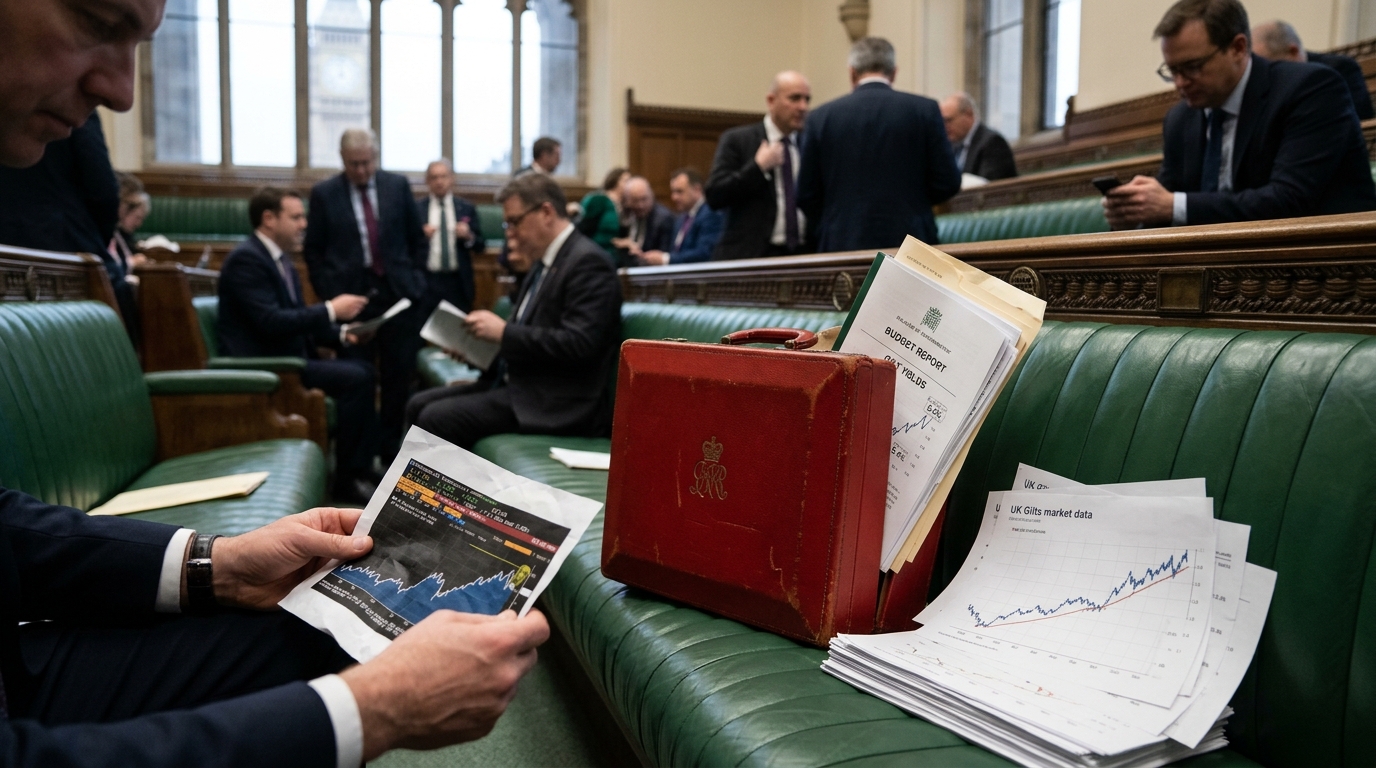
Bonus Content: UK Gilts Above 5.4% Into Healey’s Budget. Here Is the Real Trade.
Dear Reader,
On May 3rd, 2025, Warren Buffett looked at his shareholders for the last time and said:
“The dollar is going to hell.”
Six words. Sixty years defending the currency. He didn’t soften them.
Ray Dalio isn’t softening his either.
The founder of Bridgewater Associates, with $150 billion in assets under management, is calling it a “debt death spiral.”
*Source: International Business Times
Look at the math these two are staring at.
$40 trillion in debt. A trillion added every 60 days. A billion every 8 hours.
If the dollar falls, most people will get hurt badly.
But there’s a specific asset class and investment system built to thrive when the dollar collapses.
It’s called the ABN System.
It adapts the principles behind BlackRock’s own investing strategy so everyday investors can apply the same framework to protect themselves.
Over 4,500 of our members have already implemented it.
If you have $50k+ exposed to the dollar right now… including your 401(k), stocks, real estate, or savings… you need to pay attention.
Watch how to protect what Buffett and Dalio see coming →
To your freedom,
Tan Gera, CFA©
Decentralized Masters
P.S. JPMorgan warned we’ve crossed 120% debt-to-GDP. Greece collapsed at 130% and cut pensions 40% overnight. Watch the presentation now →
UK Gilts Above 5.4% Into Healey’s Budget. Here Is the Real Trade.
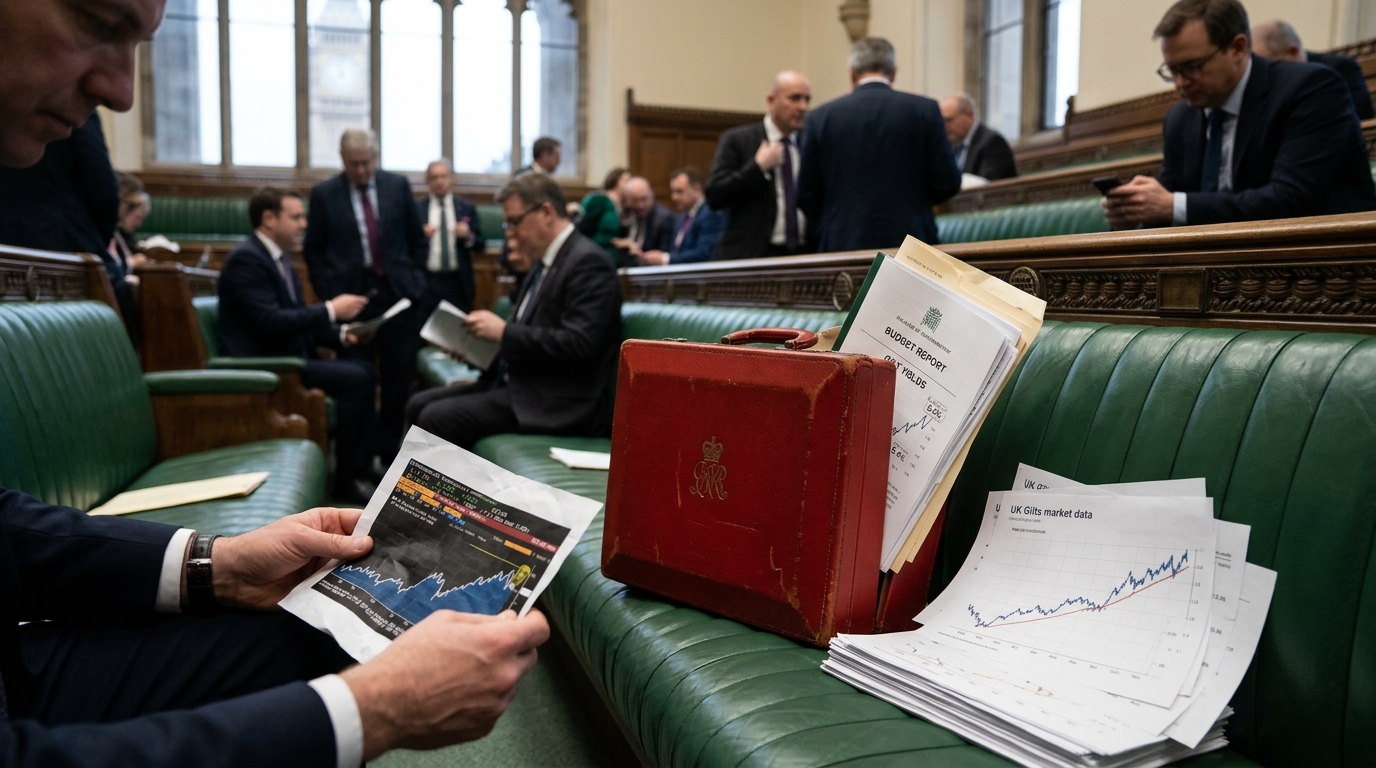
John Healey steps up to the dispatch box Wednesday with the gilt market already delivering its verdict in advance. The 10-year gilt yield sat near 5.43% ahead of the Budget, having touched 5.53% on October 8, its highest since July 2007. The 30-year reached a peak near 6.04% earlier this month, its highest level since January 1998. This is the arena Healey inherits. Active traders need to understand exactly what the market is testing and where the reaction function sits.
The Fiscal Constraint
The Chancellor starts from debt of 93.8% of GDP. That gap in yield assumptions alone is the mechanism that eroded headroom. Headroom against the fiscal target is estimated to have been halved since March, from about £23.6 billion to roughly £10-12 billion, and Reuters polling suggests economists expect it to be rebuilt toward roughly £15-16 billion at the Budget.
The level headroom could fall to without starting a significant gilt sell-off is uncertain. Analysts broadly expect a headroom outcome around the mid-teens, which is why small differences in OBR assumptions matter as much as the headline measures.
The Bank Surcharge: Where the Sector Trade Lives
Healey is expected to raise the sector-specific surcharge on banks’ profits to 8%, up from 3%, when he delivers his first Budget. The surcharge rate was cut from 8% to 3% from April 2023. Any revenue impact and any earnings hit will depend on how the Budget defines the base, allowances, and any transition mechanics.
The exposure is not uniform. HSBC and Barclays carry international income buffers that domestic-only franchises like Lloyds and NatWest do not.
Scenario Modeling
Bull Case: Healey delivers headroom at or above £16 billion, confirms the surcharge at 5% rather than 8%, and the OBR revises growth higher on stronger wage data. The 10-year gilt rallies toward 5.15-5.20%, sterling presses above 1.34 against the dollar, and the UK bank index recovers the ground lost since the October 16 sell-off. Lloyds and NatWest are the clearest beneficiaries of a smaller earnings hit.
Base Case: The Budget is designed to be quiet: breathing space for households, no big tax raid, hard choices pushed to the 2027 spending review. Headroom lands around £14-16 billion, the surcharge goes to 8%, and yields hold the 5.25-5.45% range on the 10-year. Sterling stays rangebound near 1.33. UK banks have stepped up lobbying against higher taxes, warning of the hit to growth and lending, but many investors have already priced in the risk. Post-Budget, Lloyds earnings on October 29 and NatWest on October 30 become the next rerating catalysts.
Bear Case: The main risk for gilt yields comes from the OBR forecast. A sub-£10 billion headroom reading, or Healey loosening fiscally now without matching tightening later, could lead to a more significant sell-off in the 10-year, which has already been reaching levels not seen since 2007. Under this path, the 30-year tests the early-October highs again, sterling weakens sharply through 1.31, and the FTSE 100 financials sub-index revisits October lows. Four years after the gilt market meltdown under former Prime Minister Truss, British government borrowing costs have been higher than peers in other major advanced economies.
Active Trader Strategy Framework
The asymmetry into Wednesday is negatively skewed. Traders positioning in UK bank equities should monitor the surcharge rate precisely: 8% is the hawkish end of current expectations, while anything at 5% or below represents a relative positive surprise for Lloyds and NatWest. HSBC and Barclays, with their lower UK-profit exposure, are lower-beta plays on the surcharge outcome.
On the rates side, the 10-year at 5.35-5.43% is already pricing a credibility premium. A confirmed headroom figure above £15 billion, paired with a realistic spending path, is the condition for a yield rally. Watch the 5.20% level as near-term support for bulls; a break above 5.55% on the 10-year reopens the October peak and reflects a loss-of-confidence reaction. GBP/USD 1.31 is the line that separates orderly repricing from disorderly outflow.
Conclusion
Healey’s Budget is not a surprise event: the market has been running the numbers for weeks. Amid a £10 billion fiscal hole created in part by the Iran crisis, he may defer thorny spending decisions to 2027. The gilt market’s verdict will arrive not in the headline tax measures but in the OBR’s headroom arithmetic and borrowing path. Disciplined traders watch those numbers first, the political framing second. Position sizing should reflect that the range of outcomes is still wider than consensus suggests.