
November 1, 2026
Bonus Content: The Bank of England Is Set to Raise Rates to 4%. Watch the Vote Count.
There’s a market signal that shows up around 9:35 AM that most traders completely overlook.
They’re watching RSI.
Moving averages.
Candlesticks.
Trying to figure out where the market is headed next.
Meanwhile, I’m watching what happens in the first few minutes after the opening bell.
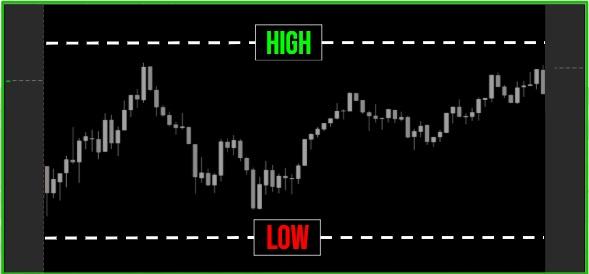
Because that’s where I’ve found a recurring pattern that can help identify key levels above and below the market.
I’ve spent years tracking this behavior.
And over the past two years, we’ve seen this approach produce 618 winning signals.
Now there’s a new test on the table.
Can we get to win #618 before the weekend?
I’ve set a challenge in motion to find out.
No trading guarantees, of course…
But I can show you the data behind the setup, the levels I’m watching, and exactly what I’m looking for as we make our run from #618 toward #620.
If you want to follow along the Challenge, I’ve laid everything out right here.
See you in the market,
Chris Pulver
The Bank of England Is Set to Raise Rates to 4%. Watch the Vote Count.
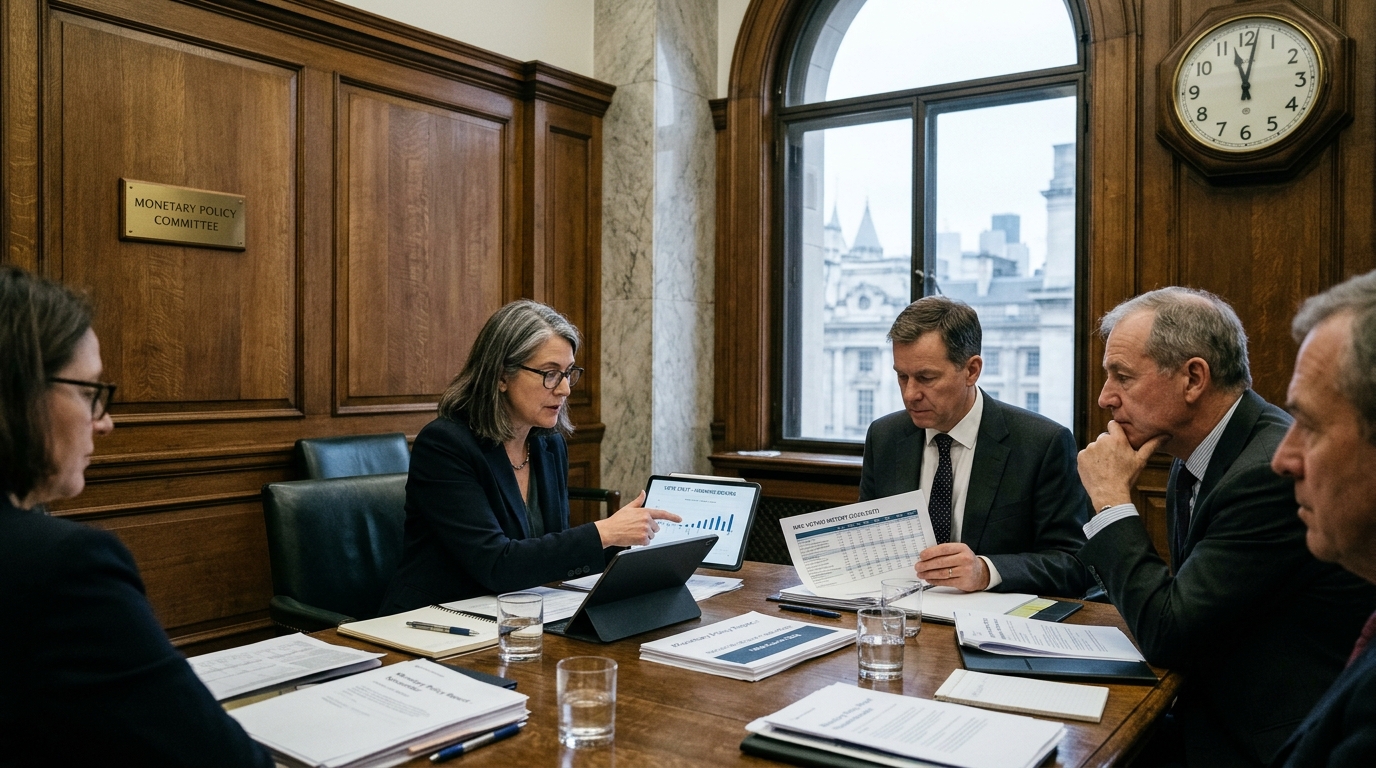
Thursday’s Bank of England decision is, for all practical purposes, resolved. OIS pricing as of October 29 implied roughly a mid-90s% probability of a 25bp hike at the November 5 meeting. A Reuters poll of 63 economists found 54 expecting the Bank to lift Bank Rate from 3.75% to 4.00%. That is not a trade. The trade is what the vote split and the November Monetary Policy Report reveal about the next step in 2027.
Why the MPC Had No Good Reason to Wait
UK growth has been running firmer than earlier-year expectations, and the October 2026 Budget document cites 0.6% Q1 growth and 0.5% Q2 growth in real GDP, with GDP in the three months to August up 0.7%. That removes the growth alibi that let the committee hold through the summer. The inflation trajectory has become equally hard to ignore as a reason to stay put. The July 2026 MPC minutes explicitly tied upside inflation risks to volatile, higher energy prices tied to the Middle East conflict, and warned about the risk of second-round effects if higher energy prices persist.
In February 2026, four of nine MPC members voted to cut Bank Rate to 3.50%. By July 29, three members voted to raise it to 4.00% and, by September, the split had shifted to 6-3 to hold at 3.75%. Rabobank’s Stefan Koopman expects the vote to land at 7-2. The question is whether that split widens to 8-1 or tightens unexpectedly toward 6-3, since either outcome carries more information than the rate move itself.
Gilt Front End: Already Doing Heavy Lifting
The UK 2-year gilt yield was around 4.95% on October 28. Separate market data sources put the 2-year closer to the high-4s on that date, but the directional point stands: the front end is already carrying much of the tightening story. A hawkish surprise in the vote split, or an MPR that pushes the inflation profile higher, likely compresses the curve as the front end moves first. A dovish split, by contrast, likely steepens it.
Healey’s October 28 Budget produced a cautiously optimistic initial gilt reaction, with reporting at the time highlighting a steadier fiscal message alongside new energy-related support. On the fiscal arithmetic, the Budget documents frame a third-year current budget surplus of £15 billion, and show public sector net financial liabilities at 83.2% of GDP this year and 83.8% next year. That outcome matters for Thursday because it reduces the odds of fiscal noise complicating the MPC’s messaging.
Banks: Two Headwinds, One Partial Offset
Lloyds Banking Group reported Q3 2026 statutory profit before tax of about £2.3 billion, up sharply versus the prior year quarter. Underlying net interest income was also higher versus the prior year. Higher rates support that income line, but the Budget introduced a countervailing force. Reporting around the Budget said Healey would double the bank surcharge to 6% for 15 months from January. For HSBA, the dynamic is more diffuse given its Asia-weighted revenue mix, but higher borrowing costs still pressure rate-sensitive areas including real estate and consumer spending, reshaping how the group balances margin benefits against potential strain on loan demand and asset quality.
The surcharge pressure on UK lenders sits inside a broader European banking story. European banks repricing NII as central banks return to hiking cycles have shown how quickly rate tailwinds can outrun regulatory headwinds.
Scenario Modeling
Bull Case
MPC votes 8-1 or unanimously for the hike. The MPR leans into a higher-for-longer profile for inflation risks linked to energy and second-round effects. A hawkish vote split could see the 2-year gilt rise while the long end holds, with GBP testing the 1.34 area and potentially higher. LLOY and HSBA outperform as the NII outlook firms further, surcharge headwind partially absorbed in earnings revisions.
Base Case
The MPC votes 7-2 to raise Bank Rate to 4.00%, followed by a slower, data-dependent path rather than a pre-committed sequence. The 2-year gilt stabilizes near current levels. GBP holds its post-Budget range. Bank shares trade sideways as surcharge concerns offset the NII tailwind.
Bear Case
The vote comes in at 6-3 and the MPR softens forward guidance, signaling the MPC views 4.00% as a likely pause point rather than a step on a continued path. The 2-year gilt rallies sharply, front-end yields fall 15 to 20 basis points, and GBP gives back post-Budget gains. The vote split is often as market-moving as the decision itself: a tight vote carries very different implications than a near-unanimous outcome.
Active Trader Framework
Position sizing around the 12:00 GMT announcement warrants discipline. The binary asymmetry is in the vote count and MPR language, not the rate move. Traders watching GBP/USD should note that a decision without the MPR would be less market-moving; this Thursday’s simultaneous publication of both removes that partial ambiguity. Rabobank argues that financial conditions are already doing some of the MPC’s work, giving the committee room to move gradually without appearing complacent, and that fresh forecasts will give policymakers more information before deciding again. The phrase “gradual” in any MPC statement language after 12:00 is the signal to watch. Preparation, not prediction, governs this one.