
July 2, 2026
Bending Spoons Is Public. The Hard Part Starts Now.
A 40% first-day pop was just the opening act.
Most people have never heard of Bending Spoons. But there is a reasonable chance they use one of its products every day.
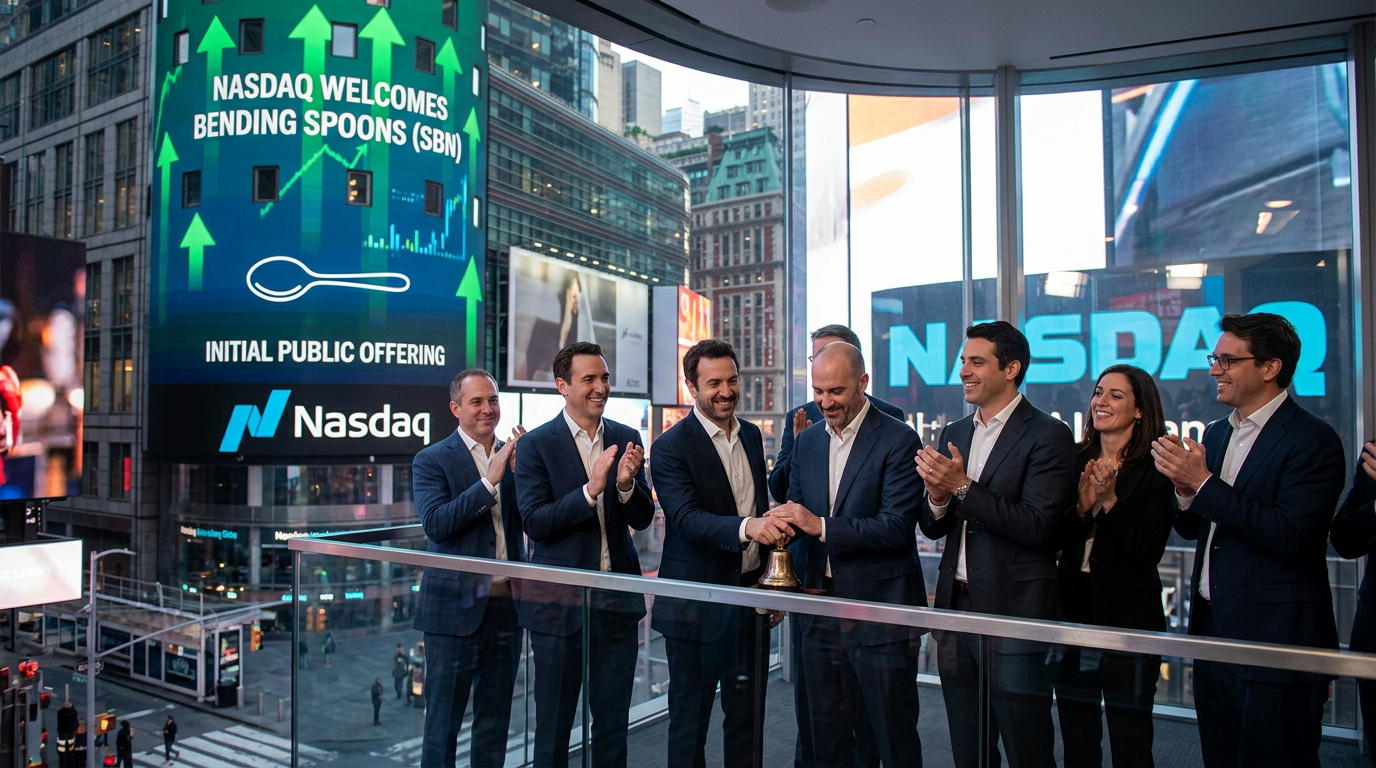
The Milan-based company owns AOL, Evernote, Vimeo, WeTransfer, Eventbrite, StreamYard, Remini, and more. Over 50 digital brands in total, serving more than 500 million monthly active users and 9 million paying customers as of March 2026. On July 1st, it went public on the Nasdaq under the ticker BSP, raising $1.68 billion in an IPO priced above its range at $29 per share. By the close, shares had surged roughly 40% to $40.50, valuing the company near $25 billion. By day two, BSP had pulled back to around $37, which is not unusual after a first-day pop of that size. It still leaves the stock 28% above its IPO price.
That is the headline. Here is the part worth thinking about.
Do NOT buy SpaceX until you read this
History shows…
Investing into the biggest IPO of our era is NEVER where the biggest money gets made.
Instead, as the man whose research has been sought out by over 500 institutions says…
The real fortunes are made in “The Aftershock.”
Bending Spoons is not a software company in the traditional sense. It is closer to Constellation Software crossed with a private equity acquirer, except it never sells. The approach: identify mature digital businesses with sticky user bases and underperforming economics, acquire them, cut aggressively, rebuild the product with AI, raise prices, and redeploy the cash flow into the next deal. It has run this model for over a decade and says it has never sold a material business.
The numbers behind the model are improving fast. Revenue compounded at an 84% annual rate from 2023 to 2025, going from $387 million to $671 million to $1.31 billion. In Q1 2026, the company reported $601 million in revenue, up 132% year over year, and swung to a net profit of $27.5 million from a $112 million loss in the same period a year earlier. Subscriptions account for 93% of revenue. That is a clean mix for a company this size.
Worth noting, though: of that 95% revenue growth in 2025, only about 13 percentage points came from organic improvement in existing businesses. The other 82 points came from acquisitions. That is the model, so it is not a criticism, but it is the number investors need to hold in mind when reading the growth figures.
“Frontier AI” is a point of no return when AI surpasses human intelligence and gains free will.
Elon Musk warns this moment could hit by the end of 2026. According to 60-year Wall Street legend, Marc Chaikin, Frontier AI could soon become the only thing that determines which companies make money and which grind to a halt. That’s why he’s giving away a list of stocks to buy and sell absolutely FREE to help you position your money for a world driven by Frontier AI technology.
What the IPO debut also represents is something the market has not fully processed. Software companies have been largely absent from the U.S. IPO market in 2026. The sector-wide chill froze the pipeline. Bending Spoons is the first major software IPO to land with serious momentum this year, and one analyst at Renaissance Capital called it a potential “data point for the software industry.” Whether that is because the business is fundamentally different from traditional SaaS, or because investor appetite for software is quietly returning, matters for everyone watching the sector.
There is a real tension at the center of this story. The same AI wave that has pressured legacy SaaS valuations is the engine that powers the Bending Spoons model. Revenue per employee jumped from $1.12 million in 2023 to $2.57 million in 2025, a number the company credits directly to AI-driven operational efficiency. The filing states that the share of software changes generated or co-generated by its internal AI systems rose from under 10% in early 2025 to more than 90% by the end of Q1 2026. Lean teams. Automated product work. AI as the restructuring tool, not the threat.
The risk is the debt. The company carried roughly $4.4 billion in total debt as of March 31, 2026, against $740 million in cash. Interest expense in Q1 2026 alone was $93 million, annualizing to roughly $370 million per year, against quarterly net income of just $27.5 million. The company deployed more than $2 billion in acquisition capital in Q1 2026 alone, up from $194 million for all of 2023. That is an aggressive ramp. And critically, management has said the IPO proceeds will go toward further acquisitions, not debt reduction.
One more thing the filing disclosed that tends to get skipped in the day-one excitement: multiple material weaknesses in internal controls over financial reporting. The prospectus cites an absence of clearly defined accountability structures, insufficient GAAP and SOX expertise, and weak controls over journal entries. The Q1 financial statements were filed as restated. For a company running more than 50 integrations simultaneously, that is not a footnote you skip past.
The company has already identified over 1,000 potential acquisition targets representing roughly $400 billion in aggregate annual revenue. The CEO told Reuters that more deals are coming. The IPO, which left Bending Spoons retaining roughly $1 billion of the proceeds after existing shareholders sold their portion, was the fuel stop, not the destination.
Author of Get Rich with Dividends Is Giving Away His Ultimate Dividend Package FOR FREE!
Click Here to Get Marc Lichtenfeld’s Ultimate Dividend Package, Including Details on His #1 Dividend Stock… the Safest 9% Dividend in the World… the Top Three “Extreme Dividend” Stocks… and Much, Much More.
At roughly 15 times trailing twelve-month revenue based on the first-day close, BSP is not cheap. The best comparable is Constellation Software, the Canadian serial acquirer that compounded returns on a similar model. Constellation earned its multiple over years of execution. Bending Spoons has the same pitch, a much shorter public track record, and a balance sheet that leaves little room for missteps on the integration side. Leverage sits at approximately 4x net debt to trailing adjusted earnings.
The first few quarters as a public company will be closely watched. Not because the story changes, but because the market will want to see whether acquired brands are growing, holding, or quietly slipping after the restructuring model runs through them. That question matters more at $25 billion than it did at $11 billion, which is what the company was valued at in private markets just nine months ago.
AOL got the headlines on day one. The real question is what happens to everything sitting behind it.
For informational and educational purposes only. Not investment advice. Trading involves risk, including loss of principal.