
August 8, 2026
DV Has a $13.60 Floor. The Real Story Is Bigger.
Nielsen’s $2.15 billion deal would close the book on public ad verification.
First a note from Brownstone Research
Editor’s Note: Former tech executive Jeff Brown picked Nvidia in 2016. It’s up 25,155% since. He recommended Bitcoin at $240. It’s up 31,219% since. And he’s been ahead of the curve on Elon Musk’s businesses for over a decade. In fact, he was one of the first to predict SpaceX’s IPO. But today, he says this goes beyond SpaceX. Elon is building something even bigger. And you can get in right now, on the ground floor. Read more below…
Dear Reader,
I’ve been following Elon’s career for decades…
When the mainstream media said Tesla would fail…
I doubled down.
And the stock has risen 1,510% since.
I’ve inspected Elon’s facilities around the country…
And I was one of the first to predict SpaceX’s IPO.
Now, I believe Elon is about to make his latest invention available to the public.
When he does, sales could go through the roof.
And the stock price of one of his critical partners could soar.
I expect Elon to make this announcement any day now. By the end of the month at worst.
But you never know with Elon…
He could post it on X tomorrow.
So there’s very little time to act.
Click here to find out the name of Elon’s critical partner… The company he can’t live without.
Before it’s front page news.
Regards,
Jeff Brown
Founder & CEO, Brownstone Research
DV Has a $13.60 Floor. The Real Story Is Bigger.
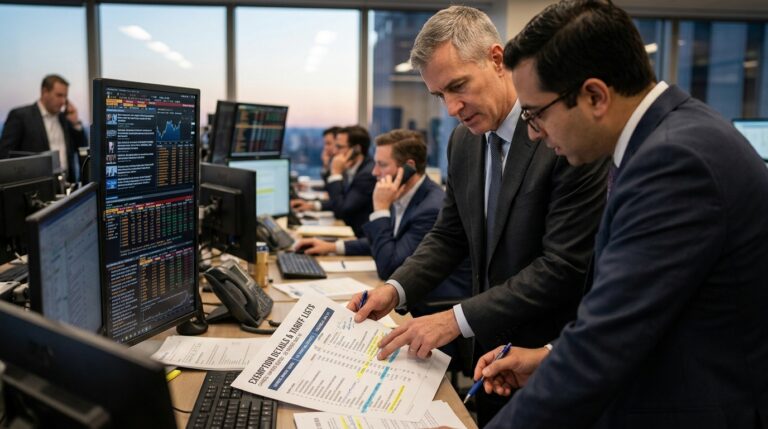
DoubleVerify stock closed at $11.71 on August 6, 2026. By 4:28 PM Eastern, the game was over. Nielsen dropped a definitive agreement at $13.60 per share in an all-cash deal valuing the company at roughly $2.15 billion, and the stock leaped nearly 13 percent into the offer price in after-hours trading. That jump resolves nothing interesting about DV as a business. But the deal itself raises something much more consequential for anyone paying attention to the ad-tech landscape.
The straightforward read is a merger-arb trade: buy DV near $13.20, collect $13.60 at close. The boards of both companies have approved the transaction and the close is targeted for Q1 2027, subject to shareholder and regulatory approval. Law firms have started making noise about whether $13.60 fully compensates shareholders, but the structural support for the deal is tight. This is not a coin flip. It is a slow-roll toward a known exit number, with the spread reflecting time value more than deal risk.
The arb math is real but thin. What deserves more attention is the $13.60 itself and what it says about the public market’s appetite for ad verification as a category.
The Business
DoubleVerify does exactly what its name implies: it checks whether the ad that was supposed to run actually ran, in front of a real human, in a brand-appropriate environment, in the right geography. That sounds like table stakes, but the digital ad industry has historically lost billions per year to fraud, bot traffic, and misrepresented inventory. DoubleVerify built MRC-accredited tools to police that gap, and it became the dominant independent verifier operating between buyers and sellers at scale.
The company’s platform covers media quality verification, viewability, brand safety, contextual targeting, attention measurement, and AI-driven campaign optimization. Q1 2026 revenue grew 10% to $180.8 million, with measurement revenue rising 16% to $61.8 million in that period. Q2 results were released after the close on August 6, 2026, but DoubleVerify had guided for Q2 2026 revenue of $199 million to $205 million and an adjusted EBITDA margin of about 32% at the midpoint. The business is profitable, clean, and generating free cash flow. The stock was trading below $12 before the deal was announced.
The 60-Second Change That Stays With You
One small setting could change how you enter and exit every options trade. It’s easy to overlook, but many beginners learn its importance the hard way. Discover the permanent rule inside Your First Trade Playbook – free for a limited time.
That last sentence is the thesis in reverse. A company with no debt, strong margins, and a defensible market position was priced as if it had a structural problem. The market was not wrong to ask hard questions about DV’s growth trajectory. Revenue decelerated meaningfully from prior years, fee-rate pressure was visible even as transaction volumes climbed, and AI tools from platform-native providers threatened to replicate services that once required a dedicated vendor. The stock had declined more than 56% over the prior year before the deal surfaced. Nielsen’s $13.60 bid lands almost exactly where one independent fair-value estimate had pegged the business in February, when the stock was trading near $9.34.
Why Wall Street Is Paying Attention
The Nielsen deal does not exist in isolation. Integral Ad Science, DoubleVerify’s largest verification competitor, entered a definitive agreement to be acquired by private-equity firm Novacap for $1.9 billion at $10.30 per share in September 2025, a premium of roughly 22%. Novacap installed a new CEO, Lidiane Jones, in July 2026. Now, with Nielsen absorbing DoubleVerify, both of the ad industry’s largest independent verification firms will have exited the public markets within twelve months.
That consolidation is not coincidental. The economics of running an independent verification business in public markets had become difficult to defend. Growth rates slowed, AI pressure on software valuations compressed multiples across the category, and advertisers were increasingly demanding a unified data layer rather than separate vendors for audience measurement and ad quality. Private ownership provides the runway to rebuild without quarterly earnings scrutiny.
Nielsen comes in from a specific position of strength here. The company, which was itself taken private in 2022 for about $16 billion by an Elliott-affiliated vehicle and Brookfield, has been expanding its platform across the full media lifecycle. Its Big Data + Panel system, combining a panel of about 42,000 households with data from roughly 45 million households and 75 million devices, earned MRC accreditation in January 2025. Four-screen ad deduplication has been rolling out internationally, reaching Japan on June 22, 2026. The Nielsen acquisition gives the combined platform the quality signal to sit on top of those audience numbers. It collapses two separate vendor relationships into one contract, which is precisely the commercial pitch to agencies negotiating 2027 budgets.
The combined company is projected to generate more than $4 billion in revenue on a pro-forma basis, with reach across companies responsible for more than $300 billion in advertising spend. The deal also gives Nielsen entry into the roughly $240 billion digital advertising segment it has not owned end to end.
What’s Driving the Opportunity
The angle most worth watching is not the arb spread. It is the independence question.
DoubleVerify built its entire commercial value on a specific claim: it is the neutral third party. When an advertiser runs a campaign, they want verification from someone who has no financial stake in whether that campaign shows up in a premium environment or a brand-unsafe one. The seller wants the same thing from the other direction. DoubleVerify’s neutrality was the product.
Nielsen, as the dominant audience currency provider in American television, is not exactly a neutral party. Broadcasters, streaming platforms, and agencies have had long-running disputes with Nielsen over methodology, data access, and market power. Variety noted that the streaming transition has left no consensus on an industry-standard measurement currency, with rival measurement providers actively competing for contracts that Nielsen once held by default. iSpot extended its partnership with Fox on July 29, 2026, deepening an attribution integration through FOX AdStudio that links ad exposure to near-real-time business outcomes.
Both Nielsen and DoubleVerify have been explicit that the merged entity will maintain independent, open verification standards. Nielsen CEO Karthik Rao framed trust as increasingly important as AI automates more advertising workflows, calling the DV acquisition a strategic addition for that reason. DoubleVerify CEO Mark Zagorski described the goal as creating a single currency that scores media on both audience delivery and media environment quality. The pitch is compelling. The execution question is whether advertisers, particularly those who have been vocal critics of Nielsen’s market position, will accept verification from a company inside the Nielsen umbrella.
That tension is real. It does not kill the deal. But it creates the first crack in the combined company’s go-to-market story, and it is the place where competitors like Comscore will push hardest over the next 12 months.
What Could Go Wrong
The deal risks are modest by most measures. The board approved it, and Nielsen financed it through cash on hand and committed debt from Barclays, BofA Securities, and Citi. Shareholder-rights firms including Ademi LLP have opened reviews of whether $13.60 fairly values DoubleVerify, which is standard post-announcement activity. A rival bid is possible, but the category is already consolidating into private hands, and the buyer universe for a $2 billion-plus ad verification platform is not large.
The bigger risks live past closing. DoubleVerify may limit forward-looking commentary while the deal is pending. Once it goes private, there will be no public visibility into whether the integration thesis is working. Clients negotiating 2027 measurement contracts are already doing so under uncertainty, as the industry processes what it means to buy verification services from the same parent company that supplies audience currency.
Revenue growth had already slowed heading into the second half of 2026. That was manageable as a standalone story. Inside Nielsen, the pressure to accelerate that line while simultaneously defending the neutrality argument will be the operating challenge that defines whether this deal generates real value or merely consolidates two sluggish businesses under one roof.
Trump: Don’t Mess With This American Stock!
One little-known U.S. stock is 20x cheaper than AMD – yet more profitable than Airbnb, Chipotle, and Hilton.
Backed by Trump and now partnering with a top AI firm, it’s poised to explode.
The Bottom Line
DV is a merger-arb trade with a tight spread, a Q1 2027 close target, and limited upside beyond $13.60. Scotiabank cut its rating to Sector Perform and pegged its target at the deal price immediately after the announcement. That assessment is mechanically correct for anyone who needs to decide what to do with the stock today.
But the more interesting question is structural. Nielsen just paid $2.15 billion to position itself as the end-to-end infrastructure layer for how advertisers plan, buy, verify, and measure every dollar of digital and TV spend. The combined company will serve clients responsible for over $300 billion in advertising spend. If the independence argument holds, and advertisers accept Nielsen-owned verification as genuinely neutral, the combined platform becomes the most complete media intelligence franchise in existence. If it does not, the deal accelerates the fragmentation it was designed to end, and competitors like Comscore and iSpot inherit the credibility gap Nielsen just created.
That outcome will not be visible in a stock price. DV will be delisted once the deal closes. The verdict arrives in contract renewals, market-share shifts, and agency holding company relationships that play out in 2027 and 2028. Nielsen is making a $2.15 billion bet that advertisers want one trusted data layer more than they want independence from any single vendor. The ad industry’s answer to that question will determine whether the bet was cheap or expensive.