
Forty-nine percent revenue growth. $8.85 billion in the first quarter. The fastest top-line expansion MercadoLibre (MELI) has delivered since Q2 2022 — and more than 28 consecutive quarters above 30% growth.
The stock is sitting roughly 30–33% below its 52-week high.
That gap is either a screaming opportunity or a trap, and figuring out which requires understanding what MercadoLibre actually is at this point — because it’s not the same company most people picture when they hear ‘the Amazon of Latin America.’
Two Businesses, Both Growing Fast
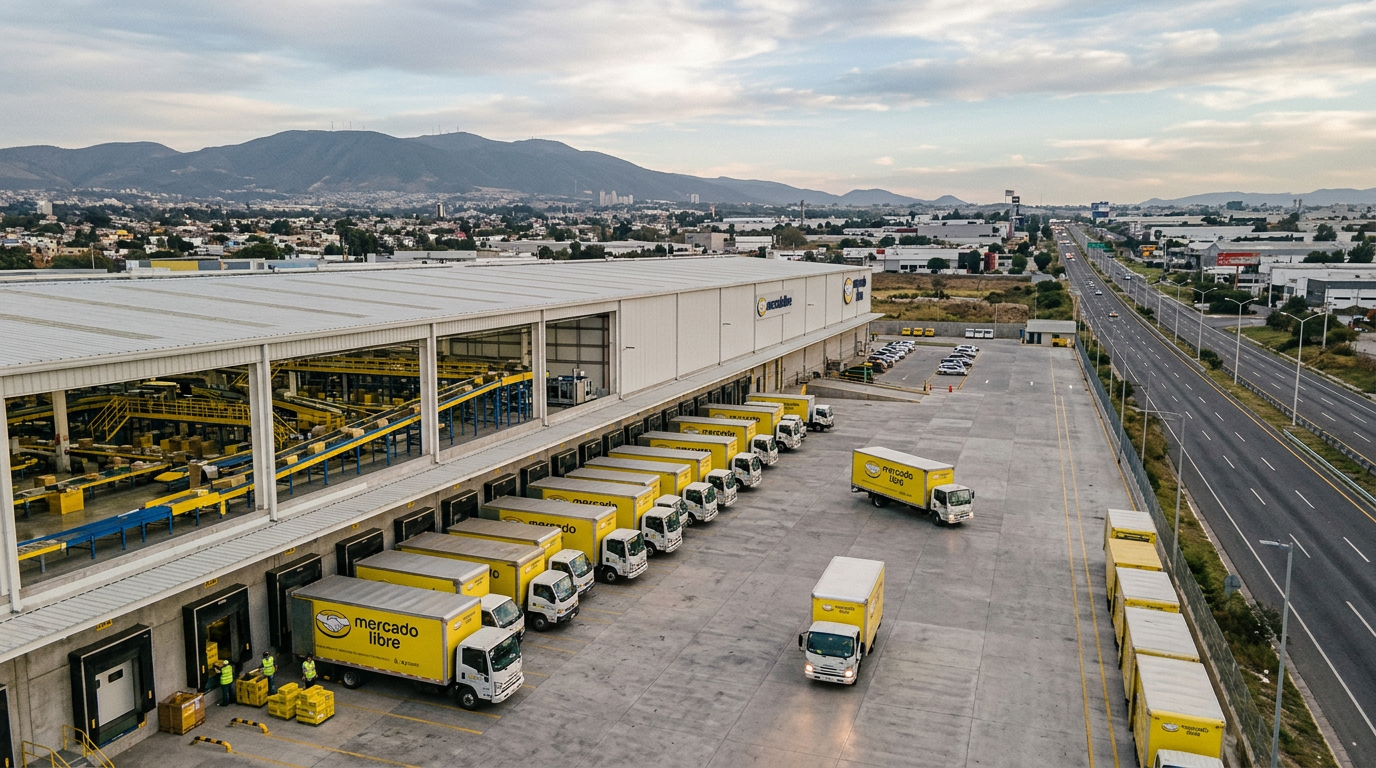
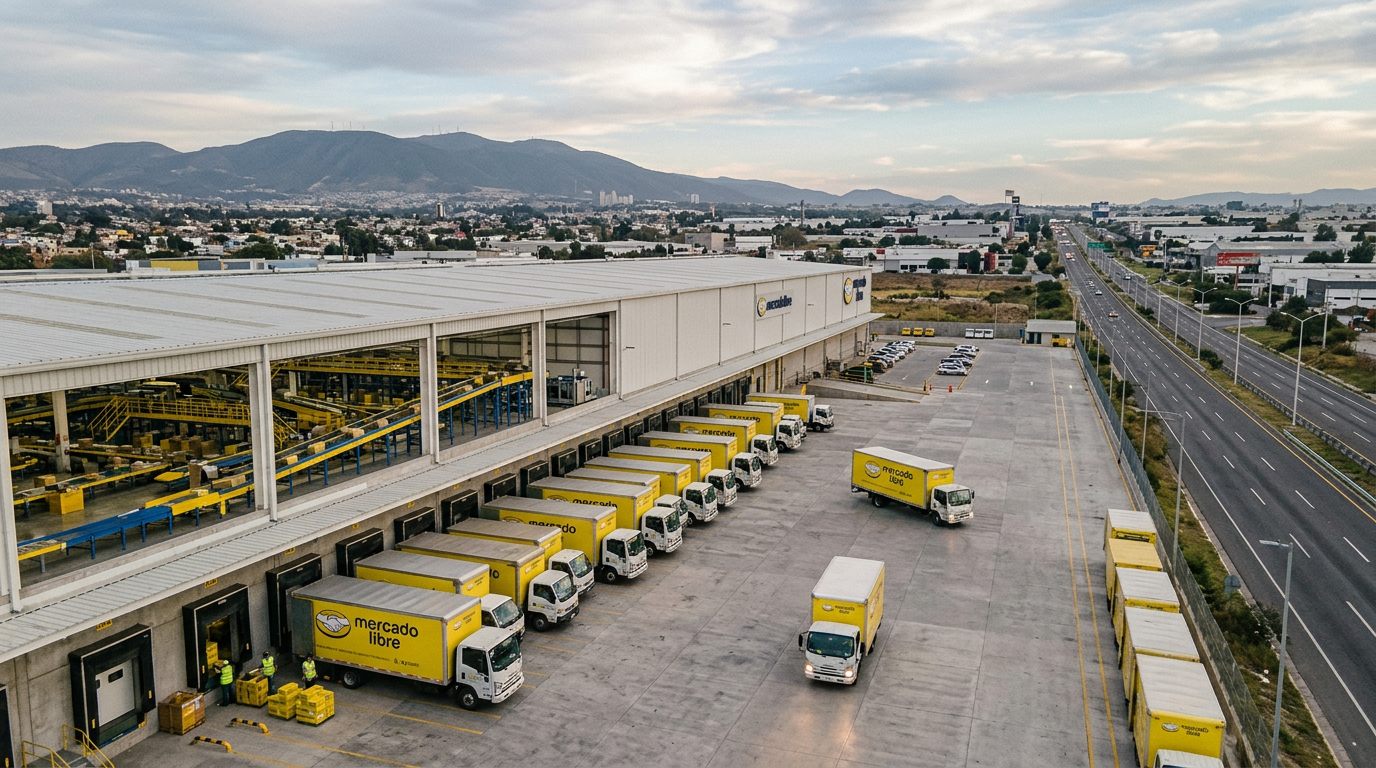
The commerce side is executing. Gross merchandise volume hit $19 billion in Q1 2026, up 42% year over year. Items sold in Brazil jumped 56%. Same- and next-day shipments reached 199 million, up 39% — a logistics network that has become a genuine competitive moat in a region where last-mile delivery is notoriously fragmented.
But the more interesting story is Mercado Pago.
Commerce revenue grew 47% year over year. Fintech revenue grew 51%. Assets under management expanded 77% to reach $19.9 billion. Monthly active users on the fintech platform hit 83 million. The credit card portfolio, consumer loans, and merchant financing arms are all scaling — with credit cards now representing 37% of total credit exposure.
Slight tangent, but worth noting: Latin America’s e-commerce penetration is still only in the mid-teens as a percentage of total retail — nearly a decade behind the U.S. The runway isn’t a talking point. It’s structural.
Where the Market Gets Confused
MELI missed on earnings per share. EPS came in at $8.23, below the $8.50 estimate. Net income was $417 million on $8.85 billion in revenue — a 4.7% margin that looks thin against the growth rate.
The reason? Deliberate reinvestment. Lower free-shipping thresholds in Brazil, a bigger credit book through Mercado Pago, expanded logistics infrastructure, and AI investment across the platform. Management framed it plainly: they’re choosing long-term market share over near-term margin. CFO Pedro Arnt said the strategic focus on growth remains ‘unwavering.’
Adjusted free cash flow was negative $56 million in Q1 — though management attributed this largely to seasonal factors, including long-term retention program payments and peak-season supplier invoices. Cash from operations still totaled $2.1 billion for the quarter.
The compression is intentional. That doesn’t make it painless for shareholders who bought expecting steady profitability. But it’s a different thing than a business deteriorating.
The Risks Are Real, Not Hypothetical
Brazil is both the engine and the exposure. FX volatility, consumer credit risk, and intensifying competition from Shopee in e-commerce all create friction. Net interest margin after losses compressed to 17.8% in Q1 from 22.7% a year earlier — driven by a broader mix of lower-spread credit cards and longer-duration personal loans. That’s a trend worth watching carefully.
And the valuation — even at the pullback — is not cheap by traditional standards. This is a high-expectation stock pricing in years of continued dominance.
What the Long-Term Setup Looks Like
Some analysts see the current dip as a buying window. The fintech division’s 35% growth in monthly active users and 93% year-over-year growth in assets under management suggest the financial services layer is becoming a genuine digital bank — with higher margins than commerce once the investment phase normalizes.
If MercadoLibre can sustain its trajectory, the scale of the opportunity in Latin American fintech and e-commerce is hard to overstate. The company already leads a market projected to reach $232 billion in e-commerce by 2028, up from $151 billion in 2023.
Whether the market’s current frustration with margins creates the right entry point — that’s the question worth sitting with.