Market Snapshot
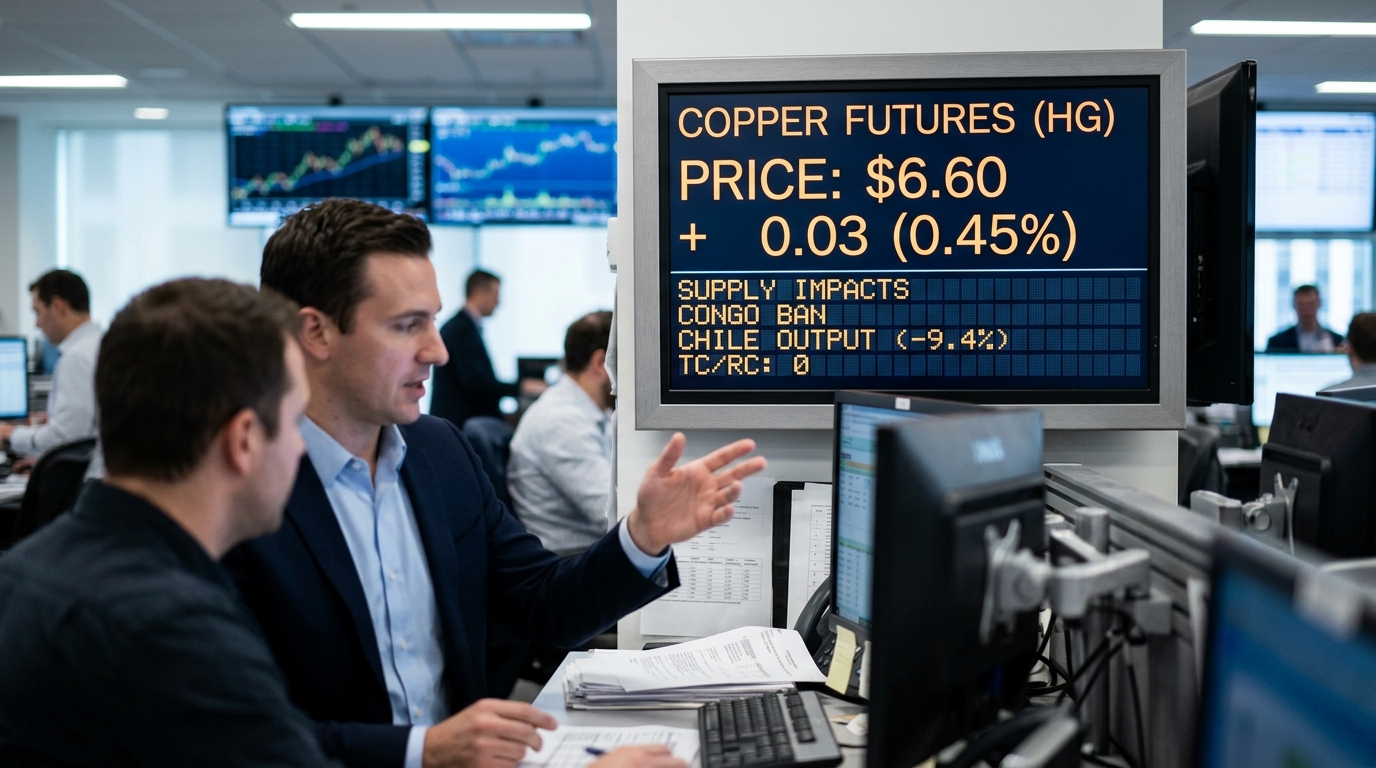
Copper futures are trading around $6.57 to $6.60 per pound, holding recent gains as ongoing supply-side challenges continue to support prices, with analysts pointing to Congo’s concentrate export ban and weaker output from Chile. The 52-week high on Comex copper reached $6.8665, set in August, with the July-to-August period averaging $6.56 per pound. The record is still close. The demand-side scare that triggered the September 3-4 pullback has not erased the math underneath it.
Stocks in Focus
FCX (Freeport-McMoRan): Freeport’s giant Grasberg complex in Central Papua, hit by a severe mud rush in September 2025, restarted unaffected mines in late October 2025 and has guided to a phased restart and ramp-up of the Grasberg Block Cave beginning in the second quarter of 2026. This translated into lower full-year guidance, with consolidated copper sales cut to approximately 3.1 billion pounds from earlier estimates of 3.4 billion. What Grasberg loses, Comex prices partially replace: Freeport’s Americas operations benefit directly from every dollar copper trades above its cost base. Watch the stock against the $6.50 copper floor.
SCCO (Southern Copper): The company expects copper production of 911,400 tonnes in 2026, implying a decrease of 4.7% from 2025 due to lower ore grades at its Peruvian operations. Lower volumes, higher prices: the net effect is still favorable as long as copper holds above $6.00.
COPX (Global X Copper Miners ETF): COPX closed at $91.25 on September 3, up 1.50% on the session. For traders who want broad exposure without picking between FCX’s Grasberg drag and SCCO’s Peru grade decline, COPX packages both alongside Glencore and other copper-miner names. The ETF has risen sharply over the past year per fund and market price data, making it the blunter but cleaner trade on the supply shock thesis.
Sector Watch
Three supply shocks are running simultaneously. Congo banned exports of copper and cobalt concentrates to expand domestic processing. Chile’s copper production fell 9.4% year-on-year in July due to severe weather and mine maintenance. None of these resolve quickly. The average timeline from copper discovery to first commercial production now stands at approximately 17.9 years, meaning copper lost through weather disruptions in Chile cannot be recovered by new mines before the middle of the next decade at the earliest.
Catalyst Calendar
- Congo export ban exemptions: Congo’s order has included exemptions for some producers in the past. Any update on Kamoa-Kakula’s exemption status moves the market immediately.
- Chile production data: Next monthly output figures will confirm whether the July 9.4% drop was an anomaly or the start of a trend. Cochilco has cut its 2026 full-year production forecast to 5.27 million tonnes, a 2.6% drop from 2025, after an exceptionally weak first half at major operations.
- US-Iran developments: Renewed hostilities between the US and Iran have raised concerns that elevated energy prices could weigh on global economic activity and metals demand. Further escalation reintroduces the demand-destruction argument that pulled copper off its record in early September.
Risk Radar
The one structural risk that does not fit the bull framing is the smelter fee collapse. Smelter fees for processing copper concentrate, known as TC/RCs, have hit all-time lows, with the annual benchmark between Antofagasta and major Chinese smelters settling at USD 0 per tonne in January 2026, the lowest level ever agreed in annual negotiations. Spot TC/RCs have been negative since 2024, driven by a surge in Chinese smelter capacity additions that significantly outstripped growth in copper concentrate production, ramping up competition among smelters for concentrate. Zero benchmark fees mean Chinese smelters survive on byproduct revenue alone. If they respond by cutting output further, refined copper supply tightens even more. If they hold throughput to cover fixed costs, the pressure stays on miners to subsidize processing.
The Cheat Sheet
- Top Market Theme: Three simultaneous supply disruptions, Congo’s concentrate ban, Chile’s weather losses, and Grasberg’s disruption and ramp, are keeping copper within 4% of its recent record despite a brief demand-shock pullback.
- Stock to Watch: SCCO. Best margins in the peer group was not verified. Production guidance is already reset lower, and a commodity price that can compensate for the volume shortfall.
- Sector to Watch: Base metals miners broadly. The TC/RC collapse signals concentrate is scarce enough that smelters earn nothing to process it. That is the strongest possible price signal for mine-level producers.
- Biggest Risk: US-Iran escalation driving energy prices higher and denting global manufacturing demand, which would put the demand side of the copper equation under pressure just as sentiment recovers from the September pullback.
- Biggest Opportunity: FCX on a confirmed Grasberg ramp update. Any credible recovery in Indonesia production restores the volume story that justified its $100 billion market cap milestone.
- One Thing to Remember: Physical supply, not demand, is driving copper prices right now, and these supply constraints cannot be reversed quickly because weather disruptions, export restrictions, and mine development timelines all take time to resolve. Demand worries create dips. The supply math creates the floor.