September 8, 2026
Bonus Content: Trump Threatens Bombardier US Ban. Gulfstream and Textron
This Surface Clue May Point to a Much Bigger Story
A geologist can spend a career searching for the clue that forces them to take a 2nd look. At this North American project, that clue may already be sitting at the surface.
Recent samples returned exceptionally high-grade antimony, with some readings approaching the mineral’s natural limit. It does not answer the biggest question – how much might be there – but it gives the team a very good reason to find out.
Today’s team can look deeper and across a much wider area using modern geophysics and drilling techniques that may reveal whether those rich surface clues belong to something larger below.
The clues still have to lead somewhere. But when the data starts asking a bigger question, curious investors may want to hear the answer.
Trump Threatens Bombardier US Ban. Gulfstream and Textron
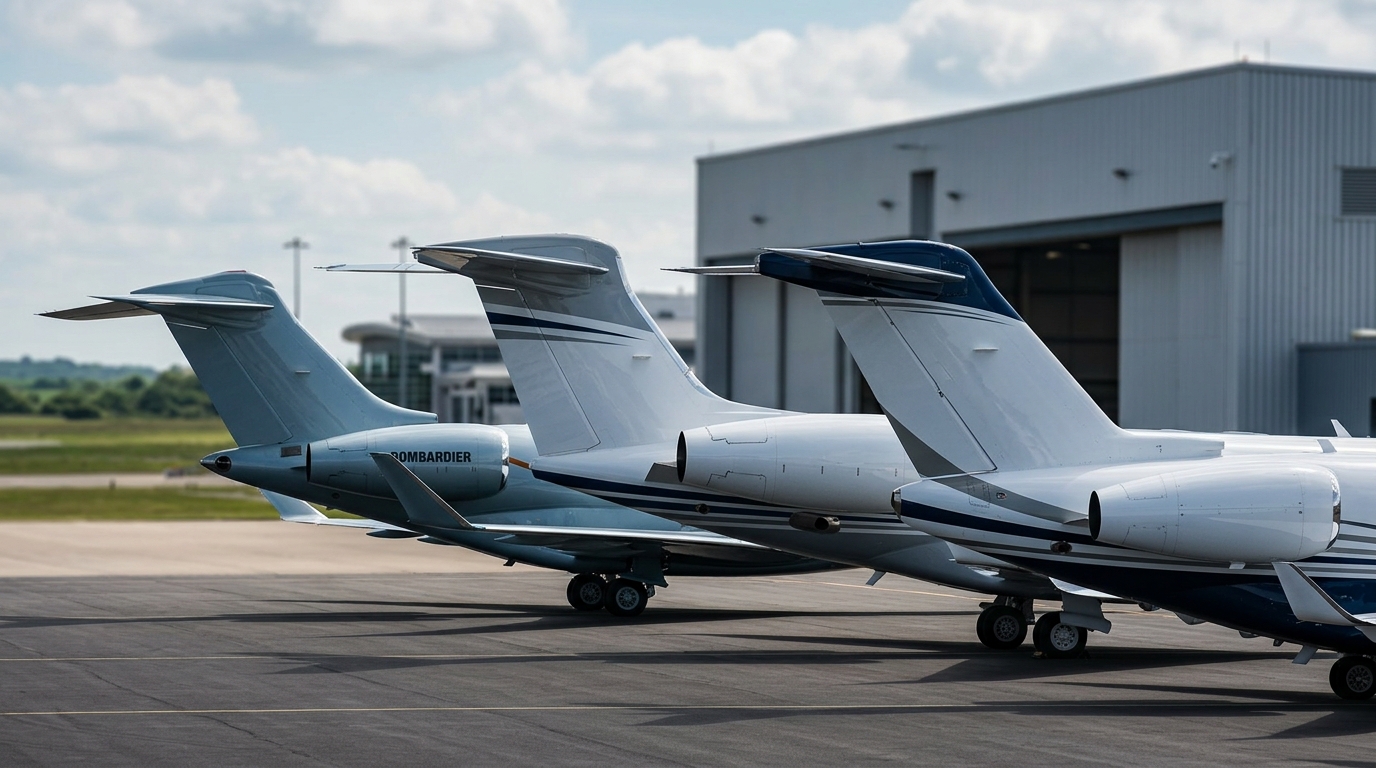
Trump posted on Truth Social Monday afternoon demanding that Bombardier build its jets in the United States or lose access to the American market. The declaration landed hours before Canada moved forward with roughly $20 billion worth of retaliatory tariffs on American goods, which took effect at 12:01 a.m. ET Tuesday. The timing was deliberate. The target was chosen carefully. And the implications for business aviation order books are immediate.
Trump said on Truth Social that over 50% of Bombardier’s revenue comes from the United States, arguing the company lives off “American Buyers, American Companies, American Airports, and American Service.” The post came a day before Canada’s 15% to 50% counter-tariffs on nearly $20 billion worth of American products took effect, a tit-for-tat response to Washington imposing 50% tariffs on roughly $20 billion of Canadian goods.
The Backlog at Risk
Bombardier’s Q2 2026 revenues reached $2.15 billion, against a backlog of $21.8 billion as of June 30, with 32 aircraft deliveries in the quarter. Revenues were up 6% year-over-year, driven by a record services contribution. If the president’s demand is enforced and American buyers freeze or redirect orders, more than half that backlog faces direct disruption given Bombardier’s own stated US revenue concentration.
Bombardier countered by highlighting its US footprint: an expanding American presence across more than 20 states, a supply chain of approximately 2,800 American companies across 47 states, and over $2.5 billion in annual spending with American suppliers. It remains unclear how a sales ban would be implemented, as the FAA, not the White House, certifies aircraft. That enforcement gap gives the market some breathing room, but it does not eliminate the demand-side risk of buyers pivoting to domestic alternatives while policy uncertainty persists.
Who Absorbs the Rotation: GD and TXT
Gulfstream, owned by General Dynamics, is the most direct beneficiary of any Bombardier demand displacement. Gulfstream’s Aerospace segment ended Q2 2026 with backlog of about $24.0 billion, with a dollar-based book-to-bill ratio of 1.5-to-1. Aerospace is now expected to generate about $13.8 billion in full-year 2026 revenue, and General Dynamics has reiterated deliveries of about 160 aircraft for the year. Gulfstream is already capacity-constrained. Order books for both the G700 and the G800 stretch into mid-2028. Displaced Bombardier buyers seeking a domestic large-cabin jet are walking into a multi-year queue.
Textron Aviation, maker of the Citation family, presents a more accessible alternative in the midsize segment. Textron Aviation recorded $1.54 billion in Q2 2026 revenue, delivering 40 business jets and 44 commercial turboprops. Textron Aviation’s backlog at the end of June totaled $8.03 billion, up from $7.72 billion a year earlier. The backlog growth is modest but directionally positive, and any trade-driven demand shift from Bombardier’s Challenger or Global series could accelerate Citation order intake without the same years-long wait that Gulfstream customers face.
Honeywell Aerospace adds a wrinkle. Many Bombardier business jets rely on US-made engines and major US aerospace content, including Honeywell and GE components. A sales ban that grounds Bombardier order activity would reduce Honeywell’s OEM-related volume, even as the company already has a long-term strategic agreement with Bombardier. Honeywell Aerospace’s Q2 2026 sales grew 5% year-over-year to $4.5 billion, with backlog at $18.2 billion by quarter end.
Political Friction Inside the GOP
Senator Jerry Moran, whose state hosts Bombardier’s US headquarters in Wichita, stated that Bombardier supports a local workforce of more than 1,000 employees, and said he reached out to the Trump administration to make certain the president is aware of its contributions to Kansas. The response is the latest example of pushback from Republican senators against Trump’s Canada trade policy, with midterm elections approaching. That political friction matters: it raises the probability that any formal enforcement mechanism faces congressional or administrative resistance before it reaches the order book.
Scenario Framework
Bull Case for GD and TXT: The administration formalizes the ban through executive action aimed at FAA delivery certificates. US buyers with pending Bombardier orders accelerate cancellations and redirect to Gulfstream and Citation wait lists. GD’s Aerospace backlog, already near $24 billion, expands further; TXT sees Citation order intake rise 10% to 15% through year-end. GD trades toward $350, TXT toward $95.
Base Case: The Truth Social post functions as negotiating leverage within the broader Canada tariff dispute. No formal ban is implemented. Bombardier backlog holds largely intact, though US-based corporate buyers defer new orders pending clarity, creating 60 to 90 days of demand noise. GD and TXT see modest speculative inflows but no structural order change. BBD.B remains pressured near recent lows on headline risk.
Bear Case: The ban is challenged legally, enforcement remains impossible, and the episode further strains US-Canada relations without resolving either side’s tariff grievances. Prime Minister Mark Carney has said Canada will match future trade actions from Washington, raising the prospect of further escalation affecting US aerospace exporters. HON and GE Aerospace face secondary demand disruption if Bombardier order activity stalls significantly.
Trading Framework
The primary tactical question is how much of this move is durable versus headline-driven. GD at current levels prices Gulfstream on a delivery trajectory to roughly 160 aircraft in 2026. A Bombardier demand displacement scenario adds upside optionality, not a fundamental re-rate. Traders monitoring GD should watch the $310 to $315 level as near-term support, with the Q2 2026 all-in aerospace backlog near $24 billion providing a valuation floor. TXT remains the higher-beta expression of the same thesis given its smaller market cap and direct overlap with Bombardier’s Challenger 350 customer base.
Watch BBD.B on the Toronto exchange for institutional sentiment. A break below recent support on elevated volume would signal that large shareholders are pricing enforcement risk as real rather than rhetorical. Honeywell Aerospace deserves a separate look: a sustained Bombardier demand freeze hurts Honeywell’s OEM line even as its commercial aftermarket, up 8% in Q2, continues to benefit from elevated business jet flight hours regardless of who built the aircraft.
Preparation over prediction applies directly here. The enforcement path is unclear, the political opposition is already organized, and the backlog math at Gulfstream means displaced demand does not translate immediately into delivered revenue. Position sizing around that lag is as important as identifying the direction.