
October 6, 2026
Bonus Content: Pension Giants Are Selling US Stocks. Nvidia Just Hit a Record.
Most traders have never noticed the weird market anomaly that happens at 9:35 AM every morning.
They’re too busy with lagging indicators trying to predict the next move… when the market makers have already set the tone for the trading day.
It’s this weird anomaly that points us to the market maker’s key levels above and below.
And by playing the move within that range…
Regular folks like you have been able to reach for $100 or more (on a $1K stake) over 600 times in the last 2 years.
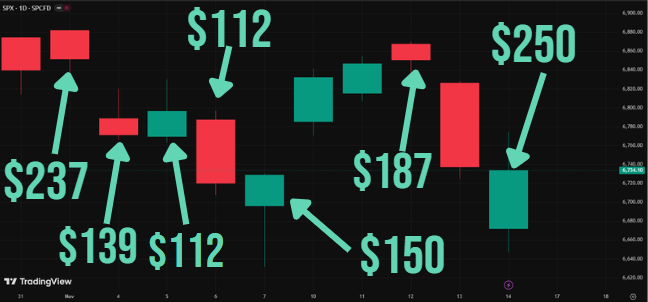
We’ve seen this straightforward approach play out whether the market broke out… broke down… or stayed choppy.
Granted, I can’t make trading guarantees here.
But I’ve opened up the data behind those trades, as well as how you can get in on the very next morning opportunity.
You’ll find the full details right here.
See you in the market.
Chris Pulver
Pension Giants Are Selling US Stocks. Nvidia Just Hit a Record.

The Nasdaq Composite closed Monday at a record 27,477.31, up 1.05% on the session. Nvidia closed at an all-time high, adding about 2.2% to push its market capitalization to roughly $5.77 trillion. The S&P 500 gained 0.66%. All of it happened on the same day the Financial Times published research confirming that three of the world’s largest pension pools have quietly moved underweight US equities, citing AI concentration as the primary concern.
That timing deserves trader attention, not because Monday’s record is about to reverse, but because the flows underpinning it are more fragile than the index level suggests.
The Macro Context
The 10-year Treasury yield briefly crossed 5.35% intraday Monday, its highest level since 2002, before settling near 5.31%. Equities ignored it. The Nasdaq’s willingness to set records while the risk-free rate trades at multi-decade highs tells you precisely how dependent this rally is on earnings expectations rather than valuation support from the bond market. September nonfarm payrolls came in at 29,000, well below the roughly 90,000 consensus, which reduced Fed rate-hike odds at the October meeting to roughly the high teens to low 20s per CME FedWatch. That soft labor reading supplied the oxygen for Monday’s move. Strip it away, and the macro backdrop is considerably less friendly.
Who Is Selling and Why It Matters
Australian Retirement Trust ($260 billion), Canada’s La Caisse ($388 billion), and the UK’s People’s Pension (£45 billion) now all hold US equities below global benchmark weight, according to the FT research published Monday. The People’s Pension cut its US allocation from 53% to 49% of its global equity sleeve, versus the MSCI ACWI weight of roughly 64%. La Caisse’s head of equities, Vincent Delisle, said the central question is whether earnings growth can be sustained. Denmark’s ATP CIO Mikkel Svenstrup, overseeing roughly $140 billion, said current valuations already imply very strong earnings growth expectations in coming years, framing any disappointment as a vulnerability rather than an opportunity.
A Marsh survey of 430 institutions managing more than $5 trillion found that one-third plan to cut US equity exposure over the next 12 months, about double the proportion from a year ago. These are not momentum traders. Their exits are slow, structural, and unlikely to reverse on a single soft payroll print.
The Concentration Problem
Nvidia, Microsoft, and Alphabet do not account for more than one-third of the S&P 500’s weight. A more defensible framing is that the index remains unusually top-heavy, with Nvidia and Microsoft each among the largest weights and Alphabet also a top holding.
Nvidia’s consensus analyst target sits at $327, implying roughly 37% upside from current levels, with 61 analysts rating it Strong Buy. Projected earnings growth of approximately 70% next year gives bulls a credible valuation anchor. But that growth estimate is exactly what ATP’s Svenstrup flagged: current prices already require it to materialize.
Technical Framework
The Nasdaq’s 52-week range runs from 20,690 to Monday’s record close of 27,477. The index is 33% above its 52-week low and has now closed at records in back-to-back sessions. Near-term support sits near 27,100, the level that held through Friday’s rally. The 21-day moving average lies near 26,800. A break below there would confirm a shift in short-term momentum. For Nvidia specifically, the prior May high represents both the breakout reference and the level where profit-taking becomes technically obvious.
Scenario Modeling
Bull Case
Q3 bank earnings kick off this week and beat broadly. Fed minutes release no hawkish surprise. Nvidia’s next earnings cycle shows gross margins recovering toward 75%+ guidance. Nasdaq extends toward 28,000; institutional underweights become performance pain that forces partial re-entry.
Base Case
The index consolidates in a 26,800 to 27,500 range through earnings season. Sector leadership stays narrow. Pension outflows continue at a measured pace but are offset by retail and momentum flows. No breakout, no meaningful pullback.
Bear Case
A single earnings miss among Nvidia, Microsoft, or Alphabet triggers outsized selling given elevated expectations. The 10-year yield pushes toward 5.50%, compressing multiples on long-duration tech. Nasdaq breaks 26,500. Institutional underweights prove prescient, and passive rebalancing amplifies the move lower.
Active Trader Framework
The record close is real. So is the institutional selling. Traders who treat those two facts as contradictory are misreading the situation. Pension outflows operate on quarterly allocation cycles; they do not front-run daily index moves. What they do is remove a category of patient buyer at elevated prices. That matters most when the next earnings catalyst disappoints.
Key levels: Nasdaq 27,100 as immediate support, 26,800 as the line that separates pullback from trend change. Nvidia’s $240 area intraday high warrants monitoring as a resistance reference. Position sizing should reflect the asymmetry Delisle identified: if earnings growth is already priced, merely meeting expectations may not be enough. Preparation is the edge. The record is a data point, not a destination.