
October 10, 2026
Bonus Content: Inflation Rises Wednesday. Here Is What Traders Need to Know
For 137 years now…
A little-known public land trust has been quietly sitting on millions of acres of American land…
Paying royalties on every drop of energy that gets pulled out of the ground.
Oil. Natural gas. Even water.
Every barrel. Every cubic foot. Every gallon.
The checks just keep rolling in.
It’s so profitable… a single $1,000 investment since January 2000 turned into $556,000!
That works out to a 29% return… every year for 25-straight years.
You can check out the details by clicking here.
But get this…
Donald Trump just TURBOCHARGED the entire opportunity…
He just pledged $500 billion to develop massive new AI data centers – and he’s beginning with this specific area.
More drilling means more royalties.
More royalties mean bigger payouts.
Bigger payouts mean even better returns for anyone holding what I call “The 29% Account.”
The big banks figured this out decades ago.
BlackRock, Wells Fargo, JPMorgan – they’ve all quietly parked billions here.
Now you can do the same.
Click here to start tapping this cash gushing machine before drilling starts.
Good investing,
Marc Lichtenfeld
Chief Income Strategist, The Oxford Club
P.S. This account is open to any American – no matter your age or income. Click here to see how it works.
Inflation Rises Wednesday. Here Is What Traders Need to Know
Two catalysts arrive in four days, and the sequencing matters. The September CPI report drops Wednesday, October 14, at 8:30 ET. Two days later, Fed Chair Kevin Warsh speaks at the IMF and World Bank annual meetings in Bangkok on October 16. Neither event exists in isolation. Together they set the price of the December hike that markets already half-believe is coming.
Macro Context
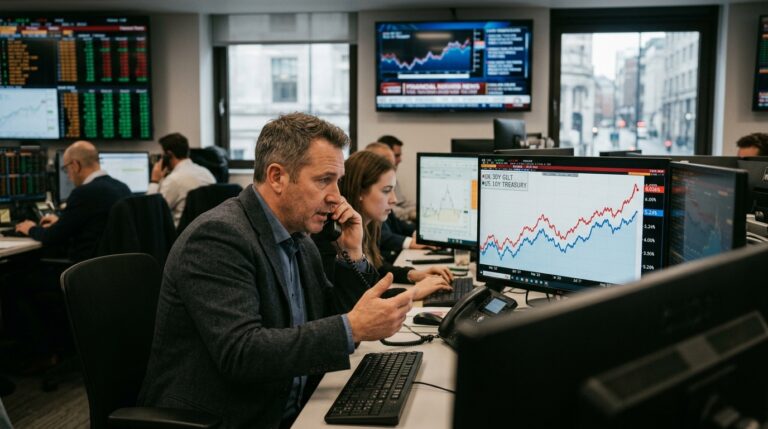
The 10-year Treasury finished October 9 at 5.24%, while the 2-year ended at 4.80%. Over the past month the 10-year has edged up roughly 25 to 30 basis points and sits about 110 basis points above where it was a year ago. That is the environment heading into Wednesday’s release.
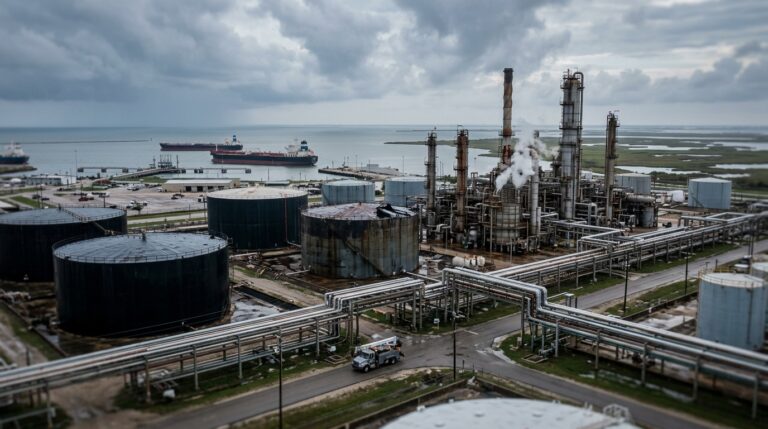
Consensus sits at a 0.6% monthly increase in headline CPI, with core expected at 0.2% month-on-month. Regular gasoline averaged $4.355 per gallon in September, 7.3% above August’s $4.058 and higher than a year earlier. Disruptions tied to Gulf shipping risk and a temporary shutdown of Saudi Arabia’s East-West crude pipeline helped lift crude prices in September versus August. Energy is doing the work. Core is where the surprise lives.
As of October 10, market-implied odds still favor a hold at the October 27 to 28 FOMC meeting. December hike odds remain elevated, but recent readings have been closer to the mid-60% range than the mid-70s. Those numbers are the lens through which Wednesday’s print gets read.
Sector Breakdown
Hot readings reinforce higher-for-longer rates, lift the dollar and real yields, and pressure gold and rate-sensitive equities. Higher borrowing costs have already hit rate-sensitive and dividend-oriented sectors during September’s yield surge. Another hot headline would revisit those losses quickly.
A major change to U.S. bank accounts could arrive in months.
It may allow closer tracking of your transactions.
Energy is the ironic case. Elevated crude lifted the CPI headline, yet the sector can still struggle when investors question demand durability at $97 oil. A beat on headline driven purely by gasoline tells equity traders less about broad pricing power and more about a single commodity. Financials face a different arithmetic: banks collecting 5.24% on Treasuries see net interest margin support, but loan demand softens as borrowing costs press consumers and commercial borrowers.
The supply disruption behind September’s energy spike has its own unresolved tail risk. Strikes on Saudi crude storage at Yanbu pushed Brent above $107 and reopened the question of how durable the pipeline recovery actually is.
The Core Risk and Warsh’s Role
A core reading of 0.3% or more could revive talk of another near-term hike; a reading of 0.2% or less could keep the Fed on hold into December. Core CPI ex-food and energy has been running closer to the high-2% to low-3% range recently, not 2.4% for multiple months, and any gap between headline and core is not solely energy.
Warsh is scheduled to appear in a moderated conversation at the IMF meetings, which falls at 11:30 pm U.S. Eastern time on October 15. At Jackson Hole, Warsh criticized the idea of binding the Fed to forward guidance or a mechanical reaction function. Bangkok could follow the same script, or it could offer the first real signal on how the chair reads a 3.6%-plus CPI print. Markets will not wait to find out.
Scenario Modeling
Bull Case: Core prints at 0.2% month-on-month as expected, Warsh in Bangkok emphasizes data dependency without endorsing December tightening, and the 10-year pulls back toward 5.10%. Rate-sensitive sectors including REITs, Utilities, and small-cap indices stabilize. SPX reclaims recent resistance as December hike probability fades toward 60%.
Base Case: Headline CPI lands near 0.6%, core at 0.2%, market reads the energy-driven headline as transient. Prices rising 0.6% in September driven by energy, while core inflation remains contained, would be consistent with a Fed hold in October. December odds remain above 60%. The 10-year holds 5.15-5.30%, equities are range-bound into month-end.
Bear Case: Core surprises at 0.3% or higher, signaling energy pass-through into services. The 10-year could retest the 5.31% area seen on October 5. Rate-sensitive stocks such as small caps and real estate would come under pressure in this setting. Warsh’s Bangkok remarks would face a market already pricing October back onto the table.
Active Trader Framework
The asymmetry into Wednesday favors watching core, not headline. A 0.6% headline with 0.2% core is priced; a 0.6% headline with 0.3%+ core is not. Duration exposure in portfolios carrying long Treasuries should be sized with that risk in mind before 8:30 ET Wednesday. The 5.31% level on the 10-year is the structural reference for the bear scenario; a clean break above it changes the calculus for equity valuation multiples broadly.
Warsh’s Bangkok timing, late-night U.S. Eastern, means FX and front-end rates absorb the first reaction in thin conditions. Volatility in short-dated Treasuries and the dollar could overshoot before the New York open on October 16. Position sizing ahead of both events should account for that sequenced risk. Preparation here is not about calling the number; it is about knowing exactly which number changes your view.