October 10, 2026
Bonus Content: Diesel Is the Real Risk From Hurricane Isaias. These Refiners Are the Trade.
Here’s something you should see…
When you work with a team full of some of the best traders in the business, it doesn’t take long before someone uncovers something so simple… so repeatable… and so effective, it forces me to stop what I’m doing and pay attention.
That’s exactly what happened when Thomas Wood showed me the Opening Bell Trade he’s been using to pull triple-digit wins out of the market before most investors have even poured their second cup of coffee.
I’m talking about real trades that have delivered gains like:
113% on GOOGL
240% on META
70% on CAG
37% on MCD
139% on GLD
And here’s the part most people will never believe until they see it for themselves:
It’s one setup.
One pattern.
One repeatable moment that appears almost every morning.
By 10 AM, he’s done.
Most investors spend their entire lives chasing complicated systems, expensive software, or some mythical “perfect” strategy.
Meanwhile, the real edge – the one hiding in plain sight – has been sitting right at the market open.
We just finished putting everything about this breakthrough into a new report called The Opening Bell Trade Guide. It explains the setup, the timing, and why this window of the trading day continues to produce outsized opportunities for regular investors.
Right now, you can download it for free.
But let me be blunt: we won’t keep it free forever. At some point, we may charge for it – because information like this should cost money.
So do yourself a favor and grab your copy now, while the link still works:
[Download The Opening Bell Trade Guide – FREE]
If you want a real shot at generating income from the market—without gambling, guessing, or sitting in front of your screen all day – this is where you start.
To your trading success,
Drew Day
Founder & CEO
Base Camp Trading
Diesel Is the Real Risk From Hurricane Isaias. These Refiners Are the Trade.
Hurricane Isaias came ashore overnight along the northern Gulf Coast. The damage-assessment window is open now. Markets already know that crude production took an enormous hit in the days before landfall. The question that drives positioning today is narrower: what happened to the refineries?
Bullet Summary
- 1.28 million bbl/d of Gulf oil output shut in before landfall, representing 62.9% of total regional production, per the Marine Minerals Administration.
- BMS Group raised its insured industry loss estimate to $4–6 billion on Friday, up from $3–5 billion Thursday; Gallagher Re placed losses in the mid-single-digit billions. Both firms kept the ceiling below $10 billion.
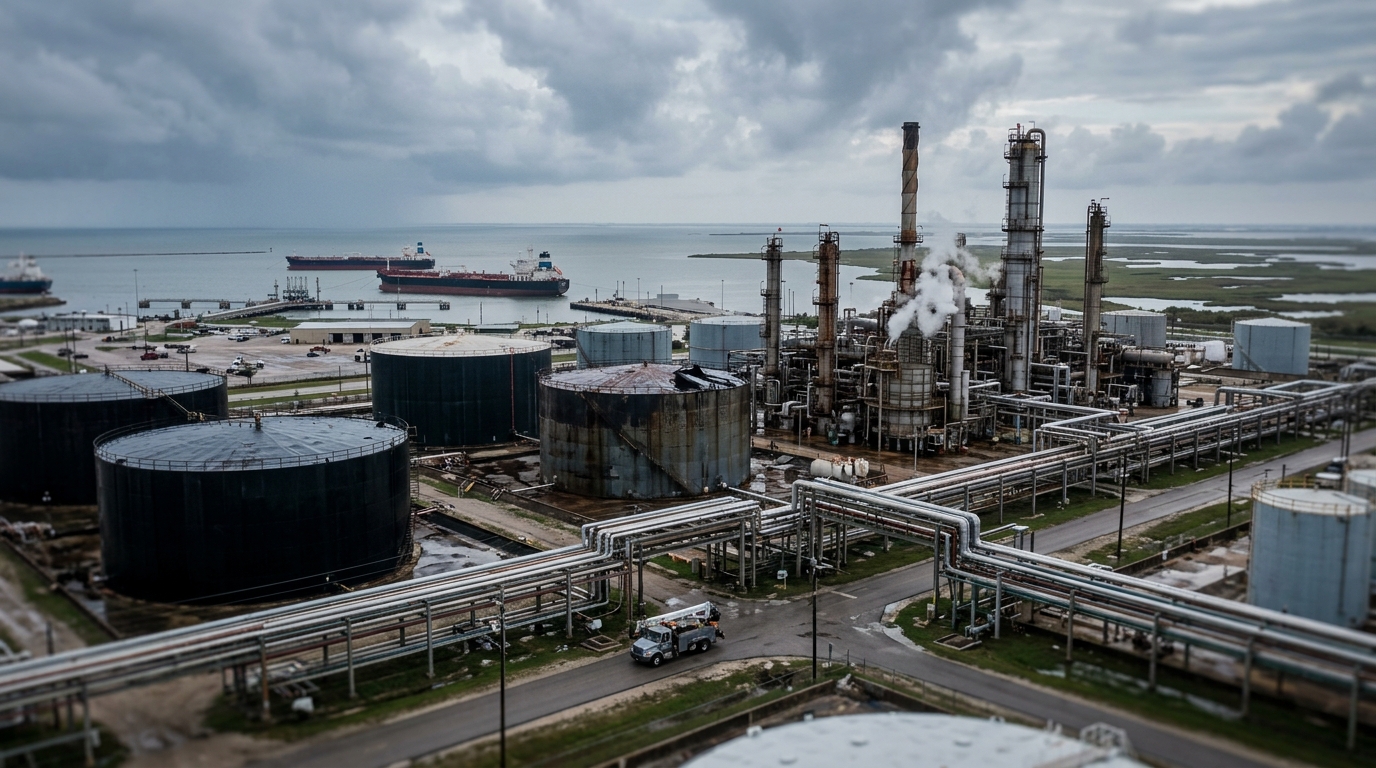
- Chevron’s 356,000 bbl/d Pascagoula refinery and Vertex Energy’s 88,000 bbl/d Mobile-area plant were directly in the storm’s path, together representing roughly 2.4% of U.S. refining capacity.
- Distillate inventories sat at 105.1 million barrels entering the storm, 13% below the five-year average and the lowest seasonal level since EIA records began in 1982.
- The Strategic Petroleum Reserve holds approximately 283 million barrels, the lowest since 1982, leaving no meaningful emergency buffer for a refined-product squeeze.
- Gulf Coast refineries were running near 95% utilization before landfall; there is no slack in the system to absorb an outage of any duration.
- VLO, MPC, and PSX hit 52-week highs Thursday; VLO’s Q2 EPS of $12.54 beat consensus by $2.43, with Q3 earnings due October 22.
Market Context
Distillate inventories are at their lowest level for early October since tracking began in 1982, and the Strategic Petroleum Reserve now holds crude at levels not seen since 1982. That double-floor collapse in emergency capacity is the macro context every refiner trade sits inside. Diesel had already climbed above $6 per gallon amid tight middle-distillate supplies and war-driven supply disruptions, reaching a record $6.53 on September 22 before pulling back modestly to $6.30 on October 7. Isaias did not arrive into a well-supplied market. It arrived into the tightest one in a generation.
Analysts at Jefferies wrote that “Hurricane Isaias is a fuel supply event hitting a system already stretched by the Iran war” and that “a small disruption now has outsized price consequences.” That framing is exactly right, and it clarifies where the active trade lives.
Sector Breakdown: Crude vs. Refining
With Gulf Coast refineries already operating near 95% utilization, there is no available headroom in the system to compensate for any production that goes down. Offshore crude shut-ins matter for integrated majors like BP and Chevron in the near term. BP removed all personnel from its Na Kika and Thunder Horse platforms and suspended production at both facilities. Shell simultaneously halted operations at Mars, Ursa, Olympus, and Vito. Those shut-ins normalize within days once inspection crews return. Refinery damage does not.
Buy This $5 Stock Before Elon Musk Does
Rumors are spreading quickly…
Elon is gearing up to buy a tiny, publicly traded company.
Why? Because it holds the exclusive rights to a $16 trillion MOTHERLODE of the exact materials his empire runs on… rare metals like cobalt, manganese and lithium.
On January 1st, a new Pentagon rule cuts off his Chinese supply.
Today, it’s a $5 stock… but once Elon makes his move, it could soar to $50 within 6 months.
The biggest risks to the two at-risk refineries are power loss and flooding. If either shuts down, Lipow Oil Associates estimates it would take one to two weeks to restart even without structural damage. Pascagoula is particularly important for supplying airports across the Southeast. Any extended outage routes directly into distillate crack spreads, and therefore into refiner earnings.
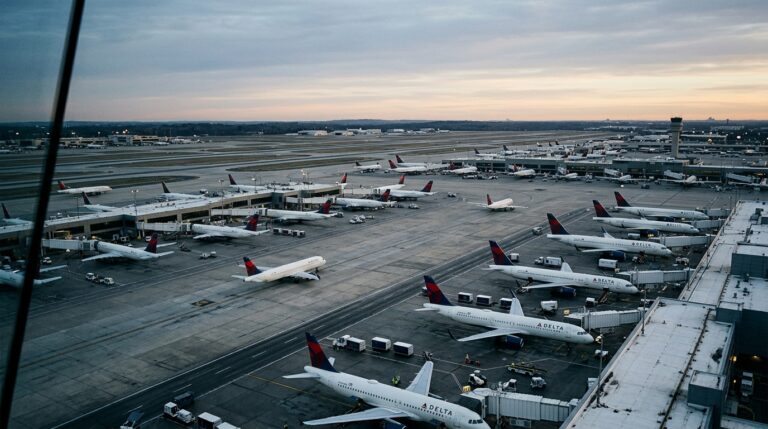
Pascagoula’s role in supplying Southeast airports makes the downstream exposure concrete. Delta Air Lines was already navigating a diesel-above-$6 environment before this storm added a new supply threat.
Stock-Specific Breakdown
The pure-play refiners carry the most direct exposure to a diesel price move. VLO stock has gained more than 153% in 2026, while MPC has surged more than 162% and PSX more than 106%. VLO, MPC, and PSX all hit 52-week highs Thursday amid rising diesel prices and upward analyst revisions.
VLO reported Q2 EPS of $12.54, beating the consensus estimate of $10.11 by $2.43. Q3 earnings land October 22. VLO runs 3.2 million bbl/d of refining capacity across Gulf Coast, Mid-Continent, and West Coast assets; MPC operates 3.0 million bbl/d. Both names carry beta above 1.25 to crack spread moves. PSX offers the broadest diversification across refining, midstream, chemicals, marketing, and renewable fuels, which dilutes upside in a pure diesel squeeze but adds downside protection if the storm outcome proves benign.
Technical Framework
VLO closed at $433.75 on October 9, pulling back 2.3% from Thursday’s session high of $449.77 as the storm track shifted east of the dense Louisiana refining corridor. That intraday range establishes an initial support zone at the $427–$430 area. The 20-day moving average sits below current price action after the group’s September breakout. Volume on Thursday’s reversal was above average, consistent with institutional repositioning rather than retail liquidation.
Watch the $449.77 October 9 high as near-term resistance. A confirmed close above that level on damage-assessment news that includes refinery disruption would constitute a clean continuation signal. A close below $420 on confirmed storm bypass would suggest the storm premium is exiting the stock.
Scenario Modeling
Bull Case
Isaias caused material flooding or power outages at Pascagoula or the Vertex Mobile plant. A one-to-two week restart timeline removes 440,000+ bbl/d of refining capacity from a market already 13% short on distillate stocks. Diesel cracks spike; VLO and MPC re-test the $450–$460 range ahead of October 22 earnings. BMS loss estimates migrate toward the upper end of the $4–6 billion range, pressuring insurers with Gulf energy exposure.
Base Case
BMS Group’s $4–6 billion insured loss estimate remains sensitive to intensity at landfall, forward speed, and precise track. Both at-risk refineries sustain power disruptions but avoid structural damage, restarting within five to seven days. Distillate prices stay elevated through October but do not breach the September record. VLO trades in a $420–$450 range into earnings. Offshore producers restore most output within two weeks after inspection.
Bear Case
Isaias tracked east of both refineries with minimal damage, the storm fades as a supply event, and the crude shut-in premium unwinds as platforms restart. VLO and MPC give back 8–12% of the September-October run. The distillate inventory problem remains structurally intact but loses its near-term catalyst. Loss estimates come in at the low end near $3–4 billion, below the revised BMS range.
“This Gold ‘Annuity’ Yields up to 10%…”
Twenty year veteran gold analyst Garrett Goggin just found an incredible high-yielding gold security that’s unlike anything else in the market. Backed by what he calls the “world’s best gold mine,” this special security is yielding up to 10%. The only catch: this security’s yield is already capturing the attention of global investors. Among them: the Rothschilds, Vanguard, and BlackRock.
Don’t wait: get the full details of this high yielding gold security here.
Active Trader Framework
The asymmetry today favors refiners over integrated producers. BP and Chevron offshore shut-ins reverse quickly. Refinery outage duration does not. Traders who want exposure to the distillate squeeze with a defined catalyst window should focus on VLO and MPC, where Gulf Coast refining concentration is highest, rather than XOM or CVX, where refining is one segment among several.
Risk management is straightforward: the storm-damage assessment is the binary event. Position sizing should reflect the fact that early damage surveys from overnight landfalls are frequently incomplete. Volatility in the refiner complex will likely remain elevated through Monday as inspection data arrives. The October 22 VLO earnings date sets a secondary catalyst window regardless of storm outcome.
Conclusion
Crude shut-ins get the headlines. Refinery status drives the trade. As Andy Lipow of Lipow Oil Associates noted, losing any refinery capacity when diesel supplies are at their lowest level for this time of year since the EIA began reporting in 1982 is not a good thing. The damage-assessment morning is now. Disciplined traders will wait for confirmed data on Pascagoula and the Vertex Mobile facility before adding exposure, size positions to the binary outcome, and let the numbers determine direction rather than the storm model.