October 10, 2026
Bonus Content: Delta’s Earnings Miss Puts Every U.S. Airline on Notice
Dear Reader,
A market legend is predicting a monumental and historic event (which could unfold in as little as 24 hours) is about to hit America.
He says it will change the fortunes of average Americans forever.
Not just in the stock market. But how they bank, how they are paid from their jobs, how their insurance policies work and how their businesses operate every single day.
Keep in mind this legend has made some shocking predictions over 55 years. And the crazy thing is the accuracy of his predictions are usually dead-on target.
He predicted the double-digit inflation of the 1970s. The collapse of the S&L banks and the “Black Monday” stock crash in the 1980s. The dot-com collapse and the implosion of Fannie Mae, Bear Stearns and Lehman Brothers in the 2000s.
He’s testified before Congress. And The New York Times has credited him as being “the first to see the dangers.”
This goes deeper than the headlines about the stock market and recent highs.
This is bigger than AI, bigger than the midterms, bigger than oil prices and bigger than what’s happening in the Middle East. And it’s already impacting thousands of Americans.
This legend has just issued a free video to warn the public.
For most, it will be a rude awakening. We want as many Americans as possible to see this.
This legend explains exactly what’s happening along with a few simple steps to protect yourself, and even come out ahead.
Get Ready for an Ominous New Day in America
Sincerely,
Eliza Lasky
Weiss Advocate
Delta’s Earnings Miss Puts Every U.S. Airline on Notice
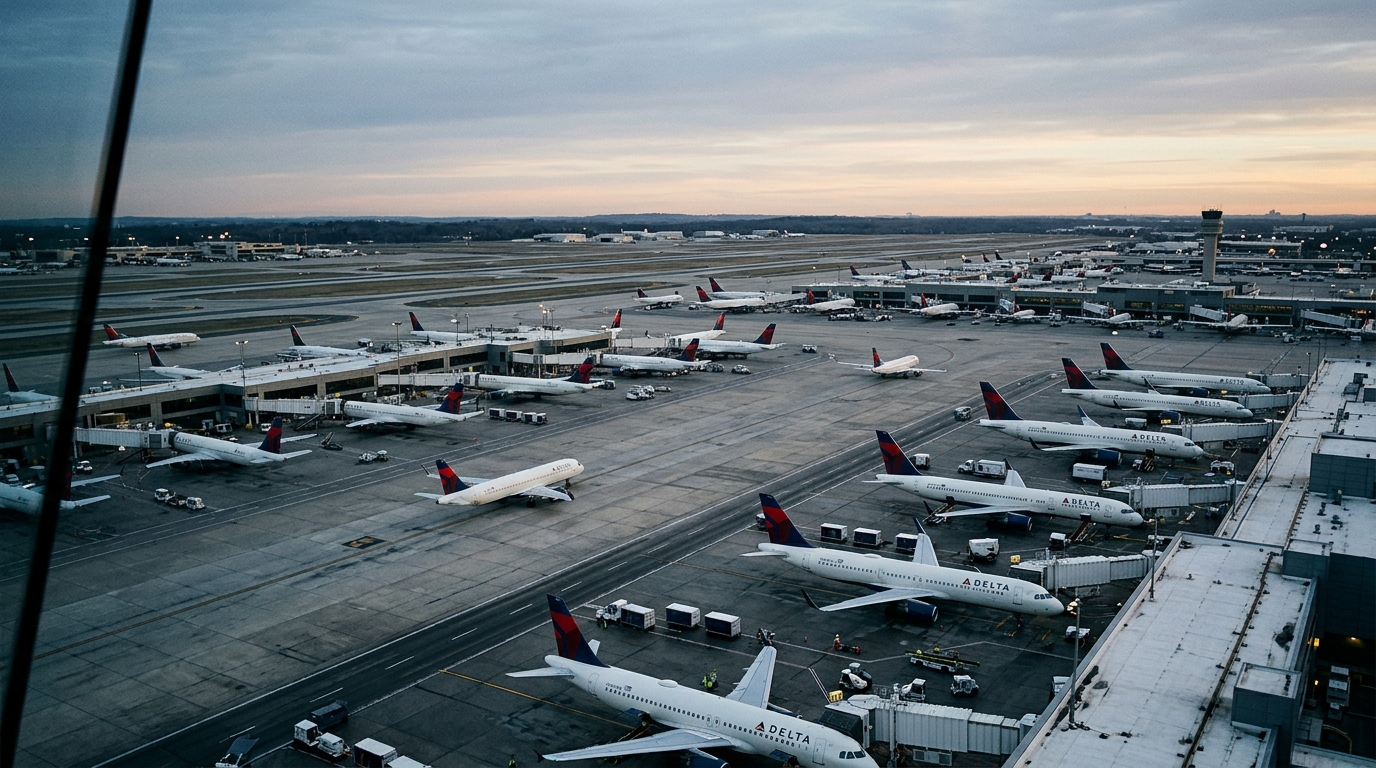
Delta Air Lines handed the market an unambiguous reset on Friday. The carrier missed Wall Street earnings estimates for the first time in two years, and the numbers behind that miss carry consequences well beyond one quarter’s EPS.
The Numbers That Changed the Picture
Delta reported September-quarter 2026 adjusted revenue of $17.585 billion, slightly below analyst estimates of about $17.6 billion, and adjusted EPS of $1.72 versus roughly $1.75 to $1.8 consensus, with adjusted net income of $1.134 billion. The fuel line is where the story lives: adjusted fuel expenses jumped 62% to $4.1 billion during the quarter, while the adjusted average fuel price rose 60% to $3.61 a gallon, including a refinery benefit of 13 cents per gallon.
CFO Erik Snell said the company’s quarterly earnings absorbed more than $500 million in additional fuel costs compared with its early July forecast. For the full year, Delta said it expects to absorb a roughly $6 billion increase in fuel costs while still generating a pre-tax profit of about $4.5 billion.
Delta forecast full-year EPS of between $5.10 and $5.60 on an adjusted basis, compared with its July outlook of $6.50 to $7.50. By the desk’s arithmetic, the midpoint falls 23.6% to $5.35 from $7.00. Free cash flow guidance came down to approximately $2.5 billion from a prior range of $3 billion to $4 billion. Adjusted operating margin fell to 9.4% from 11.1% a year earlier.
“This Gold Firm’s Stated Policy: Return Free Cash Flow to Owners”
Very few publicly traded securities are run with the owners in mind. Over the past 50+ years, yields have cratered. But today, one unique gold firm is doing something differently. Backed by the world’s best gold mine, this firm has one policy: to return all free cash flow to owners. It’s one of the highest yielding securities in the market. Some early investors are already seeing 10% annual yields.
Industry-Wide Fuel Math
U.S. airlines spent $42.92 billion on fuel in the first eight months of 2026, up $13.2 billion from a year earlier despite slightly lower consumption. In August alone, the industry fuel bill reached $6.17 billion, up 60.2% from August 2025, at $3.72 per gallon versus $2.30 a year earlier. That is not a one-month spike; it is a structural cost shift. American Airlines said the latest jump in fuel prices was adding roughly $1 billion to its expected fourth-quarter costs compared with assumptions made earlier in the year. United’s aircraft fuel expense increased $2.3 billion, or 84.1%, in the second quarter of 2026 versus the year-ago period.
“In a high-cost environment you cannot grow your way out of it,” Delta CEO Ed Bastian said on the earnings call. The industry has already taken steps to restrain capacity, but more will be needed next year to improve profitability, he said.
Who Can Actually Pull Back
The capacity restraint question is where carriers diverge sharply. Delta has a structural advantage most peers lack: Delta has some protection against higher fuel costs through its ownership of the Trainer refinery complex near Philadelphia. The carrier expects fuel to cost about $4.25 a gallon in the December quarter, compared with $3.61 a gallon in the September quarter.
Southwest faces a structurally weaker position. Southwest’s second-quarter 2026 fuel cost was $3.92 per gallon, and the company said fuel expense was up $889 million year over year, creating a $1.17 headwind to adjusted EPS. Southwest has already reduced its planned 2026 capacity growth. Slimmer margins leave less room to absorb another leg up in fuel. American’s debt load similarly constrains its flexibility: as of March 31, 2026, American had $10.8 billion in total available liquidity, a buffer that looks adequate until a sustained fuel shock erodes free cash flow for multiple quarters. United, meanwhile, said some flights scheduled for December would no longer operate and further reductions could follow in the first quarter and through 2027 if fuel remains expensive.
American’s position deserves its own accounting. American Airlines faces roughly $1 billion in added fourth-quarter fuel costs with no refinery offset and a debt load that limits its options.
Technical Framework: DAL Into the Miss
DAL closed Friday at about $82.17. Susquehanna and Bernstein both lowered their price targets to $100, from $105 and $106 respectively.
Scenario Modeling
Bull Case: Jet fuel pulls back toward $3.00 per gallon as Middle East tensions ease. Delta’s refinery advantage becomes less relevant sector-wide, compressing the cost gap, but strong demand and limited seat growth continue to support higher fares. DAL reclaims the $87.80 area; AAL and UAL benefit disproportionately from relief on their unhedged books.
Base Case: Fuel holds near current levels through year-end. Delta’s fourth-quarter revenue is expected to grow about 20% year on year, with adjusted EPS of $1.15 to $1.65, broadly consistent with a sector grinding through high costs on fare discipline. DAL trades in a $78 to $87 range, range-bound against the 50-day moving average overhead. Capacity cuts accelerate across AAL, LUV, and UAL into Q1 2027.
Bear Case: Fuel moves above $4.50 per gallon in Q4. The growing challenge for U.S. airlines is that adding too many flights in an effort to capture demand could intensify competition for passengers, making it harder to sustain higher fares and protect profits. DAL breaks $78.39 support and revisits the September low near $76.91. LUV and AAL, with thinner liquidity buffers, become the pressure points.
Active Trader Framework
The actionable structure here is the spread between carriers with structural fuel offsets and those without. DAL’s refinery benefit is real but partial; the thirteen-cent-per-gallon credit does not change the directional bet. Traders watching the group should track the weekly EIA jet fuel price publication as the primary catalyst, given that every ten-cent-per-gallon move represents roughly $170 million in annualized cost across a mid-size carrier’s consumption base.
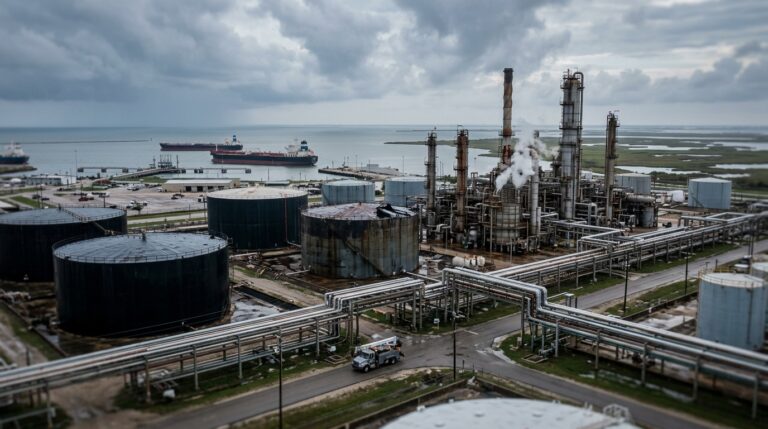
The other side of that fuel cost equation sits in the refining complex. Domestic refiners printing record crack spreads on Hormuz-rerouted fuel flows face their own exit-risk question when a diplomatic headline arrives.
For DAL specifically, the 50-day moving average around $87.80 is the level that separates a post-earnings stabilization from a deeper retest. On the short side, LUV’s thin margin profile and now-minimal capacity flexibility make it the most leveraged expression of a sustained fuel bid. Position sizing should account for the binary character of any geopolitical fuel catalyst: gaps open wide and close slowly.
Disciplined preparation beats reactive positioning here. The fuel cost structure is known; the unknown is duration. Traders who size for volatility rather than a directional conviction will be better placed when the next government fuel data or a Middle East headline resets the sector in either direction.
The Deal Elon Couldn’t Close in 2018 Is Back on the Table
Elon went after this small chipmaker back in 2018… and walked away empty-handed.
Today it’s the missing piece of his entire AI empire.
And this time he has billions to spend.
Get positioned before he moves… and you could see 50% overnight gains, with a shot at 300% in the months that follow.