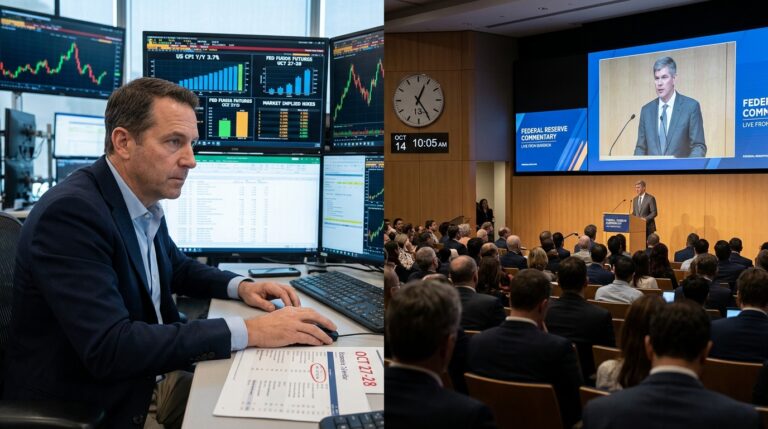
Every trader focused on Nvidia’s trajectory has tracked the revenue numbers. $96.2 billion in fiscal Q2 2027, data center revenue up 117% year-over-year to $89.0 billion, Q3 guidance set at $108.0 billion. The compute story is not in dispute. The thermal story underneath it deserves equal attention right now, because a specific material risk has a hard expiration date six weeks out.
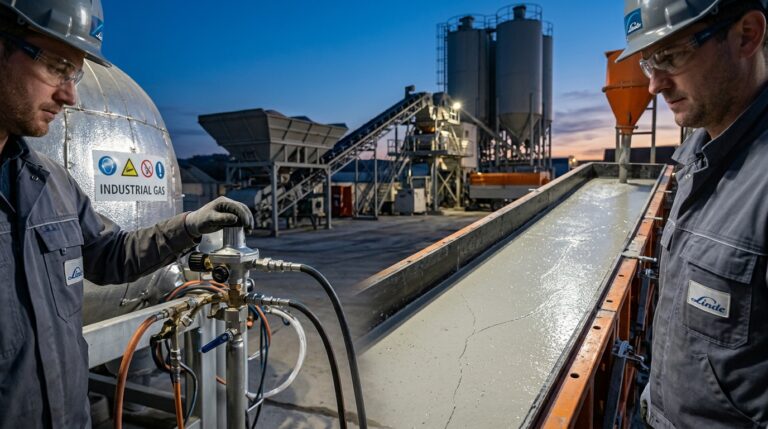
Nvidia’s Vera Rubin platform, which is ramping into full production in 2026 and is slated to be deployed by AWS, Google Cloud, Microsoft, Oracle Cloud Infrastructure, and CoreWeave, operates at rack densities that rewrite infrastructure assumptions. The NVL144 CPX configuration packs 144 Rubin GPUs into a single rack delivering 8 exaflops of AI performance. Nvidia has positioned Rubin-era data center designs around rack-scale liquid cooling, and industry supply-chain content around Rubin has been framed around warm-water liquid cooling at the rack level. Separately, Galinstan is a gallium-indium-tin liquid metal alloy used as a thermal interface material in electronics. But Nvidia has not publicly confirmed that Vera Rubin uses Galinstan specifically as the standardized die-to-cold-plate thermal interface layer, nor that the NVL144 CPX rack targets 260 to 300 kilowatts, nor that a $10 million rack becomes unusable at full load absent liquid metal TIMs. Those are plausible engineering assertions, but they are not verifiable as stated, so traders should treat them as an unconfirmed implementation detail rather than a disclosed bill-of-materials fact.
Gallium is not a discretionary upgrade. It is a critical input to multiple semiconductor supply chains, and the supply picture is structurally exposed. China accounts for about 98% of the world’s refined primary (low purity) gallium output. China imposed export licensing in August 2023 and escalated to an outright U.S.-specific ban in December 2024. Reuters reported that China later suspended the U.S.-specific ban, but kept the licensing regime in place, and set the suspension to run until November 27, 2026. Ex-China supply is still limited, and the market remains bifurcated between comparatively lower China domestic prices and materially higher Western import prices.
The November 27 deadline is not unique to gallium. China’s suspension of enhanced export verification for graphite-related materials carries the same expiration date, creating a second binary cliff in semiconductor supply chains.
Sector Positioning
The liquid metal thermal interface market sits at an estimated $325 million in 2026, small relative to Nvidia’s quarterly revenue but structurally irreplaceable. Indium Corporation is a long-standing supplier of gallium-based liquid metal alloys marketed for thermal interface applications. The precise total market size and the cited 9.7% CAGR through 2034 to $718 million are not independently verifiable from primary, attributable sources as written here, so they should be treated as directional rather than hard figures.
Scenario Framework
- Bull Case: China renews the gallium suspension past November 27 as part of ongoing trade negotiations. Rubin shipments continue uninterrupted through 2027. NVDA holds above $145 on sustained data center momentum. Ex-China producers accelerate timelines.
- Base Case: The suspension lapses but licensing friction, rather than a hard ban, creates 60 to 90 day procurement delays. Hyperscalers with existing inventory buffers absorb the disruption. Near-term throttling risk is limited; medium-term costs rise as non-Chinese gallium prices increase.
- Bear Case: Full export restriction reinstated November 27. Western gallium spot prices move back toward prior 2026 highs reported in market commentary. Rubin cluster deployments slow into Q1 2027. Nvidia’s $108.0 billion Q3 guide holds, but Q4 fiscal 2027 guidance draws scrutiny on supply-chain language.
Active Trader Framework
The November 27 date is a binary catalyst traders can plan around rather than react to. Monitor trade negotiation signals between Washington and Beijing for any extension announcement. Watch Indium Corporation procurement disclosures and junior gallium project financing activity in Australia and the US as leading indicators of supply-chain stress. For NVDA positioning, the thermal supply risk may not be reflected in current consensus. Guidance language on supply chain in the next earnings call deserves close reading. Disciplined traders size accordingly and define risk before the expiration, not after.
Preparation is the only edge available when a clock is running. The numbers are visible. The question is whether you have a framework before the deadline arrives.