October 17, 2026
Bonus Content: Ten Ships Hit in Six Days. Here Is How to Size Your Oil Trade.
When news broke overnight about China’s Moonshot AI unveiling its new model…

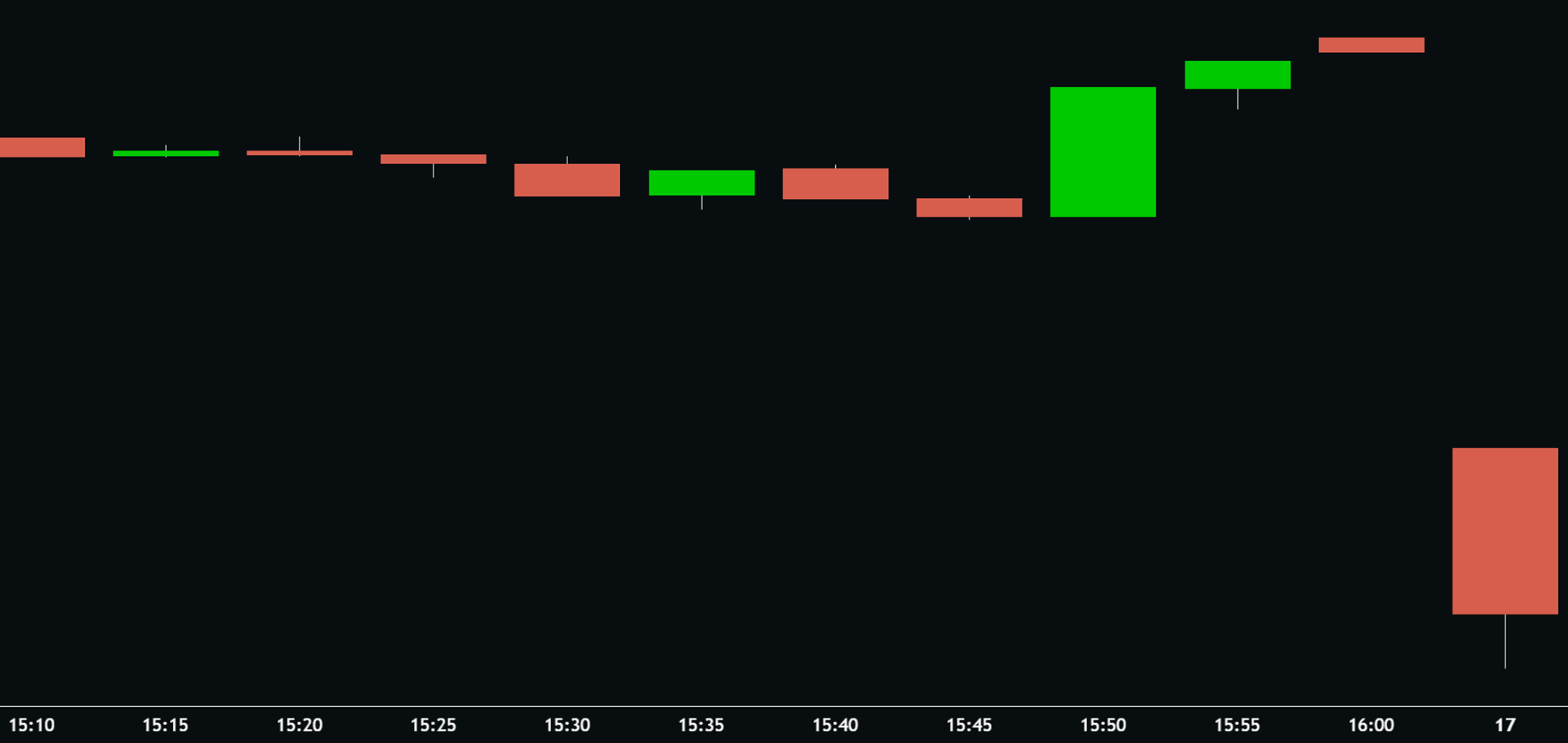
The market gapped down 1% before most traders even poured their morning coffee…
For standard portfolios, it looked like the start of another stressful day…
And over the next two hours, the market barely crawled higher… moving a tiny 0.2%…
To traditional buy-and-hold investors, a 0.2% move is practically useless…
Yet, according to our research, anyone who ignored the overnight headlines and waited until exactly 9:50 AM Eastern could have locked in a $529 payout before lunchtime… on a simple $1,000 starting stake…
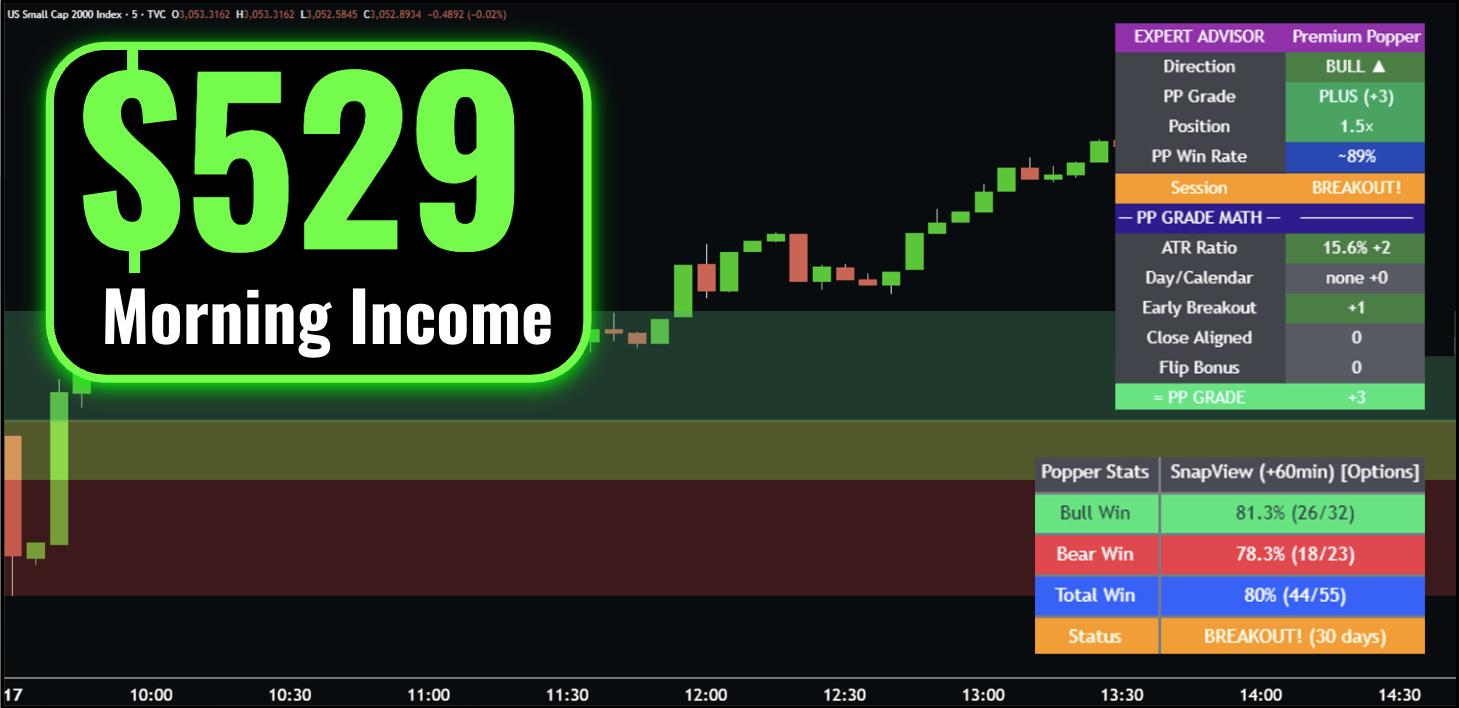
That would not have been an isolated fluke either…
Back on June 25th, when inflation surged past 4%…
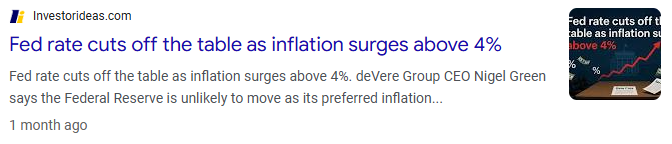
And panicked investors expected a massive market beatdown… the market moved just 0.3% after the open… yet that exact same morning setup yielded another $526 payday before lunch…
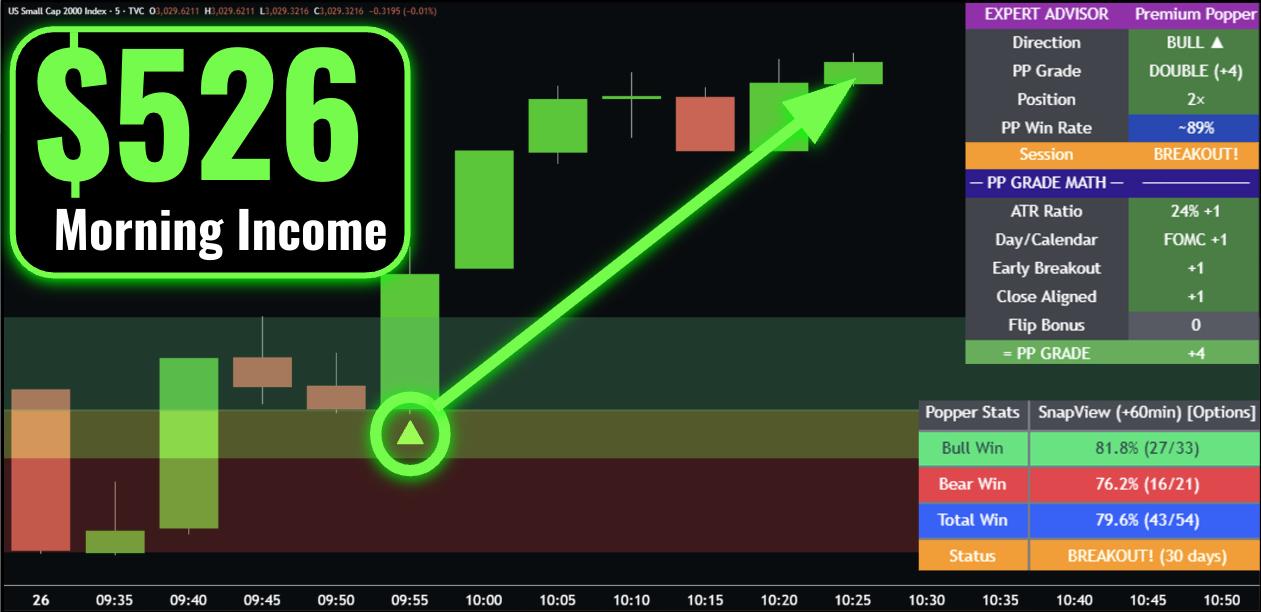
Of course, there would have been smaller gains and some that did not work out, but…
How would it have been possible to pull $500+ out of the market on a tiny fraction-of-a-percent crawl… while traditional traders are getting chopped to pieces?
It all comes down to an institutional phenomenon that happens during the first 20 minutes of every trading day…
Between 9:30 AM and 9:50 AM, Wall Street heavyweights enter a massive brawl to settle block orders… pushing nearly 25% of the entire day’s volume into a brief 20-minute window…
Right around 9:50 AM, the brawl ends… the dust settles… and the market literally hands us its direction for the rest of the morning…
By placing just one simple trade on one ticker right as that direction becomes clear…
You give yourself a shot to walk away with $500 in hand before lunch, leaving you completely free for the rest of your day…
While I cannot make any guarantees in the market…
Recently, I sat down live on camera with a former money manager to lay out the floor data behind this 9:50 AM morning phenomenon…
And how anyone with a normal brokerage account can take advantage of this step-by-step…
Tap here to watch the complete video breakdown before access is taken down.
See you there,
Silas Peters
Ten Ships Hit in Six Days. Here Is How to Size Your Oil Trade.
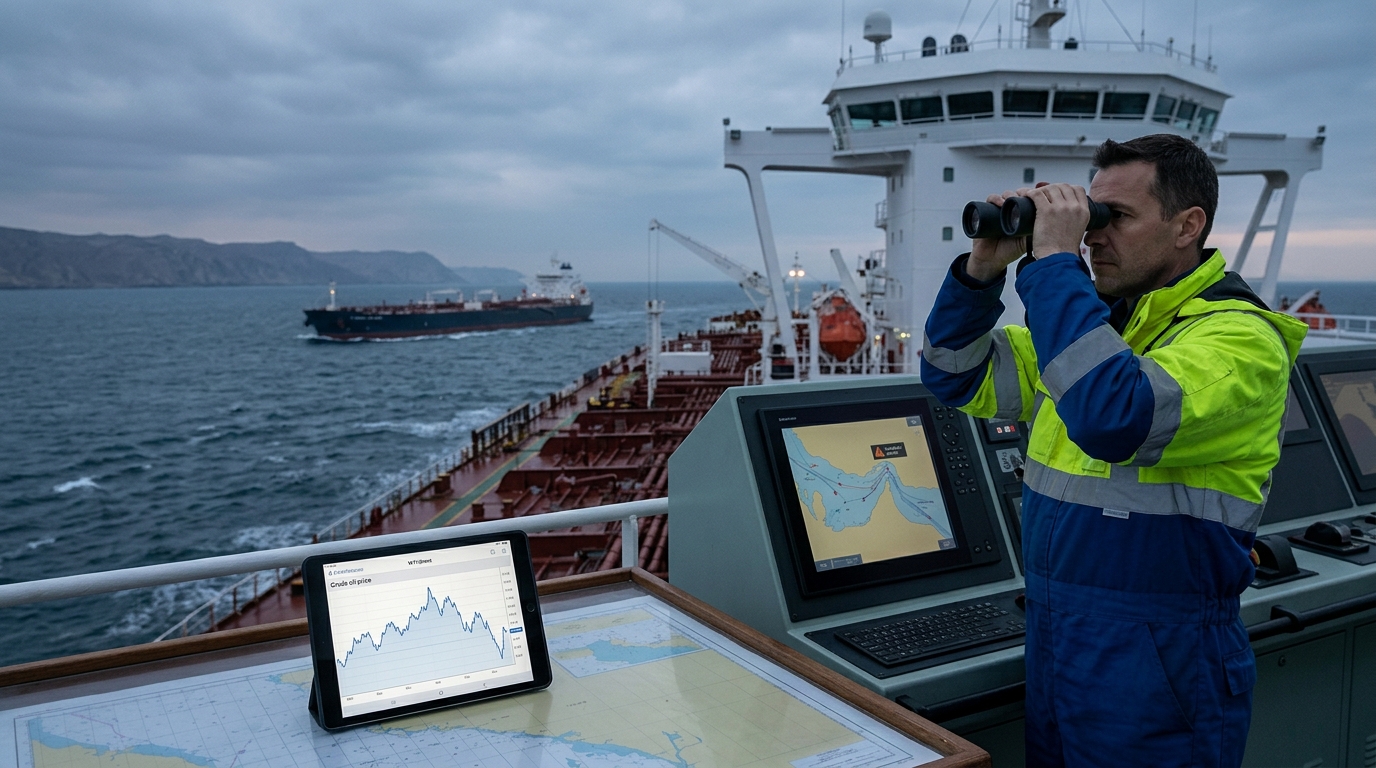
Ten vessels struck since October 11. A crude oil tanker was struck on October 6 while transiting the Strait of Hormuz, according to UKMTO. A cargo ship sank after striking a naval mine in the Strait of Hormuz on October 14, according to Iran’s IRGC navy. And then, inside 24 hours, Trump named Pickaxe Mountain as the next potential target in a Newsmax interview while Iran’s president declared readiness for dialogue. This market does not need a new headline to move, it needs a framework for when to add and when to fade.
- WTI: $101.41, up 3.5% Friday; Brent: $109.86, up 3.7%
- Hormuz transit volume: sharply reduced versus pre-war levels, with some trackers placing it in the single digits per day versus a pre-war average near ~85
- U.S. crude inventories fell about 8.6 million barrels for the week to October 9
- War-risk insurance for a Hormuz transit: roughly 7.5%–10% of hull value in recent market commentary, against a pre-war baseline around 0.25%
- DHT (DHT): Q4 spot bookings at $509,100 per day, approximately 50% covered
- FRO (Frontline): Q2 net income $659 million, a record; Q3 VLCC spot guidance $156,900/day at 86% coverage
- INSW: preliminary Q3 revenue $480M–$490M; early Q4 fixed ~$180,000/day on ~37% of days
Market Context
The Strait of Hormuz is severely constrained for commercial shipping as of October 16. CENTCOM has emphasized control of primary routes, while other reporting suggests throughput is far below pre-war levels. Separately, UKMTO-linked reporting has described a surge in incidents, including claims of unusually high weekly totals in late September and early October. The energy complex’s rise in Brent since the pre-war price near $72 reflects that arithmetic directly.
Trump’s Newsmax interview Thursday put Pickaxe Mountain, a fortified underground site linked to Iran’s nuclear program, on the table as a conventional strike target. He ruled out nuclear weapons and ground troops, and he did not confirm whether planners are weighing the GBU-43/B. Within hours, Iranian President Masoud Pezeshkian said Tehran has “always been ready for dialogue” while vowing it will not “bow to coercion.” ING analysts have noted that a U.S.-Iran agreement could strip the market’s geopolitical risk premium. That premium is currently measured in tens of dollars per barrel.
Sector Breakdown
Crude tanker operators are the most direct expression of the trade, and the numbers are no longer speculative. Frontline posted Q2 2026 revenue of $943.3 million, up 96.5% year over year, with record net income of $659.2 million. Its estimated average daily cash breakeven sits at roughly $23,800 per day for VLCCs against spot TCE rates of $152,700 currently contracted for Q3 at 86% coverage. DHT, the pure-play VLCC operator, reported Q3 fleet TCE earnings of $141,300 per day; its Q4 spot bookings already average $509,100 per day on about half of available spot days. International Seaways expects Q3 revenue of $480M–$490M and net income of $340M–$350M, with early Q4 fixed at roughly $180,000 per day on ~37% of days. Valuation multiples across the group remain low versus the broader market, reflecting skepticism that peak rates persist.
For integrated majors, ExxonMobil enters its October 30 earnings report with refining strength already evident in Q2, when stronger refining margins increased earnings by $3.18 billion. Q2 earnings reached $14.5 billion, more than double the year-earlier figure. XOM carries a current P/E near 23x, significantly richer than the tanker names, because the market is pricing durable Permian and Guyana growth, not just the war premium.
The same Hormuz disruption that lifted tanker rates also restructured refining economics for the integrated majors. Chevron’s downstream business swung from a loss to a $4.9 billion profit as war-damaged Middle East refinery capacity made surviving refineries extraordinarily valuable.
Technical Framework
WTI broke above $100 and is holding it. The psychological level at $100 becomes the first line of support on any de-escalation headline; the prior resistance near $95 is the next meaningful level below that. Brent’s $110 touch on Friday marks the high end of the range established since early October. A confirmed peace signal, a ceasefire announcement or a credible nuclear deal framework, would likely gap prices lower by $10–$15 before the dust settles, given how much of the premium is sentiment-driven day to day.
Tanker equities have outperformed the broader S&P 500 by a wide margin in 2026. The S&P 500 is up about 13% year to date. Volume on FRO and DHT has tracked the Hormuz headline cycle closely, making them effective real-time proxies for escalation sentiment. VWAP levels on a multi-week basis continue to slope higher, but daily swings of 5–8% in either direction on geopolitical news mean position sizing is the primary risk-management decision.
Volume and momentum in FRO and DHT have tracked the headline cycle, but there is a policy variable the tape has not fully priced. The Trump administration’s reported move to ease sanctions on shadow fleet tankers could structurally compress the rate environment lifting FRO, DHT, and INSW.
Scenario Modeling
Bull Case
Trump orders a conventional strike on Pickaxe Mountain. Iran retaliates at sea, ship attacks intensify through October, and Hormuz traffic remains near minimal levels. Brent tests $120; VLCC spot rates hold above $500,000 per day. FRO, DHT, and INSW push to new highs. War-risk insurance premiums near 10% of hull value persist, further concentrating freight economics with the operators willing to transit.
Base Case
Back-channel negotiations continue without a breakthrough. Hormuz attacks stay at current frequency but do not escalate dramatically. Brent consolidates in the $100–$112 range. Tanker rates remain structurally elevated but begin to show quarter-over-quarter deceleration as more ships reroute. XOM and the integrated majors trade range-bound into earnings. The midterm elections on November 3 act as a near-term restraint on major U.S. military escalation.
Bear Case
A credible ceasefire is announced before November. Pezeshkian’s dialogue signal turns into a formal negotiating track. Brent retraces $15–$20 in days, as happened in March when U.S. intervention signals caused an 8–9% single-session drop. Tanker stocks, which have priced in elevated rates through 2027, would face sharp multiple compression even as Q3 earnings remain strong. The speed of that unwind would be the defining risk for anyone long with significant size.
Active Trader Strategy Framework
The core tension is between a market that swings 5% on a single interview and underlying fundamentals that remain structurally supportive for tanker operators regardless of whether Hormuz opens tomorrow or in six months. Sizing accordingly means treating geopolitical catalysts as short-duration volatility events and the freight-rate data as the anchor for longer-term positioning.
Key levels: WTI $100 is the line. A close below it on heavy volume would signal the de-escalation trade is in play and would warrant reducing energy exposure quickly. Brent $95 is the next meaningful structural level. For tanker names, the bid in earnings multiples stays attractive as long as Q4 rate guidance holds: DHT’s $509,100 per day average on Q4 spot bookings already contracted is the number to watch when it reports.
Volatility is the product here, not the problem. Manage position size rather than trying to time each Trump or Pezeshkian statement. The traders who hold full size through every interview are the ones who give back weeks of gains in a morning session. Preparation over prediction, that is the framework that survives a market moving on 24-hour news cycles.