October 23, 2026
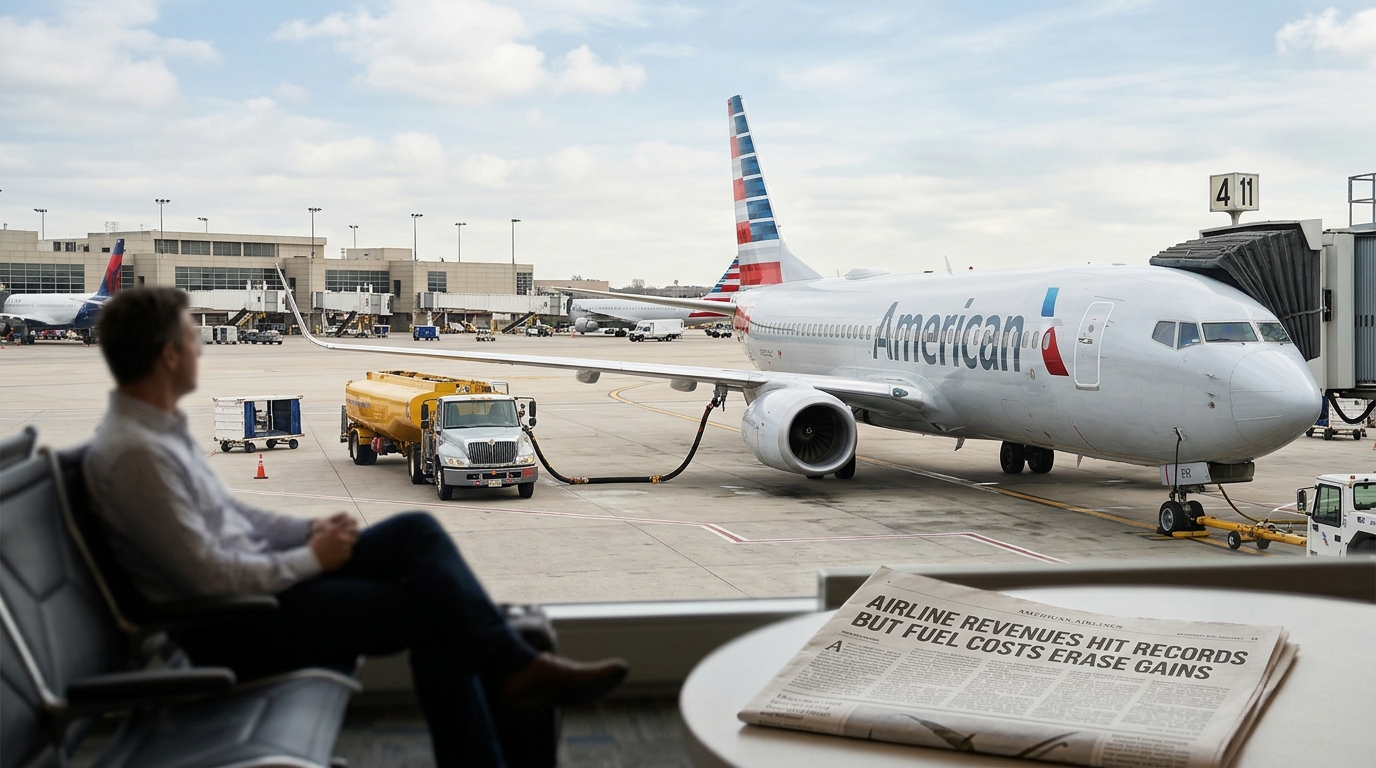
Bonus Content: American Airlines Set a Revenue Record. Fuel Erased It.
For a while now, I’ve been showing regular traders like you how to take advantage of a specific 60-minute window…
One that lets us go after 50% returns every morning – whether the market opens higher… or lower.
Here’s what I mean…
If you had spotted this 60-minute opportunity yesterday morning… all you would’ve had to do was place a quick trade before 10 am…
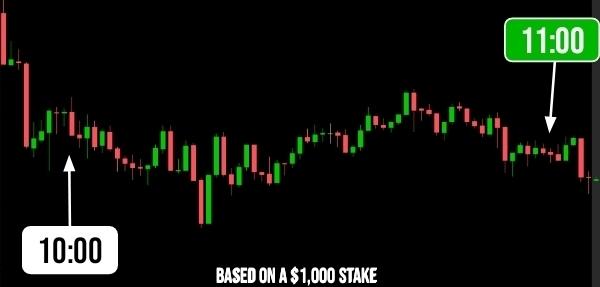
Went ahead with your morning plans and when you return a couple of minutes later, there’s a good chance you’d find $500 in extra income sitting in your account (on a 1k stake)
It wouldn’t have mattered what happened with the overall market… this 60-minute window would have been all you needed to target cash.
Today? Same story.
Place a quick trade, grab your coffee… and let the setup do the heavy lifting.
And just 60 minutes later… come back to what could be a nice $500 in extra income sitting in the brokerage account.
I designed the setup to be that straightforward.
Granted, there will be trades that won’t work out
But if you want in?
American Airlines Set a Revenue Record. Fuel Erased It.
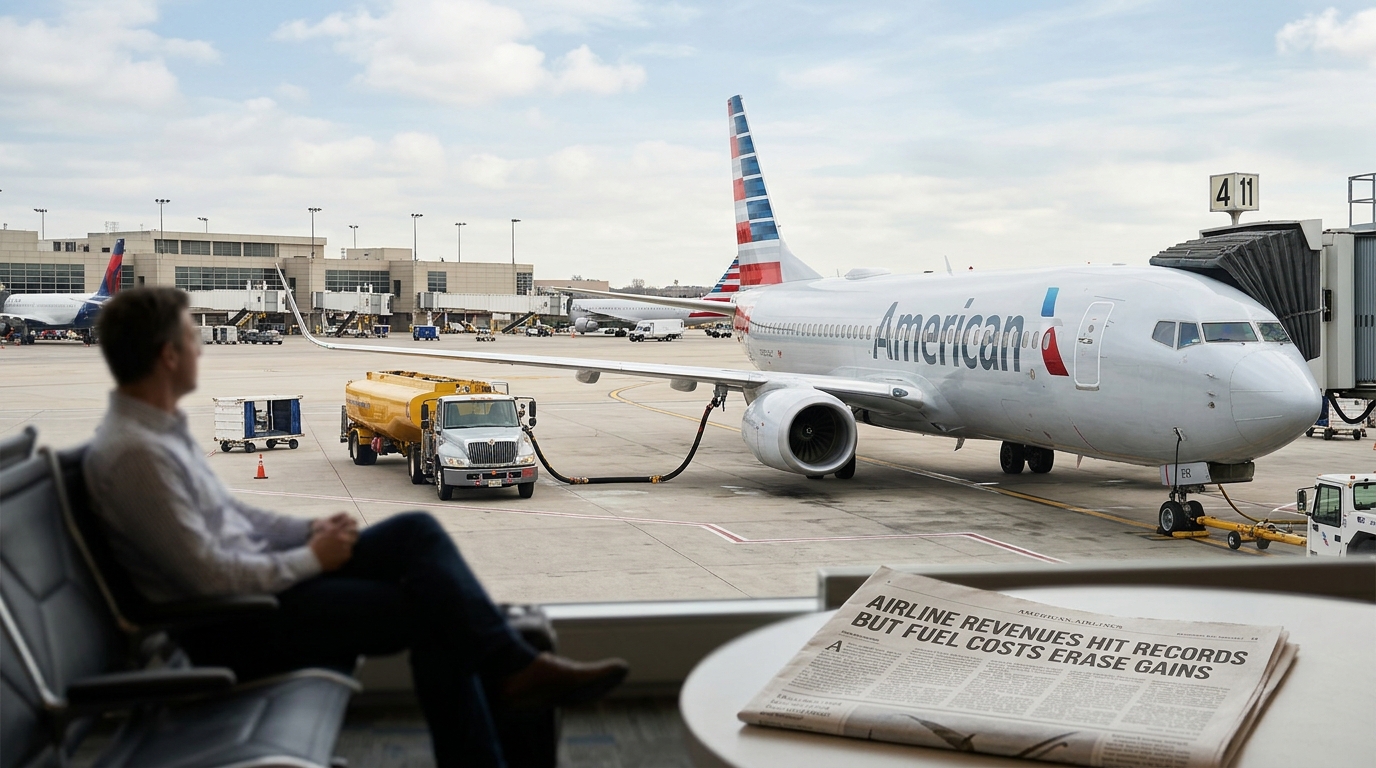
American Airlines posted the best quarterly revenue in the carrier’s history on Wednesday, and it still guided to a full-year loss. That contradiction is the entire trade. Revenue jumped 19.3% from a year earlier to $16.3 billion. Aircraft fuel expense rose 67.5% year-over-year to about $4.6 billion, driven by a 62.7% rise in the average price per gallon to $3.85 from $2.37 in the same period of 2025. The math is brutal: a record top line absorbed by a single cost item that nearly doubled in twelve months.
The Macro Backdrop
Oil climbed about 4% to a five-month high on Thursday after Houthi attacks in Saudi Arabia stoked concerns of further supply disruption, with Brent futures settling at $113.17 a barrel and WTI at $99.47. Analysts at Ritterbusch and Associates attributed the move to a risk premium tied to additional Houthi strikes on Saudi infrastructure and talk of a combined US/Israeli strike on Iran after the midterms. American carries no buffer against that environment. As of September 30, the carrier had no fuel hedging contracts outstanding and its stated policy is not to enter into hedging transactions, leaving it fully exposed to fluctuations in fuel prices.
Sector Damage: Four for Four
All four major US carriers reported Q3 results in October, and all four cut their annual outlooks. Delta slashed full-year 2026 EPS guidance to $5.10 to $5.60, down from a July forecast of $6.50 to $7.50, driven by Q3 adjusted fuel expenses of about $4.1 billion, up 62% year-over-year. United guided Q4 adjusted earnings of $0.50 to $1.50 per share assuming jet fuel at $4.80 per gallon. Southwest cut its full-year adjusted earnings forecast to $2.60 to $2.85 a share from $3.25 to $4.25, after paying $3.92 a gallon in Q3 against a prior assumption of $3.70 to $3.75. American’s position is structurally the most exposed: no hedges, the highest debt load, and now a deepening full-year loss. American now forecasts a 2026 loss of $1.00 to $1.60 per share, down from a July range that spanned a 65-cent loss to a 65-cent profit.
Stock-Specific Metrics
AAL closed Wednesday at $12.24, sitting 35% below its 52-week high of $18.79. American expects a Q4 adjusted loss of $0.50 to $1.10 per share and a full-year adjusted loss of $1.00 to $1.60, while planning slower capacity growth in 2027. Based on the forward curve as of Oct. 19, management anticipates average fuel at approximately $4.70 per gallon in Q4, nearly double the Q4 2025 price, adding roughly $2.8 billion to quarterly fuel expense versus the prior year. Premium passenger unit revenue rose 18.5% and managed corporate revenue climbed 27.6%, evidence that demand quality is improving even as the cost structure overwhelms it. UAL trades near $102, DAL near $78, and LUV near $40, all carrying significant beta to the oil curve.
Technical Framework
AAL has been compressing between the $11.70 low from October 22 and the $12.70 session high. A sustained hold above the $12.50 area, the mid-range of this week’s range, improves the short-term picture; a break below $11.70 on volume reopens the $10.09 52-week floor. DAL’s 50-day moving average near $75 is the level worth monitoring as Brent holds above $110. LUV’s relative strength versus the group has improved as its cost structure offers modest insulation at $3.92 per gallon paid in Q3.
Scenario Modeling
Bull Case
Brent retreats toward $95 on a geopolitical de-escalation signal post-midterms. Jet fuel follows to the low $3-handle. AAL, with its revenue momentum intact at 19%-plus growth, recovers toward analyst consensus of $15.44. DAL recaptures the $85 level. The unhedged carriers become the largest beneficiaries of any crude reversal, which is the asymmetric argument for holding AAL into Q4.
The bull case hinges on whether premium revenue can survive a sustained fuel shock — and Delta’s Q3 results offer the clearest test of that question. Delta’s premium revenue mix was supposed to protect earnings when jet fuel costs surge — here is whether it actually did.
Base Case
Brent consolidates in the $108 to $115 range as the risk premium holds but fresh escalation stalls. Reuters reported Oct. 21 that United CEO Scott Kirby said carriers should prepare for fuel prices to remain elevated throughout 2027. Airline stocks trade sideways to slightly lower, with Q4 earnings confirming the loss guidance already baked in. AAL holds between $11.50 and $13.50.
Bear Case
A confirmed strike on Iranian infrastructure pushes Brent above $120. Full-year 2026 fuel expense is already expected to be more than $7 billion higher than in 2025. At $4.70 per gallon in Q4 and rising, the full-year loss widens beyond the $1.60 floor. AAL tests the $10 level. DAL breaks $70 support.
Active Trader Strategy Framework
The airline complex is now a direct expression of Brent. Traders who have a view on crude should size positions accordingly and treat airline equity as a leveraged crude proxy, not an airline story. Volatility will be elevated around any Middle East headline. Key levels to monitor: $110 Brent as short-term support and $120 as the break-higher trigger; AAL $11.70 as downside support; DAL $75 as the moving average anchor. Calendar spreads in crude options may offer better risk-defined exposure than outright airline equity for those managing tail risk. Avoid over-concentration in any single carrier, given divergent hedge positions across the group.
The geopolitical trigger for the next crude move may already be in motion. Houthi strikes on Saudi airport infrastructure have reset the risk premium traders must price into any airline position.
Preparation here means having your levels defined before the next geopolitical headline, not after it. The carriers have told you what they are paying for fuel. Brent has told you where it is trading. The only question is whether the market has fully priced the range of outcomes.