Valero Energy closed at $350.71 on November 10, down 1.7% on the session. The 52-week range runs from $159.90 to $461.52. At roughly $97.8 billion in market capitalization, the stock sits well below where the fundamentals argue it should.
The numbers from Q3 2026 are not subtle. Adjusted EPS reached $23.90 against a consensus of about $21.2. That was another quarter in which Valero topped Wall Street’s earnings estimate. Revenue came in at $46.1 billion. The refining segment alone generated $8.78 billion in operating income, up from $1.61 billion in Q3 2025.
The engine behind that result is the crack spread. Refining margin per barrel of throughput tripled to $39.24 from $13.14 a year earlier. Distillate margins drove most of the year-over-year margin expansion. That is not a coincidence: diesel is where the global structural tightness lives right now.
The Geopolitical Backdrop Is Not Softening
As of November 10, the 3-2-1 crack spread sits near $45 per barrel, against a multi-year baseline in the mid-$30s. The diesel crack has traded around $100 per barrel in recent weeks, far above the pre-crisis norm of $20 to $30. In its November 2026 Short-Term Energy Outlook, the EIA said it expects U.S. crack spreads to remain elevated for the rest of 2026 and through most of 2027.
The supply disruption driving that premium is not abstract. Reuters reported this week that Ukrainian strikes since late October have hit nine Russian refineries and reduced Russia’s oil refining capacity by about 30%. Russian officials also confirmed an attack on the KINEF refinery at Kirishi near St. Petersburg. Estimates for how much capacity is offline vary by source and can change quickly as units restart, but the market impact has been visible in distillate pricing and volatility. Middle Eastern disruptions tied to the Iran conflict have added to product tightness, keeping diesel prices elevated.
The Valuation Gap
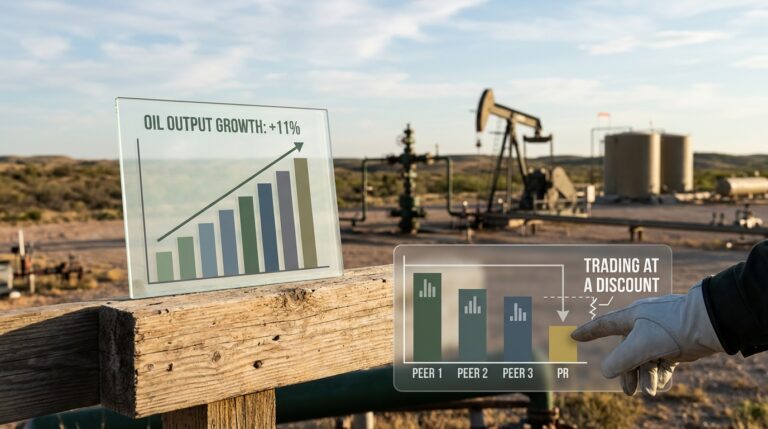
Against that backdrop, VLO’s current price implies a meaningful discount to Street targets. The average 12-month target sits around $427, with Raymond James at $530. BMO Capital Markets carries a $505 target with an outperform rating. The consensus rating is closer to Hold than Moderate Buy across major aggregators. At the November 10 close, the stock sat roughly 18% below the $427 average.
Valero is not the only refiner printing numbers that look implausible against historical norms. Chevron’s downstream segment posted a similar year-over-year earnings surge driven by refinery utilization running near capacity.
Scenario Framework
Bull Case ($430+): Ukrainian strikes persist through Q4, keeping global diesel markets tight and the 3-2-1 crack above $40. Valero’s distillate-heavy Gulf Coast refinery configuration continues to generate outsized margins per barrel. Q4 results show another EPS beat.
Base Case ($370 to $410): Crack spreads drift modestly lower as geopolitical risk premiums partially deflate, but the EIA’s projected above-average refinery run rates sustain solid cash generation. VLO trades toward the lower band of the analyst target range.
Bear Case (below $340): A ceasefire in Ukraine restores Russian refining output faster than expected, while OPEC+ supply additions rebuild crude inventories. The diesel crack compresses toward $30, and Q4 margins revert sharply from Q3 levels. VLO revisits its November low of $341.51.
Policy risk cuts in the other direction too. A Treasury-led feasibility review of a diesel export ban would directly threaten the spread conditions that underpin Valero’s margin outlook.
Trading Framework
$341.51 is the near-term floor identified by the November 10 intraday low. A close below that level would put the $310 to $320 zone in play. On the upside, the stock needs to reclaim $365 to signal a base and $390 to draw momentum buyers back. The next weekly EIA petroleum status report on November 12 is the next hard catalyst: a draw in crude inventories alongside elevated distillate demand would reinforce the bull case. Position sizing should account for the fact that crack spreads themselves can move $10 to $15 in a week when geopolitical headlines shift.
The core question here is not whether Valero is a good business. A multi-quarter run of sharply higher margins has answered that. The question is whether the market is correctly pricing the durability of the spread environment. Right now, with Russian refining still under active attack and diesel cracks running far above historical norms, the evidence says it is not.