September 8, 2026
Bonus Content: Google Paid $32B for a Data Pipeline. Broadcom Is Doing It With Silicon.
Dear Reader,
There is an ordinary looking building in Fremont, California.
The address is 7400 Paseo Padre Parkway.
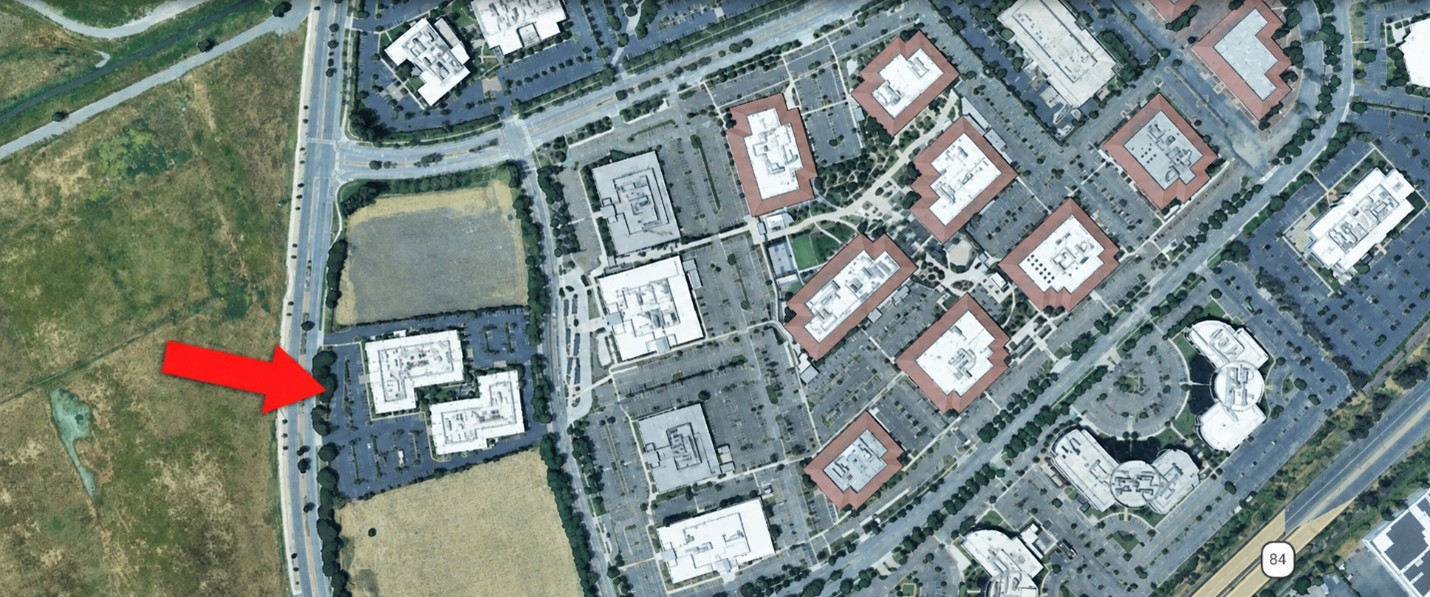
But what Elon Musk is developing inside could launch an entirely new industry.
Click here to see what he’s been quietly building.
Elon says the technology being developed there could eventually enable what he calls “Jesus level miracles.”
That is an extraordinary claim.
But Elon has already helped transform online payments, electric vehicles, solar power, space exploration and artificial intelligence.
Now former Fox Business analyst Matt McCall believes Elon may be opening the door to his next enormous opportunity.
And one tiny public company could give investors a way to participate.
Nvidia has already made an eight-figure investment in this company.
That caught Matt’s attention.
Because Nvidia has a remarkable history of recognizing important technology trends early.
It supplied the critical technology behind the artificial intelligence boom.
Now it is investing aggressively in the industry forming around Elon’s latest breakthrough.
It’s not just Nvidia, either. All members of the “Mag 7” are investing in this space, too. Perhaps the first time they’ve all ever agreed on something.
Click here to discover why the biggest names in technology are piling in.
Matt believes Elon could help create an enormous new market.
But this tiny Nvidia backed company may supply a critical technology that market will need.
That could make it one of the most direct ways for investors to follow the opportunity Elon is creating.
And a major gathering beginning November 14th could bring fresh attention to the entire field.
Click here to get the full story.
To your wealth,
Stephen Prior, Publisher
Monument Traders Alliance
P.S. The building looks ordinary from the outside. What is happening inside could be anything but ordinary. Click here to see the full story before November 14th.
Google Paid $32B for a Data Pipeline. Broadcom Is Doing It With Silicon.
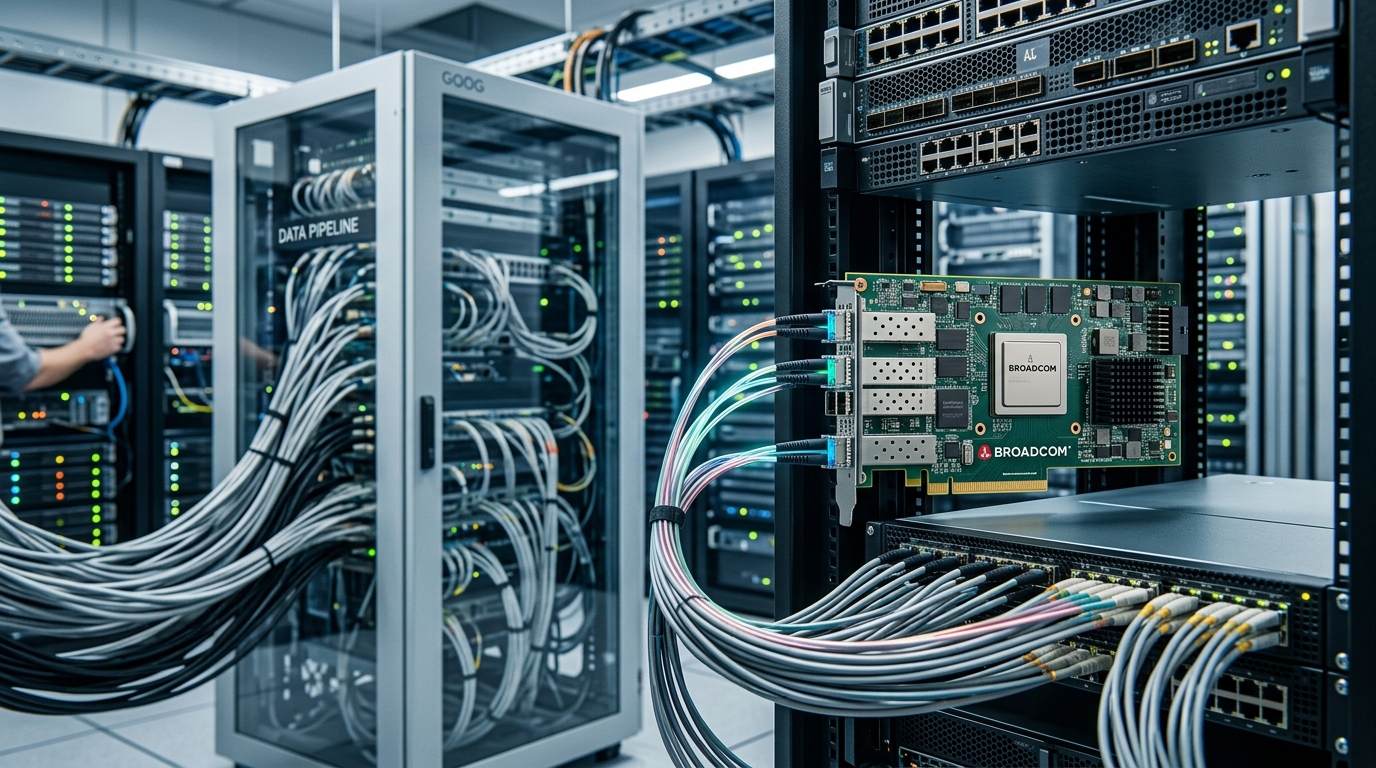
The acquisitions generating headlines in 2026 share a common architecture. Strip away the press releases and what remains is a race to own two things: the proprietary silicon that processes AI workloads and the data pipelines that feed them. Every major deal this year is a variation on that theme.
- Amazon, Alphabet, Meta, and Microsoft are on track to spend a combined $650 billion on AI infrastructure in 2026, nearly double the roughly $410 billion spent in 2025.
- Custom ASIC shipments are projected to grow 44.6% year-over-year in 2026, nearly triple the 16.1% growth rate for merchant GPUs.
- Broadcom carries a $73 billion AI chip backlog and is targeting $100 billion in annual AI chip revenue by 2027.
- Marvell reported fiscal 2026 revenue of $8.195 billion, up 42%, and its stock is up about 163% year-to-date in 2026.
- Google’s $32 billion Wiz acquisition closed March 11, 2026, locking multicloud security infrastructure directly into Google Cloud.
- Marvell’s August 19 agreement with Google carries up to $120 billion in potential revenue through fiscal 2033, with Google receiving a warrant to purchase up to 58,970,907 MRVL shares.
Market Context
The AI infrastructure consolidation is executing in a higher-for-longer rate environment. With the 10-year Treasury near 4.79% and the Fed widely expected to hold through year-end, capital allocation decisions are load-bearing. Spending $650 billion on data center buildout while funding costs stay elevated means every acquisition must deliver durable, defensible revenue, not optionality. That pressure is compressing the window for mid-cap AI infrastructure firms to remain independent.
Combined AI infrastructure spending by Google, Microsoft, Amazon, and Meta is projected to reach nearly $600 billion in 2026, yet Big Tech’s outright acquisition activity has remained well below historical levels. Rather than buying AI capability wholesale, hyperscalers are redirecting capital toward infrastructure buildout and large strategic minority investments. The Wiz deal is the exception. Most of the action is quieter.
Sector Breakdown: Where Consolidation Is Hardening
Nvidia still holds approximately 70% of the AI chip market, but ASIC-based AI server shipments are projected to reach 27.8% of the market in 2026, the highest share since 2023, with custom ASIC shipments growing 44.6% year-over-year. Capital is rotating from GPU dependency toward proprietary silicon as a structural competitive moat.
The custom ASIC market in 2026 is no longer about cost savings on the margin. It is about structural competitive advantage. The hyperscaler that controls its own silicon controls its own performance roadmap, its own cost structure, and its own supply chain. These are three things no amount of Nvidia procurement can deliver.
The data pipeline layer is seeing equivalent pressure. Enterprise software leaders are racing to own agent infrastructure, data pipelines, and applied AI talent. Google’s Wiz acquisition is the clearest proof: the all-cash purchase folds the fastest-growing cloud security vendor on record into Google Cloud, reshapes the competitive map against Microsoft, Amazon, Palo Alto Networks, and CrowdStrike, and signals that cloud security has become the most contested battleground in enterprise technology.
Stock-Specific Breakdown: MRVL and AVGO
Marvell is the most operationally transparent beneficiary of the silicon consolidation. Marvell reported Q2 FY2027 EPS of $0.94, compared with $0.67 in the same quarter last year. The company raised its fiscal 2027 and 2028 revenue outlook, driven by broad-based data center strength, while management disclosed that much of the financial benefit from expanded hyperscaler partnerships may arrive closer to 2029.
The Google deal involves the search giant obtaining a warrant to buy up to 58,970,907 shares in Marvell, which could dilute the chipmaker’s outstanding shares by roughly 6% to 7% if fully exercised. That warrant structure deserves attention: Google is not just a customer, it is becoming an embedded stakeholder. Marvell trades at roughly 83x trailing earnings and 24x trailing sales.
Broadcom’s position is more entrenched. Bloomberg Intelligence splits the custom-ASIC market between Broadcom at 60% to 80% and Marvell at 20% to 25%. Marvell designs custom AI silicon, XPUs, for hyperscalers, alongside the interconnect, optics, and networking silicon that connects those chips. Broadcom earns 43.4% operating margins and 68.3% gross margins on this work.
Technical Framework
MRVL closed August 27 earnings week above its 50-day moving average, with the 200-day providing a floor near the $195-200 zone. The stock broke out of a prior descending channel before earnings and posted higher lows heading into the report. Volume expanded on the beat. Resistance sits near $252; a clean close above that level opens a measured move toward $275-298. The RSI reading of approximately 58 heading into the report was not overbought, which reduces the risk of a sell-the-news flush if momentum holds.
AVGO is technically extended on a longer time frame but has not shown distribution patterns at current levels. The $73 billion backlog is providing earnings visibility that limits downside on pullbacks. Watch the 20-week moving average as a retest candidate on any sector rotation.
Scenario Modeling
Bull Case: Custom ASIC shipments clear 30% market share by year-end 2026. Marvell’s Google partnership revenue begins pulling forward from the 2029 target, prompting upward estimate revisions. MRVL breaks $252 with conviction and trends toward analyst targets in the $275-298 range. AVGO rerates toward $100 billion in AI revenue ahead of schedule.
Base Case: The 2029 payoff timeline for Marvell’s deepest hyperscaler partnerships holds. Both MRVL and AVGO grind higher in line with fiscal 2027 guidance of roughly $12 billion and $100 billion in AI chip revenue, respectively. Consolidation continues at the mid-cap level, with data pipeline and security assets absorbing the most M&A activity.
Bear Case: If hyperscalers like Google or Meta develop fully in-house chip capabilities, Broadcom’s ASIC franchise could erode over three to five years. A rate shock or capital expenditure pullback from any of the big four hyperscalers resets near-term custom silicon demand, compressing multiples sharply at current valuations.
Active Trader Framework
The consolidation is not a single event. It is a multi-year regime. Traders watching MRVL should treat the $220-225 zone as near-term support and the $252 level as the decisive breakout trigger. Position sizing should account for the valuation risk: 83x earnings leaves minimal room for guidance disappointment.
AVGO’s backlog provides a different risk profile, more earnings visibility but less near-term upside catalyst unless an incremental hyperscaler deal surfaces. Options market implied volatility on both names has compressed post-earnings, which may favor defined-risk structures over outright exposure heading into the December earnings cycle.
Preparation, not prediction, is the only durable edge in a consolidation cycle moving this fast. Know your levels. Know your catalysts. Size accordingly.