
September 8, 2026
The Fed Hasn’t Hit 2%
A 25bp cut is the easy part. What traders price next is the hard one.
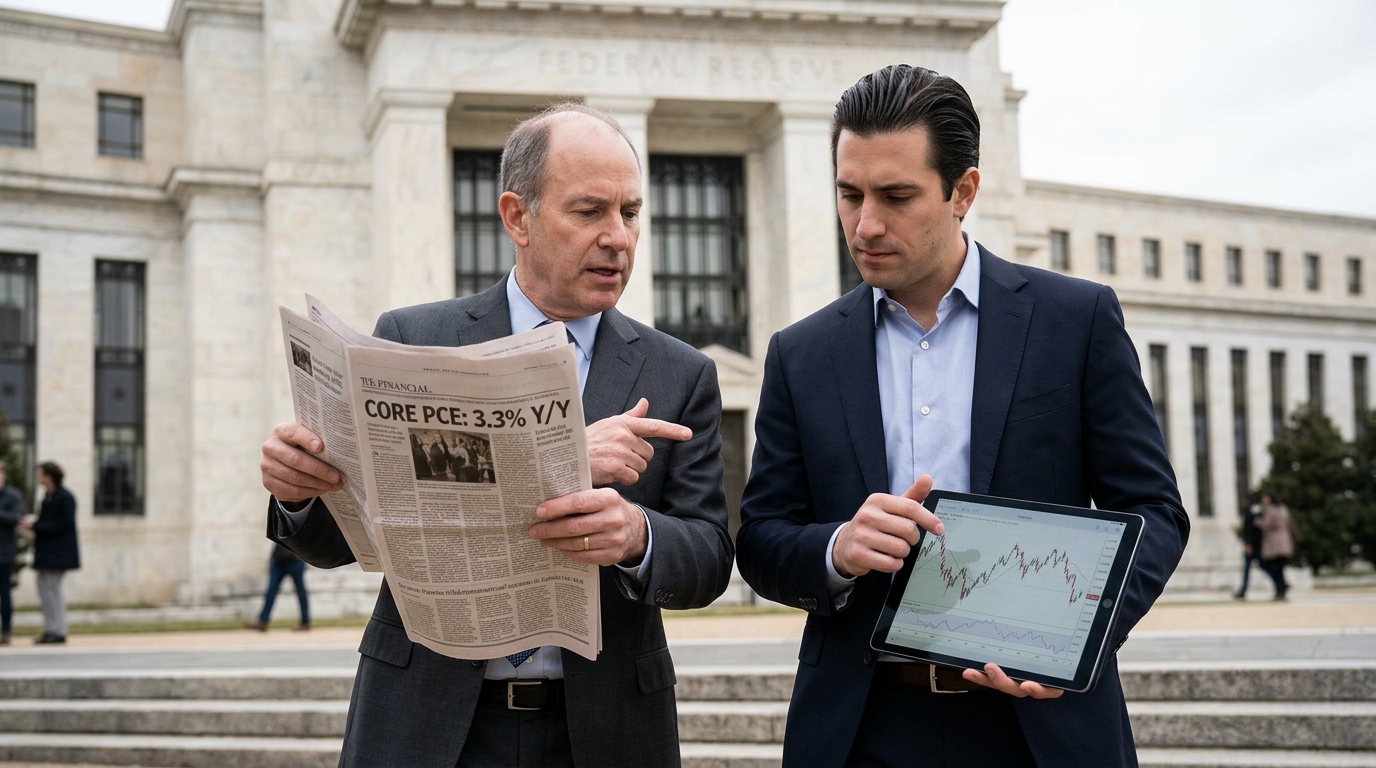
The Federal Reserve has not delivered a new 25 basis point cut this quarter, and inflation has not yet hit the Fed’s 2% target on its preferred measure. As of early September, the federal funds target range remains 3.50%–3.75% (per the Fed’s July 29 decision), and core PCE is still running above target (3.3% year over year in July). The labor market is cooling but not breaking: the unemployment rate was 4.1% in August. Read this moment as “policy is restrictive but closer to neutral,” not “mission accomplished.”
If You Had to Start Over Today with Just $500…Where Would You Put It?
Hey, Tim Sykes here.
I recently sat down with one of the most successful traders I know, he’s a $24 million trading legend.
And I asked him point blank – one simple question:
“If you had to start over today with just $500…where would you put it?”
What he said next blew me away.
This has nothing to do with AI or the Magnificent 7.
Click here to watch this free presentation now – before it’s too late
Traders should resist the impulse to treat this as a green light.
What the Numbers Say
The long end of the curve is not cooperating. The 10-year Treasury yield has spent much of 2026 in the mid-4% range, and Freddie Mac’s August 27 survey put the 30-year fixed mortgage rate at 6.66%, essentially unchanged from four weeks prior. That spread tells you something important: markets are not convinced an easing cycle is imminent or deep. A 25bp move in the overnight rate, whenever it comes, does not automatically move the 10-year. It does not automatically move mortgage borrowing costs. It does not automatically unlock the housing market.
The real transmission question is how any policy easing reaches the sectors that need it most. Homebuilders, regional banks, and rate-sensitive consumer names all carry debt structures tied to medium-term yields, not the fed funds rate. Until the 10-year retreats meaningfully below 4.3%, the macro relief for those sectors is likely to stay limited.
Where the Opportunity Sits
The NEXT Trillion Dollar Company?
It just signed a deal to get its tech in Apple’s iPhone until 2040! Online commenters are debating if this brand-new company will be the 7th trillion dollar stock.
The most direct beneficiaries are in floating-rate credit. Investment-grade and leveraged loan borrowers whose liabilities reset to SOFR would see a faster pass-through if the Fed actually starts cutting. For highly leveraged names in industrials and consumer discretionary, that margin relief can move earnings estimates by 3%–5% on a forward basis.
Small caps face a more complex read. The Russell 2000 carries disproportionate floating-rate debt exposure, so cuts are structurally supportive. But the index has already priced a meaningful easing path at various points in this cycle, and any signal that the Fed stops with policy still in the mid-3% range will compress the re-rating trade quickly.
Three Scenarios
Bull Case: Core PCE continues to cool into Q4, the September 15-16 FOMC meeting tilts dovish enough to make a late-2026 cut credible, and the 10-year drifts toward 4.2%. Cyclicals and small caps extend the rally. The S&P 500 tests new highs above Q3 closing levels.
Base Case: The Fed holds at 3.50%–3.75% through year-end. Inflation data from the next CPI release stays benign but uninspiring. The 10-year anchors between 4.4% and 4.6%. Equities grind sideways; sector rotation continues into rate-sensitive value names without broad index momentum.
5 Little-Known Stocks Behind Today’s Defense Tech Shift
Behind the headlines, a major transformation is underway.
Modern warfare is being driven by AI, autonomous systems, and next generation technology. A handful of lesser known companies are helping power this shift.
This report uncovers five stocks quietly playing a critical role in the future of defense.
Bear Case: Services inflation re-accelerates in October data. Chair Kevin Warsh, who has emphasized there is no “soft target” for inflation, signals the committee is done bending toward easier policy. The fed funds futures curve steepens in the wrong direction. Rate-sensitive longs unwind hard.
Framework for Active Traders
The next CPI release is the first real test of whether current policy is restrictive enough, or drifting toward premature ease. Watch the services ex-shelter component specifically. If it prints above 0.3% month over month, the “cuts soon” path looks like a policy error in retrospect, and bond markets will say so before equity markets do.
Position sizing matters more than direction here. Volatility in rate-sensitive sectors will compress on a confirmed hold and expand sharply on any re-acceleration signal. Manage accordingly.