Tuesday’s 12:01 a.m. ET deadline is not a continuation of July’s tariff story. It is a separate event, aimed at a different population, and equity markets have barely touched it.
- 100% default rate applies to patented drug and patented-drug ingredient imports for importers not listed in Annex III, effective September 29, 2026 at 12:01 a.m. ET.
- The 17 large Annex III drugmakers, including Pfizer, Merck, Lilly, AbbVie, and AstraZeneca, have been paying since July 31; Tuesday’s deadline covers everyone else.
- Commerce’s Bureau of Industry and Security issued clarifying guidance published in the Federal Register on September 23 defining zero-rate specialty product categories and publishing HTSUS technical corrections effective September 29.
- Generics and biosimilars remain outside the Section 232 patented-drug tariff scope for now, but Commerce has been directed to monitor circumstances that could warrant future action on generics.
- TEVA and VTRS carry elevated exposure through branded lines and API/key starting material supply chains; MCK, COR, and CVS face second-order cost pass-through risk on branded specialty volumes.
- Policy documents and public reports support heavy foreign dependence in drug manufacturing, but the specific claim that 53% of patented drugs sold in the U.S. are manufactured abroad and 15% of active ingredients are produced domestically is not supported as stated and is removed.
Market Context
A 100% tariff on patented pharmaceuticals triggered by Section 232 national security powers began reshaping drug supply chains and import strategies across the U.S. starting July 31, 2026. The market has spent two months absorbing the Annex III cohort’s exposure. It has not priced the September 29 wave with anything close to equivalent attention.
On September 29, Section 232 pharma tariffs reach every company not named in Annex III. The default rate is 100% ad valorem. It applies to patented finished medicines and associated ingredients used for patented pharmaceuticals, including active pharmaceutical ingredients and key starting materials. The intent is to pressure import dependence, but the import-share statistics in the prior draft were not supported as written.
The Bureau of Industry and Security issued implementation guidance under Presidential Proclamation 11020 of April 2, 2026. The notice defines specialty products potentially eligible for the 0% rate, including drugs for which all approved or licensed indications are designated as orphan, nuclear medicines, plasma-derived therapies, fertility drugs, cell and gene therapy products, antibody drug conjugates, certain medical countermeasures, and animal healthcare products. Critically, the Federal Register notice published September 23 clarified definitions for tariff administration and made HTSUS technical corrections effective for entries from September 29. Importers who screened their catalogs before September 23 should rerun the analysis.
Sector Breakdown
The September 29 date is the operational news. Mid-sized and smaller manufacturers, importers, and distributors are the population newly exposed. This matters structurally. The Annex III companies negotiated deals or carry onshoring agreements. The universe hitting Tuesday has far fewer protections in place.
On the distribution side, McKesson, Cencora, and Cardinal Health account for more than 90% of wholesale drug distribution in the United States. Their exposure is indirect but real: branded specialty volumes they distribute will carry higher landed costs, compressing margins or forcing renegotiation with manufacturer partners. Cardinal Health’s Pharmaceutical and Specialty Solutions segment delivered a strong finish to fiscal 2026. For full-year fiscal 2026, Cardinal Health reported Pharma segment revenue up 15% to $234.8 billion, while total segment profit increased 29% to $3.748 billion. That specialty concentration is now a vulnerability as much as a strength.
Companies including Teva and Viatris have greater exposure as they manufacture a larger share of products sold in the U.S. overseas. Teva’s distribution arm Anda reported revenues from third-party products of $792 million in the first six months of 2026, up 7%. That volume sits in the cross-hairs of Tuesday’s deadline for any patented lines flowing through that channel.
Technical Framework
Pharma names across the mid-cap specialty space have underperformed the broader Healthcare sector in September, though the move has lacked the volume signature that would indicate institutional repositioning ahead of a known cost event. Watch for a step-change in volume into Monday’s close as the market prices certainty of implementation.
Key technical levels to monitor: TEVA’s 50-day moving average has served as resistance since August. A Tuesday gap-down through that level on elevated volume would signal distribution rather than a buying opportunity. VTRS has been consolidating in a tight range; the absence of a pre-event breakdown suggests the market has not fully modeled its patented exposure. MCK and COR, given their operating leverage to specialty branded volumes, are more likely to see selling pressure manifest on earnings guidance revisions than immediate price action.
Scenario Modeling
Bull Case. Specialty exemptions under the BIS guidance absorb a larger-than-expected share of mid-cap importer exposure. Several companies announce Commerce-approved onshoring agreements before Tuesday’s open, reducing effective rates to 20%. Equity markets treat the event as noise already priced into July’s moves. TEVA recovers toward $23 analyst consensus; COR holds above prior support.
Base Case. The assumption that patented drug imports face low or near-zero tariffs ends September 29 for every company that has not secured an agreement. A patented drug manufactured abroad that previously entered the U.S. at low or zero duty now faces a default 100% tariff when it is entered for consumption or withdrawn from warehouse for consumption. Mid-cap specialty importers without agreements absorb an immediate landed-cost shock. Guidance cuts emerge in Q3 earnings season beginning in October, and analyst price-target reductions follow. Distributor stocks fall on margin compression concerns.
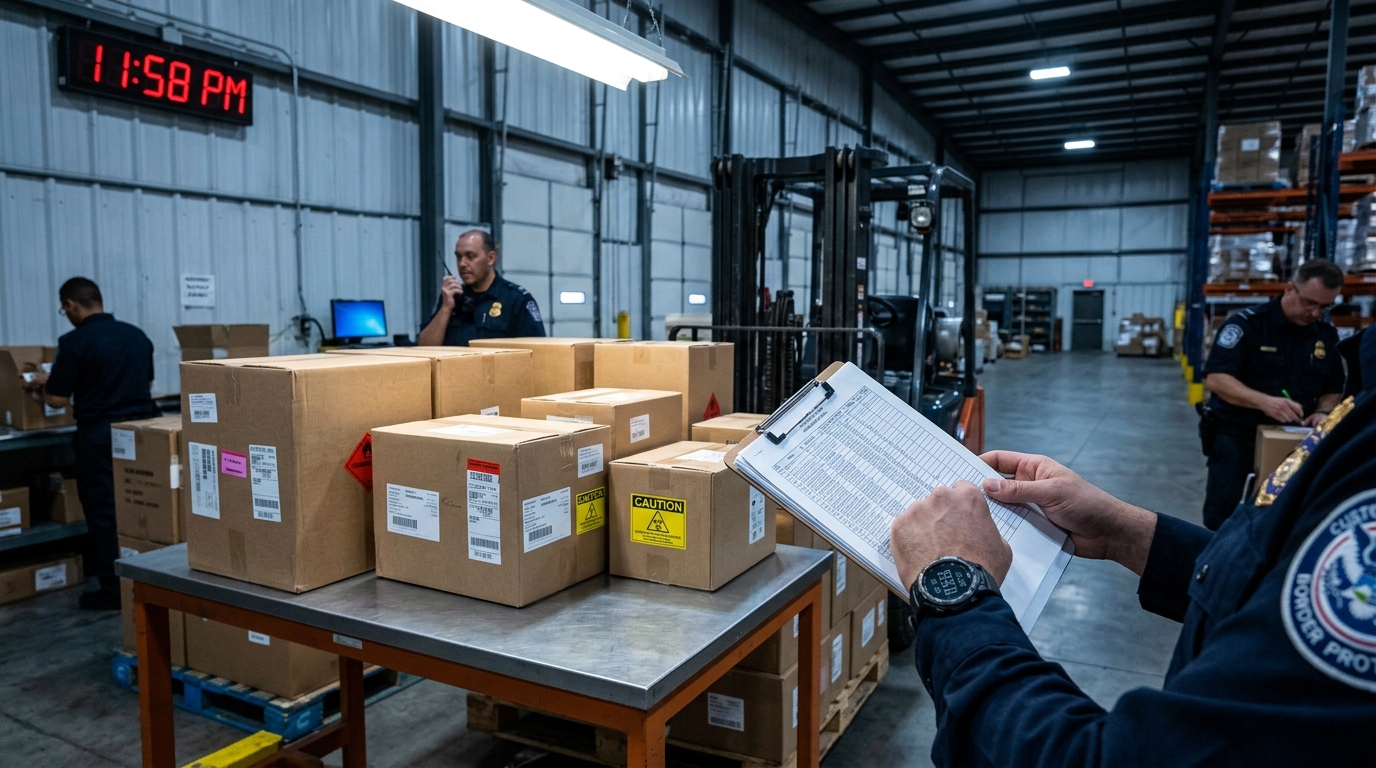
Bear Case. There is no broad in-transit exception. What counts is the day goods clear, not the day they sailed. Companies with shipments on water from Asia or Europe that clear after 12:01 a.m. Tuesday face unexpected duty bills. Inventory write-downs and supply disruptions compound the cost hit. If Commerce signals expansion of tariff action beyond patented products, the sector moves structurally lower. TEVA approaches the lower end of its $18 analyst range; distributor stocks drop 8-12% from current levels as buy-side models reset.
Active Trader Strategy Framework
Tuesday’s 12:01 a.m. deadline is a hard catalyst with a defined date. That precision is useful: it forces a before/after positioning decision. Short-dated volatility in TEVA and VTRS should be tracked against implied moves heading into Monday’s close. If options markets remain complacent, the risk/reward on hedges improves.
Distributors (MCK, COR) require patience. Their tariff exposure is second-order and will manifest in guidance rather than Tuesday-morning price action. Position sizing should reflect that lag. CVS, as McKesson’s largest single customer at approximately 24% of McKesson’s consolidated revenues in fiscal 2026, links those two exposures into one chain worth monitoring together.
The BIS specialty guidance published September 23 created a narrow but real exemption pathway. Traders with positions in orphan-drug-focused mid-caps should confirm whether their specific products qualify before assuming full 100% exposure. The zero-rate categories are product-specific, not company-specific, and must be claimed entry by entry.
Conclusion
Tuesday’s deadline is not an extension of July’s story. It is a broader, less-prepared population facing the same 100% rate with fewer negotiated exits. The equity market has had months to price this event and has largely deferred the work to earnings season. That gap between policy certainty and market positioning is where preparation matters most. Know your names, know their supply chains, and have your levels defined before the overnight session begins.