October 9, 2026
Bonus Content: Silicon Anodes Just Got $1.7B in Contracts and Pentagon Money
Dear Reader,
My name is Marc Lichtenfeld, Chief Income Strategist at The Oxford Club. I’ve appeared as an income expert in The Wall Street Journal, Bloomberg and Fox Business.
In November 2021, while the Federal Reserve called inflation “transitory,” I warned it could exceed 8% within 18 months and favored energy. Inflation reached 9%, and energy led every asset class in 2022.
I’d rather get paid when somebody else produces oil than pay to drill the well.
I’ve found a little-known oil income investment tied to more than 17 million gross acres in 28 states and more than 137,000 producing wells. Yet it does not buy the rigs, hire the crews or cover the operator’s drilling bill.
How can it participate in that production without covering those costs? That is the unusual structure I explain in my new presentation.
Explore the unusual oil income structure most investors miss
At the latest source date, 91 rigs were active on its acreage. Its interests sat in counties containing roughly 98% of all active Lower 48 drilling rigs.
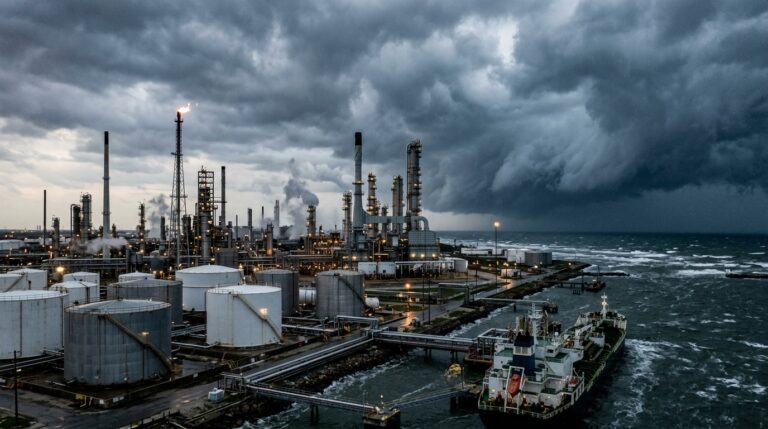
EIA estimates Hormuz oil flows averaged 4.9 million barrels a day in the second quarter of 2026, down from 21.6 million in late 2025.
I do not want to guess the next headline or trade oil futures. I want broad exposure to American production with an income stream while I wait.
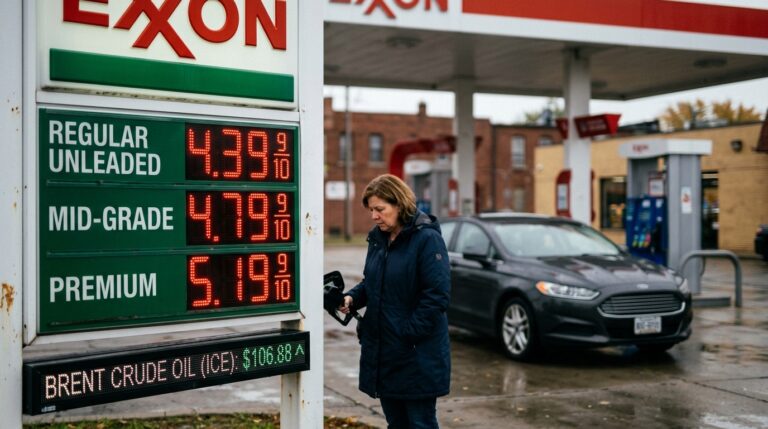
Its latest source-date distribution was $0.47 per unit. At $14.31, that’s a double digit annualized yield. The payout is variable and not guaranteed, but the investment has made a distribution every quarter since its 2017 IPO, including during the 2020 oil crash.
Watch my oil income presentation
No credit card or email required
I lay out the structure, income math and risks in my new presentation.
Good investing,
Marc Lichtenfeld
Chief Income Strategist, The Oxford Club
P.S. Roughly 73% of its recent revenue came from oil. Its natural-gas footprint could add a second catalyst as AI data centers seek reliable power. See my full oil income case for 2026.
Silicon Anodes Just Got $1.7B in Contracts and Pentagon Money
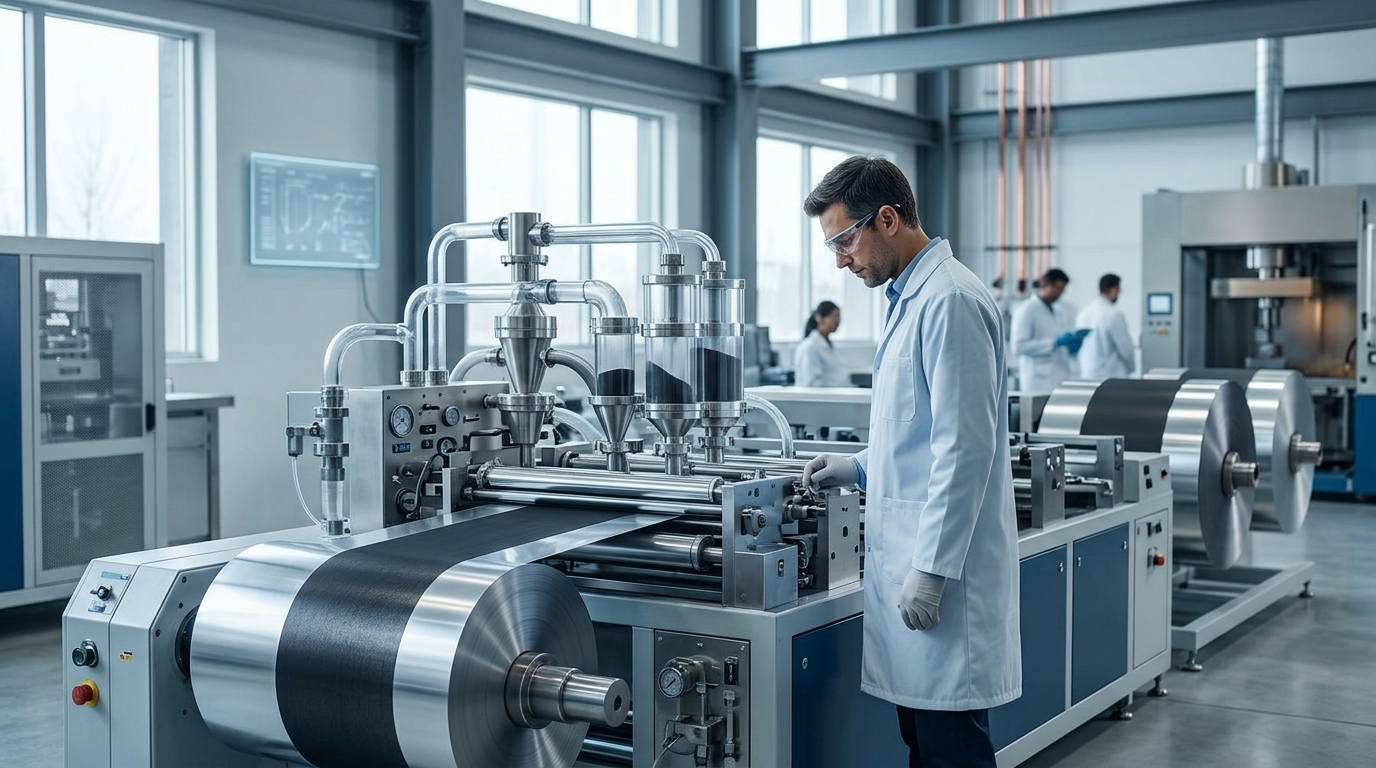
The graphite anode had a 30-year run. It is losing ground now, and the companies that solved silicon’s expansion problem first are collecting the contracts to prove it.
- Sila Nanotechnologies secured a $300 million private funding round announced on July 21, 2026, followed by a conditional loan commitment of up to $1.4 billion from the U.S. Department of War’s Office of Strategic Capital announced August 7, 2026.
- Group14 Technologies has raised more than $1 billion in equity, and its Sangju, South Korea facility is designed for 2,000 tons of SCC55 annually, which the company equates to roughly 10 GWh of battery capacity.
- Sila’s Titan Silicon material is slated to be integrated into Mercedes-Benz’s electric G-Class program, but Mercedes’ currently delivered G 580 with EQ Technology models are not yet confirmed as using Titan Silicon cells.
- Group14 has signed five multi-year binding offtake agreements amounting to a minimum commitment of over $300 million with three EV and two consumer electronics cell manufacturers across Europe, Asia, and North America.
- The silicon anode battery market is forecast in some third-party research to reach about $29 billion by 2035, against an anode materials baseline where China produces more than 90% of global anode active material.
Why the Money Is Moving Now
U.S. battery buyers, from automakers to defense contractors, struggle to source materials made outside China. In 2025, China accounted for over 80% of global battery cell production, and more than 90% of global anode active material production used in electric car batteries. That supply concentration is the real commercial accelerant behind silicon anode investment, more than energy density alone.
The U.S. Department of War financing would support expansion of Sila’s silicon-carbon anode manufacturing at Moses Lake, Washington, and the buildout of a lithium-ion battery cell manufacturing facility. The conditional commitment followed a $300 million equity round led by Sutter Hill Ventures and Atreides Management. Sila has said its Moses Lake site can expand to up to 250 GWh of capacity within five years.
Group14’s posture differs. In March 2026, Group14 said its Sangju, South Korea factory began EV-scale production, designed for 2,000 tons of SCC55 annually (about 10 GWh), and the company has separately described a target of 20 GWh by 2027. The Porsche-backed company is already inside consumer electronics pipelines, but the specific claim that SCC55 powers Honor Magic 7 Pro smartphones is not confirmed in public disclosures.
The Technical Moat
Silicon can store more lithium than graphite, but it swells and contracts as a cell charges and discharges. That physical expansion can damage the anode, accelerating battery degradation, which is why most production batteries currently use only small quantities of silicon blended with graphite.
Both Sila and Group14 address this through composite architectures rather than pure silicon. Group14 and Sionic Energy have said cells using SCC55 for 100% of the anode material are designed to achieve at least 330 Wh/kg and at least 842 Wh/L, with a cycle range of up to 1,200 full cycles in 4Ah to 10Ah cell formats. Sila has publicly described Titan Silicon as delivering meaningful energy-density gains, but the specific claim of volumetric energy density exceeding 800 Wh/L as a shipping product specification is not consistently substantiated in public, so it is best treated as a performance target rather than a universally published spec.
Active Trader Framework
Neither Sila nor Group14 is publicly traded. Amprius Technologies (AMPX) is a lone pure-play with listed equity. In its filings, Amprius says its SiMaxx silicon anodes are considered 100% silicon based on an actual silicon percentage of 99.5% to 99.9%. Its float is thin and volume is episodic, which means position sizing discipline matters more than conviction on the thesis.
The better near-term trade is through suppliers to the cell makers that are qualifying silicon material: Panasonic (PCRFY), which has a confirmed Sila supply agreement, and battery cell producers with direct Group14 exposure. Watch for qualification announcements from GM-adjacent programs as the next catalyst. Any named EV contract win from an unnamed buyer in Group14’s $300 million-plus multi-year agreements could be a material event for related equities.
The macro overlay is straightforward: IRA compliance requirements make non-Chinese anode material a procurement necessity, not a preference. That is a structural bid under every domestic silicon anode producer, regardless of where spot graphite prices trade.
Scenarios
Bull Case: A major U.S. automaker names Group14 or Sila in an EV program contract in Q4 2026. Sila’s conditional $1.4 billion Department of War loan commitment moves to financial close, triggering Phase 2 Moses Lake construction. AMPX trades on the associated attention; related public names reset toward their silicon-exposure premium.
Base Case: Sila and Group14 continue ramping quietly through 2027 qualification windows, with no single catalyst but steady contract flow. AMPX trades in a narrow band absent a specific program win announcement.
Bear Case: Conditional elements of the $1.4 billion Department of War loan commitment are not met. Private funding tightens. Program timing at Mercedes or Panasonic pushes the revenue ramp, and graphite incumbents retain market share longer than the bull consensus assumes.
The materials race is real and the capital is committed. The trade is in knowing which milestones separate the headline from the revenue line.