
October 9, 2026
Bonus Content: Brent Hit $105 on Iran Tanker Attacks. Here Is the Full Cross-Asset Picture.
At a time when copper demand is growing, a long-dormant copper property is about to thrust one little-known mining company into the spotlight.
It’s all happening in Canada’s Yukon territory, an area with a rich mining history and the kind of infrastructure and friendly regulatory environment that mining companies fight tooth and nail for.
In the case of copper mining, there is one area that has more than a century of history with past production of over 265 million pounds and yet there’s still more to be discovered.
And it couldn’t have happened at a better time.
Countries need copper to build their power grids and move away from fossil fuels.
Tech giants need copper to power their data centers.
And new mines just aren’t coming online at the pace they need to in order to keep up with that kind of surging demand.
It’s a reality the market is only just beginning to wake up to, and that fact is showing up in the price of copper as it marches steadily toward new all-time highs.
Since the process of bringing a mine online and getting the metal out of the ground is so intensive, the few companies capable of doing it are the ones in line to drive returns as more nations and corporations scramble to secure copper supply.
One mining company with assets in that storied Yukon territory is perfectly positioned to seize the opportunity to become a leading name in the copper mining industry thanks to district-scale projects that have produced exceptional results in the past.
Some of these areas haven’t been explored or drilled in over 40 years because of price collapses. But with demand resurging and mining technology having advanced in the time since, now is the time for this area to come back into the conversation.
Results so far have already been promising. Recent results have turned up thick, continuous zones of mineralization that have not only confirmed what past drillers knew, but have expanded beyond that and into new territory.
So this company is only just getting started.
Thanks to its robust treasury, experienced leadership, and ongoing work, it’s well-positioned to profit from rising copper demand into the foreseeable future.
Now’s the perfect time to buy in before more traders become aware of it.
You can learn more about how to do that in our brand-new FREE report where we go over the company, its history, its current assets, and its plans for the future in the unfolding copper bull market.
Click here to access the report now, before time runs out and more people learn about this opportunity.
Brent Hit $105 on Iran Tanker Attacks. Here Is the Full Cross-Asset Picture.
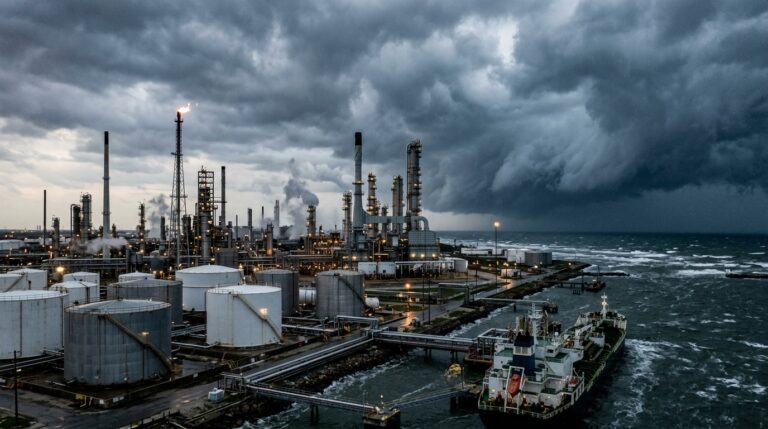
Two supply disruptions converged on October 8, and oil markets priced both without waiting for confirmation. Crude oil prices rose sharply Thursday as Iran ramped up attacks on tankers transiting the Strait of Hormuz and Hurricane Isaias threatened U.S. offshore production in the Gulf of Mexico. Brent crude rose above $105 a barrel in intraday trading before settling lower, still above $100. Then Trump blinked, and crude gave back roughly a dollar before finding its floor well above $100.
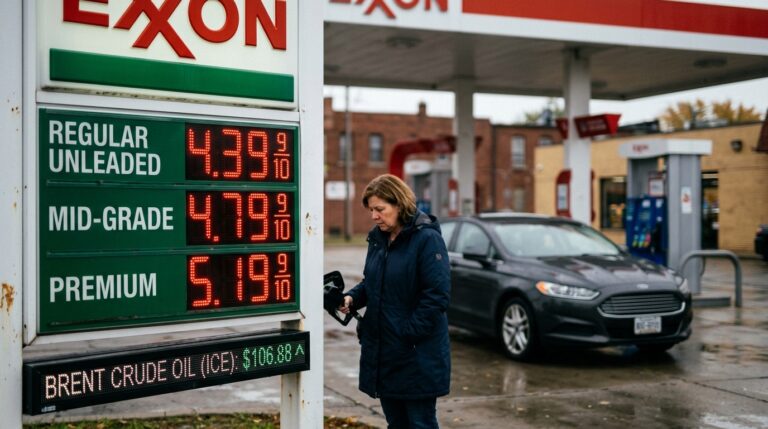
- Brent crude rose 4.1% on October 8 to close at $104.28 a barrel after trading up near $106 earlier in the session.
- WTI ended up 3.6% at $91.49 after jumping to nearly $93.
- The Marine Minerals Administration reported approximately 62.9% of daily offshore oil production, or about 1.28 million barrels per day, shut in.
- There were at least eight tankers attacked in the week ending October 5, and the Joint Maritime Information Center assessed the threat for Strait passage as “severe.”
- Marathon Petroleum moved higher after Mizuho raised its price target from $304 to $457 while maintaining a neutral rating.
- Diamondback Energy rose 4.0% to $191.68.
- Chevron gained about 3.1%.
The Hormuz Premium
Tanker traffic in the critical waterway has dropped sharply at points this year amid the Iran war, based on Kpler reporting and related coverage. As security deteriorated, the cost of moving crude has surged across certain routes and days, but the “$1 million per day for each tanker” figure is not consistently documented across mainstream reporting, so treat it as a spot extreme rather than a durable clearing rate. That freight cost is the real tax on global supply, separate from headline export volumes.
Freight costs have remained elevated in recent coverage, and the market has continued to price geopolitical risk rather than only headline export numbers. Meanwhile, America’s emergency oil stockpile is at its lowest level since 1982, a constraint that matters if policymakers try to damp price spikes into year-end.
Trump’s Pledge and the Market’s Response
President Trump’s pledge that the U.S. would not resume airstrikes against Iran before the November 3 midterm elections failed to reverse the sharp jump in oil prices. “We will not be attacking Iran at any time prior to the Midterm Elections,” Trump wrote on his social media site.
After Trump’s remarks, multiple outlets reported that the White House had asked the Pentagon to develop strike options ahead of the midterms, and separate reporting described a potential plan centered on a short, intense campaign lasting about three days. That detail explains why the pledge failed to erase the risk premium: the infrastructure for escalation is in place, even if the political calendar defers it. In Asian trade on October 9, Brent slipped 0.7% to $103.53 and WTI eased 0.6% to $90.97.
Energy Equities: Who Moved and Why
The primary macro catalyst powering downstream refiners stems from expanding global refining crack spreads, particularly across middle distillates such as diesel and jet fuel. On the Mizuho note, the revised $457 target implied limited upside versus where MPC was trading that day, even though the headline number was large versus the prior target.
Chevron experienced upward momentum driven by the sharp rally in crude, coupled with weather-related risks in the Gulf of Mexico that forced temporary platform evacuations and production shut-ins, tightening short-term supply further. The draft’s specific claims about diesel and heating-oil percentage spikes are not consistently verifiable from the same day’s mainstream reporting, so treat the distillate move as supportive rather than anchoring the whole thesis to precise single-session percentages.
Technical Framework
XLE’s 20-day moving average sits at $63.16 and its 60-day at $61.43, with resistance at $64.23 and $65.10. Price action broke above a major 2008-to-2026 resistance level that turned into support in September, now holding above $63.50. Brent itself has a seven-month declining resistance line near $108; Thursday’s intraday high near $106 tested but did not close above it. The gap between Trump’s no-strike pledge and the Pentagon’s documented planning is the market’s unresolved variable.
Three Scenarios Into Next Week
Bull Case
Iran escalates again before November 3, either through a major tanker strike or a Houthi missile hit on Saudi infrastructure. Brent revisits $108 to $110 and the prior April high near $118 comes into view. MPC and the XLE lead energy equity outperformance. Trigger: a UKMTO-confirmed attack on a VLCC, or satellite imagery showing infrastructure damage.
Base Case
Iranian officials have indicated Tehran was preparing a formal reply to U.S. positions after Trump publicly rejected an Iranian proposal tied to reopening the strait within seven days. Diplomacy remains active but fragile. Brent oscillates in a $100 to $106 band through October. The EIA raised its crude oil price forecast in the October 2026 Short-Term Energy Outlook but still expected oil prices to generally fall from their early-October average. Hurricane-related shut-ins reverse within 7 to 10 days post-landfall, capping the weather premium.
Bear Case
Trump’s public commitment to no pre-election strikes holds firm and tanker traffic normalizes faster than recent data imply. Brent retraces toward $97 to $99. XLE faces a pullback risk below long-term resistance, with a breakdown below $61 confirmed if the diplomatic channel gains credibility.
Active Trader Framework
The current cross-asset structure rewards preparation over reaction. Brent’s war premium layers three distinct risks: Hormuz shipping disruption, U.S. strike optionality, and Gulf weather. Each has its own calendar and its own unwind trigger. Traders holding energy exposure into next week should map the November 3 midterm date as the outer bound on Trump’s stated constraint, the EIA weekly petroleum report on October 15 as the first hard data on Gulf shut-in impact, and any UKMTO incident report as the intraday vol catalyst to watch.
The Gulf of Mexico accounts for almost 15% of the crude the U.S. pumps in a year, making the hurricane shut-in more than a weather story. Position sizing should reflect that at least one of the three risk layers can resolve quickly; the remaining two will not.