November 2, 2026
Bonus Content: Public Storage’s Best Quarter in Years Has a Q4 Catch
Editor’s Note: Our friend Louis Navellier has spent 47 years spotting big shifts before the crowd. He was early to Amazon, Apple, Microsoft, Google and Nvidia. Now he says the energy crisis everyone is worried about is quietly sending a wave of money toward one stretch of American coastline. Watch his free interview, or read more below.
Dear Reader,
In early February, 129 tankers a day were moving through the Strait of Hormuz.
Within a week… four.
The mainstream media covered it as a crisis. For a lot of countries, it was.
But here’s what the evening news mostly missed…
The countries that got burned aren’t sitting around waiting for the Strait to reopen. They’re lining up for American energy instead. Germany signed for 20 years.
Even Saudi Arabia, Qatar and Abu Dhabi – some of the richest oil nations on Earth – are putting billions into the American Gulf Coast – Texas and Louisiana.
The old energy powers are betting BIG on America.
See where all that money is going.
I’ve been doing this for 47 years. I’ve never seen a country’s position in the world change this fast.
And I don’t think energy is even the biggest part of the story.
What’s happening along that coastline is tied to something President Trump set in motion last year… something I’ve seen only once before in American history.
The last time, ordinary families who got in early collected income for years. Some of them passed that wealth down for generations.
I call this one America’s $31.5 TRILLION IPO. And I believe the Gulf of America could become the new Middle East.
Click here to find out what Trump is really building.
In my new interview with John Burke, I explain what’s going on… why the money is moving now… and the companies I’d want to own before Wall Street catches on.
It’s free to watch.
|
Regards,
Louis Navellier
Editor, Growth Investor
P.S. Most people are watching the price at the gas station. I’m watching who’s collecting the checks. Here’s the full story.
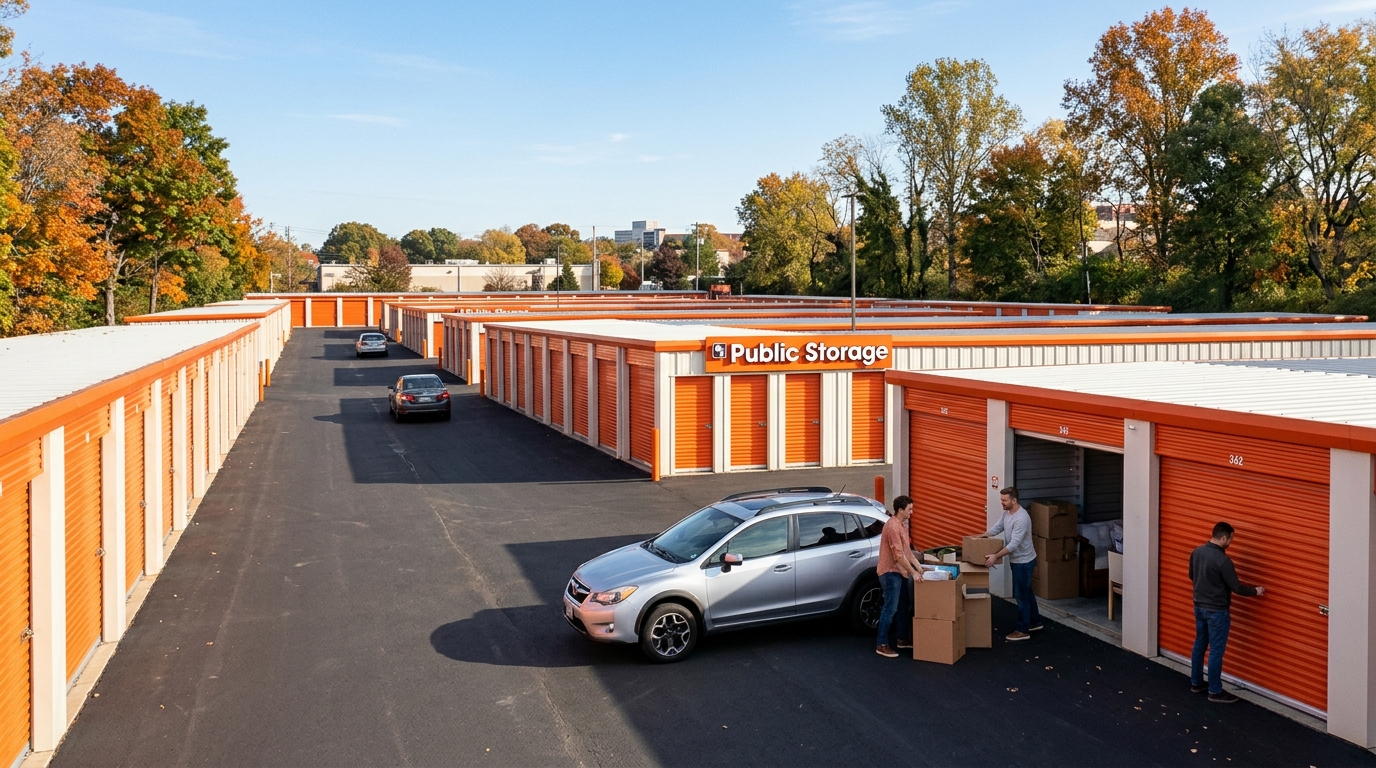
Public Storage’s Best Quarter in Years Has a Q4 Catch
Public Storage delivered what looked like a turning point in late October. Average move-in rents improved 9% year over year in Q3 2026, the strongest reading since Q2 2022, and up 28% from Q4 2025. On the surface, that is the recovery result every self-storage bull has been waiting for. The complication is that the quarter PSA just reported was also, by definition, peak leasing season. What follows is winter.
Management acknowledged that Q3 represented the period of strongest pricing power and highest occupancy across the year, and guided occupancy to come down toward parity on a year-over-year basis in Q4. The implied Q4 core FFO steps down from $4.34 in Q3 to $4.26. That is not a disaster, but it removes the cushion. Any incremental softness in move-in volume lands directly against a guide that already has no room.
The Housing Lock Problem Has Not Left the Building
The structural backdrop for storage demand remains constrained. Public Storage has tied self-storage demand to needs-based life events such as moves, and housing turnover remains suppressed. That turnover is still a headwind.
73% of mortgage holders would consider moving if they could keep their current rate, representing a large volume of suspended demand. That pent-up demand is real, but it does not release on PSA’s Q4 schedule. The expected improvement in sector fundamentals stems largely from stronger tenant retention and lower move-out activity rather than a significant increase in new customer demand. PSA’s own results align with that: churn improvement drove occupancy stability, not a surge in new leases.
The Acquisition Overhang
PSA completed the NSA and PS Canada transactions, and disclosed $119.3 million of transaction and integration costs recognized as an expense during the first nine months of 2026. Separately, excluding NSA and PS Canada, the company said it acquired or was under contract to acquire 65 facilities year to date for $713.2 million. Management also said roughly half of that $700 million plus of smaller acquisitions was lease-up activity, with average in-place occupancy in the mid-50s. That means PSA is absorbing a large block of underperforming assets heading into the slowest leasing quarter of the year. The integration timeline runs into 2027 before meaningful occupancy uplift materializes.
At September 30, 2026, the company reported about $12.1 billion of notes payable outstanding at an approximate 3.6% weighted average interest rate. Net debt and preferred to EBITDA sits at 4.7x, up from 4.2x a year ago. Refinancing upcoming maturities at current rates adds incremental interest cost against a guide that already implies a sequential step-down in Q4 core FFO.
Scenarios Into Year-End
Bull case: October churn trends hold through November and December, acquired-facility occupancy climbs toward 65% on early PS Next platform integration, and same-store revenue growth exits the year at the positive 0.25% midpoint of guidance. PSA approaches the consensus target range of $327–$337.
Base case: Winter seasonality compresses move-in volumes modestly, Q4 core FFO lands at the $4.26 implied guide, and the stock holds near current levels with the Street’s Hold consensus intact. PSA trades around 28.8x trailing earnings, and some models put fair value closer to $293.
Bear case: Move-in rate growth decelerates faster than the low single-digit full-year guide as winter discounting accelerates. With rent per occupied foot roughly flat year over year and net income per share down 35.5% year over year in Q3, the leverage and funding cost trajectory leaves little error margin if demand softens further.
What Traders Should Watch
The 9% move-in rent figure from Q3 was real, but it was also seasonal. Management confirmed October trends are consistent with Q3 in terms of churn benefits, while move-in volumes remain modestly lower and occupancy is roughly flat. The true test arrives in late November, when leasing activity drops structurally and promotional pressure from competitors intensifies. Monitor street rate trends, upcoming debt refinancing, and any signal on acquired-facility occupancy velocity. Those three variables will determine whether PSA’s recovery is durable or front-loaded.