August 29, 2026
Bonus Content: Wheat +54% and Corn at Contract Highs: Trade Grains
Dear Reader,
A close contact of ours – a deeply connected venture capitalist with insights from the Pentagon and Silicon Valley – just went live with a confidential presentation…
Depending on when you’re reading this, it might already be too late to claim your spot in what could be one of the biggest pre-IPO plays of our time.
In this video briefing, you’ll learn how everyday investors can get pre-IPO exposure to this $30 billion juggernaut…
And you can do it straight from a regular brokerage account… with right around twenty bucks!
All you need is the four-letter ticker symbol… revealed in this video.
But here’s the thing: getting in pre-IPO is where the biggest gains happen.
So if you want to position yourself before this potential blockbuster IPO hits Wall Street…
Click here now to watch the urgent briefing… and get the pre-IPO ticker symbol.
Regards,
Addison Wiggin
Founder, Grey Swan Investment Fraternity
P.S. You will get the ticker symbol completely free in this briefing. No strings attached!
Wheat +54% and Corn at Contract Highs: Trade Grains
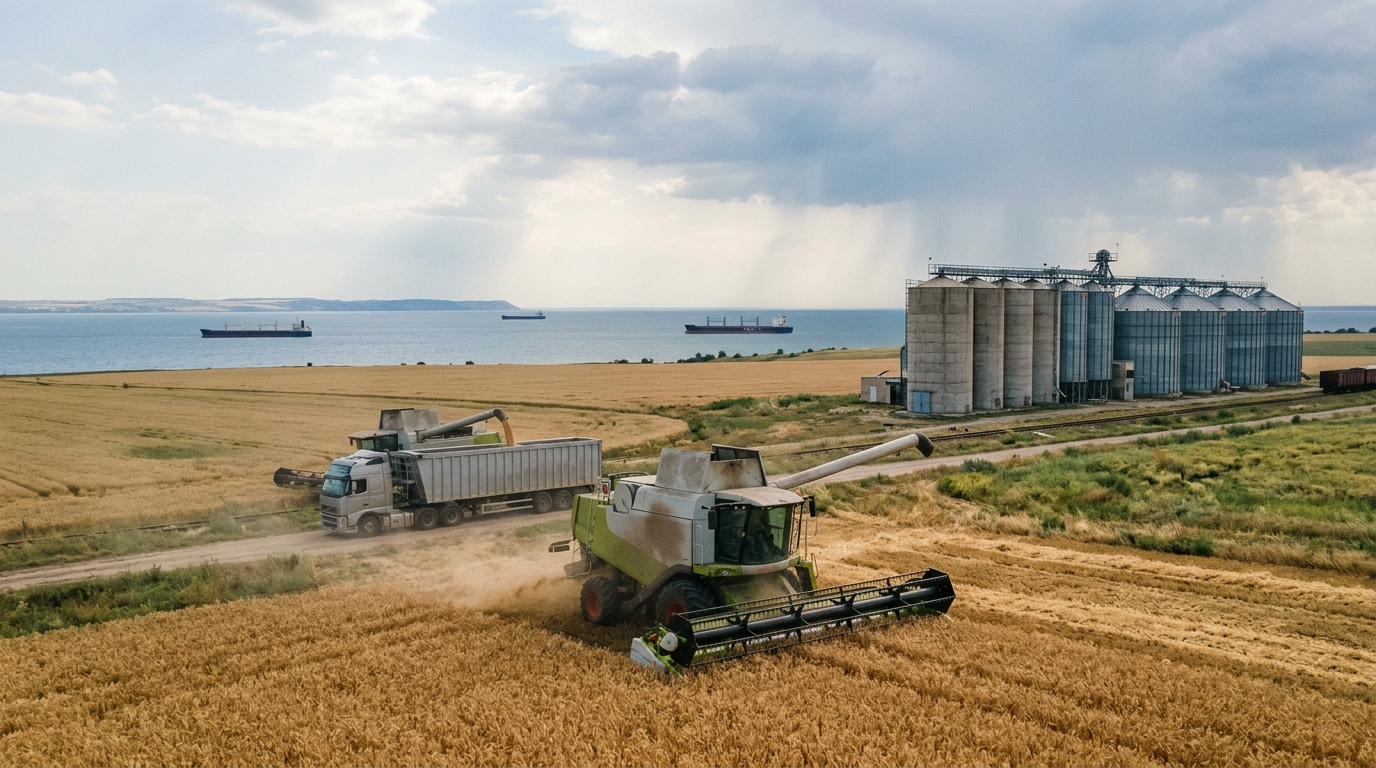
Friday closed one of the most consequential weeks for grain markets since March 2022. Chicago December wheat settled at 784 cents per bushel, up 3.1% on the day and 12.1% for the week, its largest weekly gain since Russia’s initial invasion. December corn locked in a new contract and three-year high at $5.36½, while November soybeans settled at a contract high, confirmed by USDA private-sales flash reports showing 182,000 metric tons booked to China and 226,000 tons to unknown destinations in a single session. Year-to-date, wheat futures are now up roughly 54%.
Why the Market Has Priced In a Risk Premium
The structural catalyst is not speculative: it is physical. Reuters reported that attacks on shipping have shut down more than 97% of Russia and Ukraine’s grain export capacity in the Azov and Black Sea basin. Russia and Ukraine together shipped an average 7.2 million metric tons of grain per month from those terminals last season. Today, there are no shipments from Ukraine’s Black Sea terminals at all. In Russia, only a small facility in Tuapse with capacity of roughly 160,000 tons per month remains open. SovEcon expects Russia to ship 3.0 to 3.4 million tons of wheat in August, against a five-year August average near 5 million tons.
Ukraine’s early-August grain exports have fallen sharply versus July. AgResource estimates that prolonged disruption could shift roughly 15 million metric tons of wheat demand toward alternative exporters. The European Commission has also reduced its 2026-27 cereals outlook, tightening the conversation around EU availability. Importers in the Middle East, Africa, and Asia are now being forced to source from higher-cost suppliers including Australia and the United States. Baltic and French export activity is visibly picking up as buyers physically shift demand west.
Corn’s move is a different driver. Declining U.S. yield expectations and EU heat stress during pollination have tightened domestic balances. The European Commission lowered EU corn production estimates, opening a clearer channel for U.S. exports. Soybeans are running on Chinese demand: new-crop U.S. soybean export commitments for 2026-27 remain behind last year, but China stepped up sharply this week via USDA-reported flash sales.
Sector Breakdown: Agribusiness and Fertilizer Names
ADM raised its full-year 2026 adjusted EPS guidance to a range of $5.15 to $5.60, up from $4.15 to $4.70 previously, citing stronger crushing and ethanol margins. About 77% of analysts rate ADM a hold versus 23% at buy, reflecting a view that the earnings beat is real but the stock has absorbed much of the upside. Bunge is the more direct way to play grain-market volume. The company raised its 2026 adjusted EPS outlook to $9.25 to $9.75. Analysts carry a mean price target of $137.60, and Bunge has rallied over 45% since September 2025. A key structural caveat: grain merchandising contributed $67 million of Bunge’s $796 million in Q2 adjusted segment EBIT, with the bulk of profit coming from oilseed and softseed processing. Higher soybean prices benefit Bunge’s crushing margin more directly than higher wheat prices do.
On fertilizers, the picture splits sharply. Nutrien reported strong potash profitability through the first half of 2026, with potash adjusted EBITDA of $1.24 billion. JP Morgan rates NTR Overweight with a consensus analyst upside of 23.6% to $78.22. Mosaic is the structural laggard: the company reported a Q1 loss of $258 million amid rising sulfur input costs, withdrew its phosphate production guidance, and its stock is down on the year. Mosaic has no nitrogen exposure, which matters because nitrogen pricing has been volatile around Middle East headlines and U.S. Gulf logistics.
Technical Framework
December wheat hit 790.25 cents intraday Friday, the highest since February 14, 2023. The daily-limit move on Wednesday confirmed a supply scare, not just speculative positioning. The market is showing classic geopolitical backwardation characteristics: physical buyers are paying up for near-term delivery while deferred contracts lag. Calendar spreads in wheat are the most sensitive real-time read of supply and demand shifts. Corn eased 0.6% on Friday after six straight higher sessions, which looks more like a pause than a reversal. November soybeans have maintained higher lows throughout August and attracted commercial buying on pullbacks. The USDA September 11 Crop Production and WASDE reports are the next major structural event for corn and soybeans; Black Sea port traffic and vessel movements govern wheat.
Scenario Modeling
Bull Case
No ceasefire materializes on civilian Black Sea shipping. August-September U.S. corn and soybean yields disappoint in the September WASDE. China accelerates new-crop soybean bookings. December wheat pushes through 800 cents, December corn approaches $5.60, November soybeans challenge $13.50. Bunge and ADM earnings estimates move higher on crushing margin expansion.
Base Case
Black Sea disruption persists at current levels but does not worsen. U.S. crop ratings stabilize. December wheat consolidates 750 to 790 cents, corn holds the $5.00 to $5.40 range, soybeans trade $12.50 to $13.00. Agribusiness equities grind higher on volume; fertilizer names trade with nitrogen price signals.
Bear Case
Ukraine and Russia reach a Black Sea civilian shipping accord. September WASDE confirms trendline U.S. yields. Wheat drops 80 to 100 cents in a session on ceasefire speculation, as it did briefly on late-week rumors. Corn and soybean risk premiums compress. Nutrien and CF Industries sell off sharply on nitrogen deflation risk; Bunge holds better given oilseed processing exposure.
Active Trader Considerations
The risk premium embedded in wheat futures is real but binary. Traders sizing long positions should define their downside around a geopolitical de-escalation catalyst rather than a crop report. Corn’s rally has a domestic weather and European demand foundation that is more durable than pure Black Sea risk, making December corn a potentially cleaner structural hold. The MOO ETF, in which Nutrien represents about 6.8% and ADM about 4.8% of holdings as of late August, offers a diversified way to track institutional flows into the agriculture complex without single-name geopolitical exposure. On the fertilizer side, Nutrien’s potash exposure gives it a different risk profile than CF Industries, whose nitrogen earnings are directly tied to U.S. Gulf nitrogen pricing. Any ceasefire headline is the primary tail risk to manage across all of these positions.
Preparation matters more than conviction here. The September 11 WASDE and any Black Sea shipping agreement are known catalysts. Position sizing against those dates, not against a price target, is the framework that survives a volatile resolution.