
August 31, 2026
Bonus Content: AI Customer Service Works. Just Not Everywhere.
Some market shifts are simply too large for investors to ignore.
The global drone industry was valued at $83.8 billion in 2025. By 2033, it is projected to reach $182.4 billion.
That is nearly 118% growth in eight years.
And this is no longer just a commercial technology story.

Washington is treating drones as a national priority. The Pentagon reportedly wants around 300,000 of them, while the government pushes to expand domestic manufacturing and secure American supply chains.
For investors, rapid market growth and government demand can be a powerful combination.
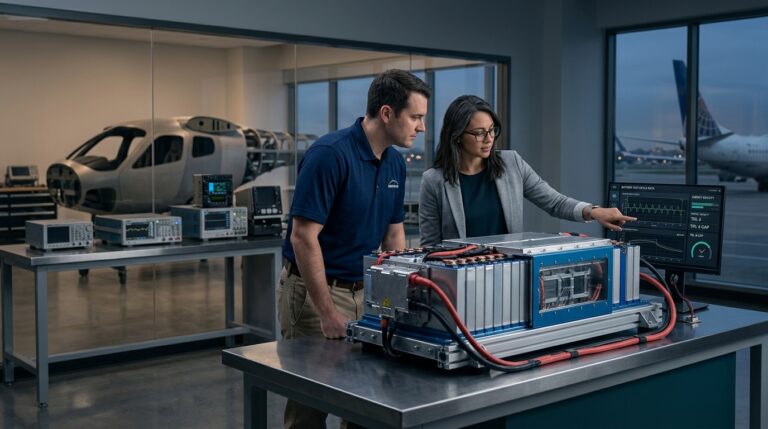
One overlooked Nasdaq company has spent more than 25 years developing professional drone systems.
It does not just build aircraft. Its platform brings together software, AI and advanced sensors, backed by professional services and real-world deployments.
Yet its shares are still trading around $5.
Markets projected to more than double rarely keep the same winners forever. If America leads this buildout, this quiet Nasdaq could become much harder for Wall Street to overlook.
AI Customer Service Works. Just Not Everywhere.

The vendor pitch is seductive: deploy AI across your entire support operation, cut headcount, and watch satisfaction scores climb. The production data from 2026 tells a more useful story.
- 35–55% of tier-1 support volume is reliably deflected by AI for small and mid-size businesses in typical deployments, with 55–70% achievable in best-in-class programs with mature knowledge bases and tight intent design, per industry benchmark reporting
- $3.50 returned per $1 invested in AI-powered customer service, with first-year ROI averaging 41%, according to aggregated industry benchmark reporting
- Data readiness is consistently cited as a leading blocker to AI success in service organizations, per Gartner and Salesforce reporting
- 74% of customer service chatbots are pulled offline after launch, per reporting on a survey of enterprise leaders
- 90% of companies report difficulty managing AI-to-human escalation handoffs, per a Nextiva survey cited in 2025 reporting
- $5–$15: a common fully loaded cost range for a single human-handled tier-1 ticket, versus roughly $0.50–$1.50 for an AI resolution under per-resolution pricing models
Where the Math Actually Closes
Three applications deliver measurable, repeatable results for small and mid-size businesses: tier-1 FAQ deflection, multi-channel ticket routing, and escalation with full context attached. Together they can handle a meaningful share of support volume without human involvement and cut escalation handle time materially when the handoff is designed well.
A small business handling 500 tickets per month can see a viable payback period on implementation, but the exact ROI and payback vary sharply by platform pricing, resolution rate, and how much human time is actually removed from the workflow. Drop below 200 monthly tickets and the economics often do not support a custom build at all. That threshold matters: most vendors do not quote it.
High-volume, repetitive queries such as order tracking, return policies, and product availability consistently deliver the fastest ROI. Those are the workflows worth automating first. Everything else is a judgment call.
The Failure Mode Vendors Skip
A deployment paradox has emerged: internal stakeholders often report higher confidence in AI outputs than consumers report in AI-powered service. In 2026 reporting from Salesforce (citing the Metrigy Consumer CX Index), 44% of consumers said they trust AI to handle their customer service needs. That trust gap has a cost. Teams that fail to realize projected returns typically measure deflection instead of resolution. A customer who gives up is not the same as a customer whose problem was solved.
A bot pointed at the right tickets, with a fast path to a human and a rule against guessing, is one of the highest-ROI systems a small business can deploy in 2026. A bot pointed at everything, with no escape hatch and no supervision, is a churn machine on a monthly subscription.
The Compounding Advantage
First-year returns can average 41%, climbing to 87% in year two and exceeding 124% by year three as systems learn from real interactions and teams optimize their knowledge bases, according to aggregated industry benchmark reporting. That compounding is real, but it requires consistent investment in the knowledge base, not a set-and-forget deployment. The typical small business now uses a median of five AI tools, according to SBE Council reporting on its February 2026 survey. Small businesses are moving away from searching for a single all-in-one solution and instead assembling a stack where each tool handles a specific, well-defined job.
The operational edge in AI customer service for small teams is not ambition. It is scope discipline. Define the ticket types, set the floor for human handoff, measure cost per resolution rather than deflection rate, and let the compounding work. The teams skipping that sequencing are the ones pulling bots offline at month four.