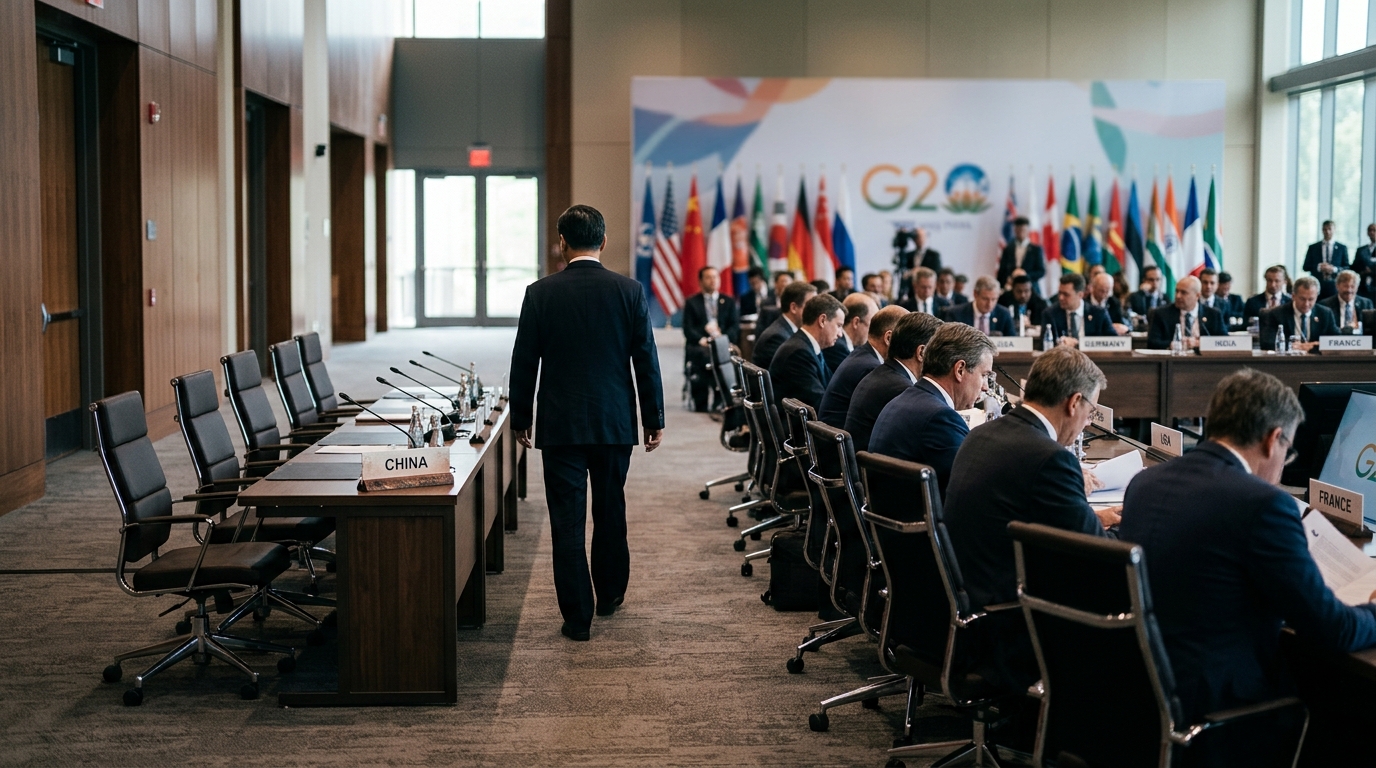
The vote count out of Asheville tells the story plainly. China was the only G20 member to dissent from a joint statement that “non-market based economies pushing out a never-ending stream of cheap exports is not sustainable,” Treasury Secretary Scott Bessent said Tuesday.
For institutional investors, the significance is not diplomatic. It is structural. A 19-to-1 alignment creates permission for countries to act, and Bessent made clear he expects them to do exactly that. Bessent said he is urging some of his G20 counterparts to take a page from the Trump administration’s playbook of using tariffs and other measures to crack down on trade imbalances. He told reporters that he had warned other nations at the beginning of Trump’s second term that the new U.S. “tariff wall” would mean that Chinese goods would flood their markets, and “unfortunately, I was right.”
The underlying numbers explain why 19 hands went up. China posted a record nearly $1.2 trillion trade surplus in 2025, despite steep tariffs imposed by President Trump. Bessent confirmed that China, “the country with the world’s largest and unsustainable current account surplus,” was the sole dissenter. When the U.S. erected its tariff wall, China did not absorb the blow at home. With reduced access to the U.S., China redirected trade flows to more open markets, including ASEAN and the EU. The flood Bessent predicted arrived on schedule.
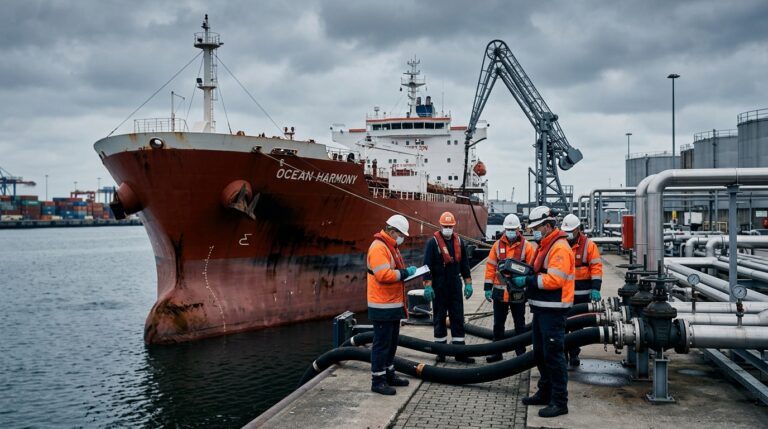
The sectors where overcapacity is most acute are not abstract. Through regulatory oversight and industry-specific measures, China’s government has tried to curb overproduction and falling prices in sectors including autos, solar, batteries, and ferrous and nonferrous metals. It has not worked. In metals, chemicals, and automotive manufacturing, margins remain low and volatile, and profitability has failed to recover despite repeated policy campaigns. China’s share of global excess capacity in steel production rose significantly during 2025, reaching 54 percent of the world gap between capacity and demand by the third quarter.
The investment committee question, then, is not whether tariffs spread. They will. The other G20 members will take action in the coming “days, weeks or months” to “reach a resolution on this unsustainable equilibrium,” Bessent said. The question is sequencing: which industries get walled off first, and whose cost base changes as a result.
Steel and autos are the obvious first movers. Both are politically sensitive in every G20 economy, and both face documented Chinese overcapacity. European Commission estimates put global steel overcapacity on a trajectory toward 721 million tonnes by 2027, about five times total EU steel consumption. Domestic producers in markets that raise barriers benefit directly. Those still exposed to third-country Chinese competition face a more complicated calculation.
The overlooked dimension is what happens to emerging-market allocations. More markets can be expected to raise barriers to Chinese goods, while those that remain open will face growing floods of lower-priced goods seeking buyers. A country that declines to follow Bessent’s playbook becomes a dumping ground. That resets risk across broad EM exposure, including vehicles like EEM, where country weights in economies with open trade regimes carry underappreciated downside.
Stocks to Watch
- FXI (iShares China Large-Cap ETF): The direct read on sentiment toward Chinese exporters. Any coordinated G20 tariff escalation compresses margins across the index’s industrial and consumer discretionary names.
- EEM (iShares MSCI Emerging Markets ETF): Countries that stay open to Chinese goods absorb deflationary pressure. Country weights in ASEAN and Latin America carry this risk and it is not yet in consensus price targets.
- Nucor (NUE): U.S. steel’s domestic champion. A G20 that builds walls around Chinese steel is a medium-term volume and pricing tailwind for an American producer already running behind tariff protection.
- General Motors (GM): Sells in markets now explicitly targeted by the 19-nation consensus. Competing against Chinese automakers in third-party markets gets meaningfully easier if Bessent’s counterparts follow through.
- BYD (BYDDY): The company most exposed to a coordinated global tariff response. Already facing barriers in the EU and Canada, a broader G20 alignment closes the remaining open-market safety valve.