September 4, 2026
The September 24 White House visit is less about diplomacy than about which sectors get unlocked
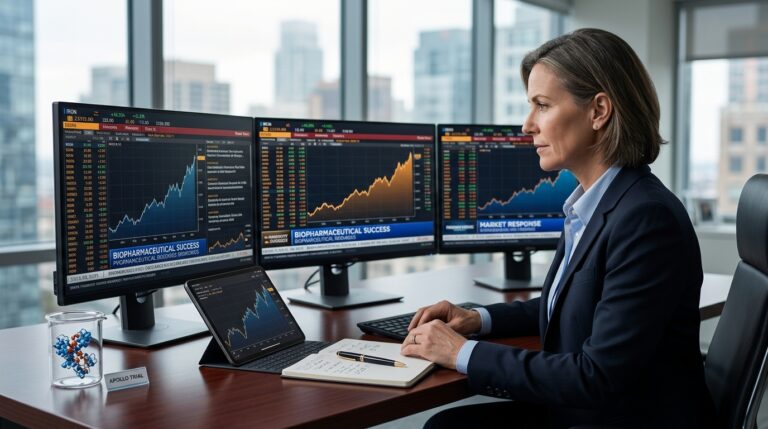
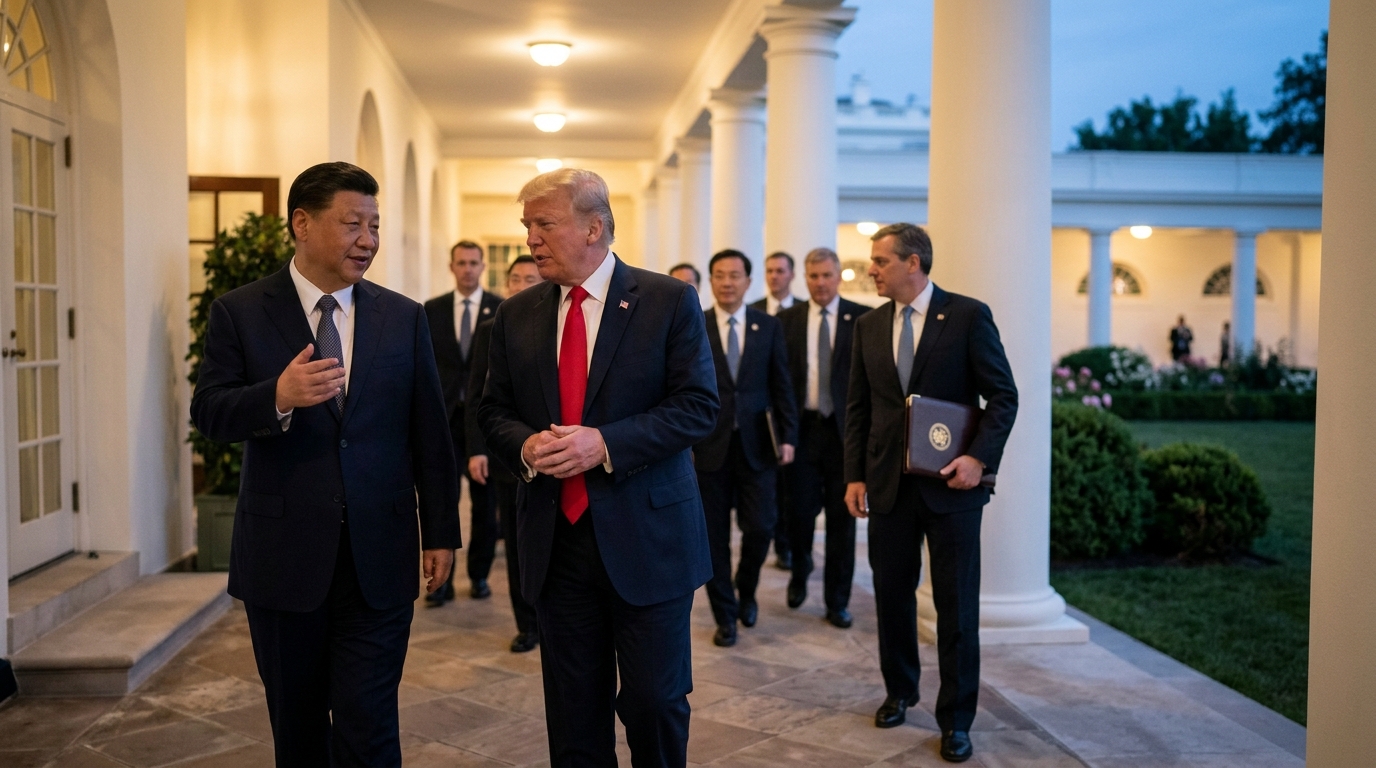
Twenty days from now, Xi Jinping arrives in Washington with something he has not brought to American soil in over a decade: a large delegation of Chinese corporate executives. The move is calibrated, not spontaneous, and traders who read it as ceremonial will miss the real positioning opportunity.
J.P. Morgan Is Building on This Under-$1 Crypto
While fear hits levels not seen since 2022, major institutions aren’t backing off – they’re building. One little-known crypto is being used for real infrastructure tied to moving traditional assets on-chain. With supply tightening and activity expected to rise, this setup is getting harder to ignore.
Get the full breakdown on this under-$1 crypto before attention grows
- September 24 White House visit is scheduled, and President Trump has said there will be a state dinner in Xi’s honor. The size and composition of any Chinese CEO delegation remain undisclosed as of today.
- Xi last brought a sizeable business contingent to the U.S. in 2015, when Boeing and China Aviation Supplies Holding Company signed a General Terms Agreement related to the purchase of 300 airplanes valued at about $38 billion at list prices, and Xi met U.S. executives including Tim Cook, Mark Zuckerberg, and Jeff Bezos.
- Trump took 18 executives to Beijing in May, including Nvidia CEO Jensen Huang and Elon Musk, reflecting the reciprocal choreography now playing out in reverse.
- The Busan trade agreement, struck in October 2025, is up for extension, with the White House saying China committed to buying at least $17 billion a year in U.S. agricultural products in 2026 (prorated), 2027, and 2028, on top of separate soybean-volume commitments from October 2025.
- Washington’s current posture includes a 100% tariff on Chinese EVs, stepped-up restrictions and security actions affecting foreign drones and certain communications equipment, and major Chinese tech firms on the Entity List and Pentagon-linked lists.
- The U.S. goods deficit with China fell 31.6% in 2025 versus 2024, but trade diversion through Vietnam (a $178.2 billion U.S. goods deficit in 2025) and Taiwan (about a $146.6-$146.8 billion U.S. goods deficit in 2025, depending on source) signals structural rerouting, not genuine decoupling.
- Midterm elections on November 3, 2026 give the White House a domestic incentive to display visible deal flow from the summit.
What the CEO Delegation Actually Signals
Xi rarely travels abroad with corporate executives, many of whom fell out of favor after Beijing’s regulatory crackdowns on the technology, education, and property sectors that began in 2020. Bringing them now is a deliberate reversal of that posture. The move is aimed in part at signaling China’s willingness to support investment and commercial ties with the U.S., while offering the White House potential economic wins ahead of midterm elections.
The last time Xi traveled to the U.S. with a substantial contingent of Chinese business leaders was 2015. A lot has happened since then, including a sweeping regulatory crackdown on China’s own tech and property sectors and a period of sustained trade friction. The reversal is not goodwill. It is leverage, packaged as goodwill.
Wall Street Is Waiting for Washington’s Next Crypto Move
The CLARITY Act could reshape how major financial institutions participate in crypto. And while firms like Goldman Sachs, J.P. Morgan and Citadel are already active across digital assets, our team believes one little-known altcoin could stand out as clearer rules bring more institutional capital on-chain.
Discover the overlooked altcoin we believe could benefit from crypto’s next regulatory chapter.
Sector and Stock Implications
Chinese companies have faced increasing scrutiny of their U.S. investments in recent years. Washington has imposed a 100% tariff on imported Chinese EVs, tightened restrictions affecting certain foreign drones and covered communications equipment, and forced TikTok’s divestiture. It also placed major Chinese tech firms on the Entity List and a Pentagon-linked list. Any softening of those restrictions, even partial and informal, changes the pricing of exposed equities immediately.
Among Chinese tech ADRs, Alibaba sits at an interesting intersection of that policy risk and its own independent catalyst cycle. The company’s open-source AI model Qwen has reached a billion downloads, giving it a commercial narrative that exists partly outside the bilateral trade story — but its valuation remains tethered to Washington’s posture toward Chinese tech. how Alibaba’s open-source AI lead sets up its next earnings decision is worth reviewing before the summit reshapes the risk premium on names like BABA.
The 2015 analog is instructive. During that visit, Boeing and a Chinese state buyer signed a General Terms Agreement related to the purchase of 300 airplanes valued at about $38 billion at list prices, and Xi met U.S. technology executives including Apple’s Tim Cook, Meta’s Mark Zuckerberg, and Amazon founder Jeff Bezos. Boeing sits in a structurally different position today, but the aerospace and agricultural export categories remain the most legible deal targets.
Under a Trump policy shift announced December 8, 2025 and implemented through a Commerce Department license-review change, Nvidia’s H200 can be reviewed for export to approved customers in China on a case-by-case basis. Whether the September 24 meeting expands that aperture or quietly closes it is the single most consequential chip-sector variable in Q4.
Nvidia’s China exposure doesn’t exist in isolation from its broader earnings narrative. The stock has logged seventeen consecutive beats while still selling off after four straight reports — a dynamic that makes any policy shift affecting its largest addressable growth market doubly consequential for positioning. a breakdown of the specific metrics and guidance signals traders watch when Nvidia reports provides useful context for sizing any summit-driven move in NVDA against the stock’s existing post-earnings pattern.
Jack Kellogg used to park cars for tips.
One Friday afternoon trade, held over the weekend, no charts open. Cashed out $37,212 Monday morning.
Scenario Framework
Bull Case: The Busan agreement extends with new agricultural and aerospace commitments. Entity List reviews begin for select firms. Chinese tech ADRs and Boeing rally 5%-8% into October on deal expectations.
Base Case: The summit is broadly symbolic, with limited substantive outcomes, but the one-year Busan trade agreement extends. Keeping that agreement alive, even without meaningful new additions, counts as a win for bilateral stability. Markets price a modest risk-on move in China-exposed names.
Bear Case: Taiwan arms or Scarborough Shoal tensions surface publicly before or during the summit. The Busan extension stalls. Chinese ADRs and semiconductor equipment names sell off sharply.
The semiconductor equipment category isn’t the only chip-adjacent trade with summit sensitivity. Memory — specifically HBM supply flowing into U.S. hyperscaler data centers — sits at the intersection of China trade policy and domestic AI infrastructure spending in ways that aren’t always obvious from the headlines. why Micron’s record quarter and Amazon’s next report are linked trades to watch lays out that connection in detail, and the logic applies directly to how memory names could move if the summit shifts chip-sector sentiment in either direction.
Active Trader Considerations
The twenty-day window into September 24 is an event-risk set up with asymmetric information. Specific deal sectors (aerospace, agriculture, semiconductors) are identifiable; which Chinese executives attend is not yet known, but the composition of that delegation, once disclosed, will be the clearest forward signal. Monitor CSCO, NVDA, and BA for unusual options activity and volume versus the 20-day average as the summit approaches. Position sizing should reflect headline risk in both directions. Preparation matters more than conviction here.