September 15, 2026
Bonus Content: Microsoft’s $329B Lease Pile Is the Real Story Behind 38GW
Below is an important message from one of our highly valued sponsors. Please read it carefully as they have some special information to share with you.
Hey, take a look at this.

That’s Elon Musk having dinner with the President back in January.
Elon posted it himself.
His caption?
“2026 is going to be amazing.”
And guess what’s happening now?
- Elon filed a plan with the FCC to quite literally take over the AI industry… From outer space.
- Trump signed an order gutting the red tape around commercial space launches
- He also signed a second order pushing NASA to hand its work to private companies (aka SpaceX)
After thirty years on Wall Street, I can tell you: nothing is a coincidence.
And what Elon’s doing in AI is exactly what he’s done his entire career.
Take an industry, and make it his.
He took over mobile payments PayPal.
He took over electric cars with Tesla.
And he took over commercial space launches SpaceX.
NOW…
He’s doing it with Artificial Intelligence.
Every single time, people who were positioned early for Elon’s NEXT PROJECT walked away millionaires.
By my estimate, he’s already minted over 100,000 of them.
But I believe this one could be his biggest yet.
It isn’t Tesla. It isn’t SpaceX.
SPOILER: It’s not even a company Elon owns.
It’s a name almost nobody’s talking about, and it still trades for less than $100.
I put the whole story into my brand-new FREE Millionaire Maker Masterclass.
When you join I’ll show you exactly what Elon filed…
Why I believe he’s the only man alive who can pull it off…
And how to position yourself before September 25th.
Sincerely,
James Altucher
Microsoft’s $329B Lease Pile Is the Real Story Behind 38GW
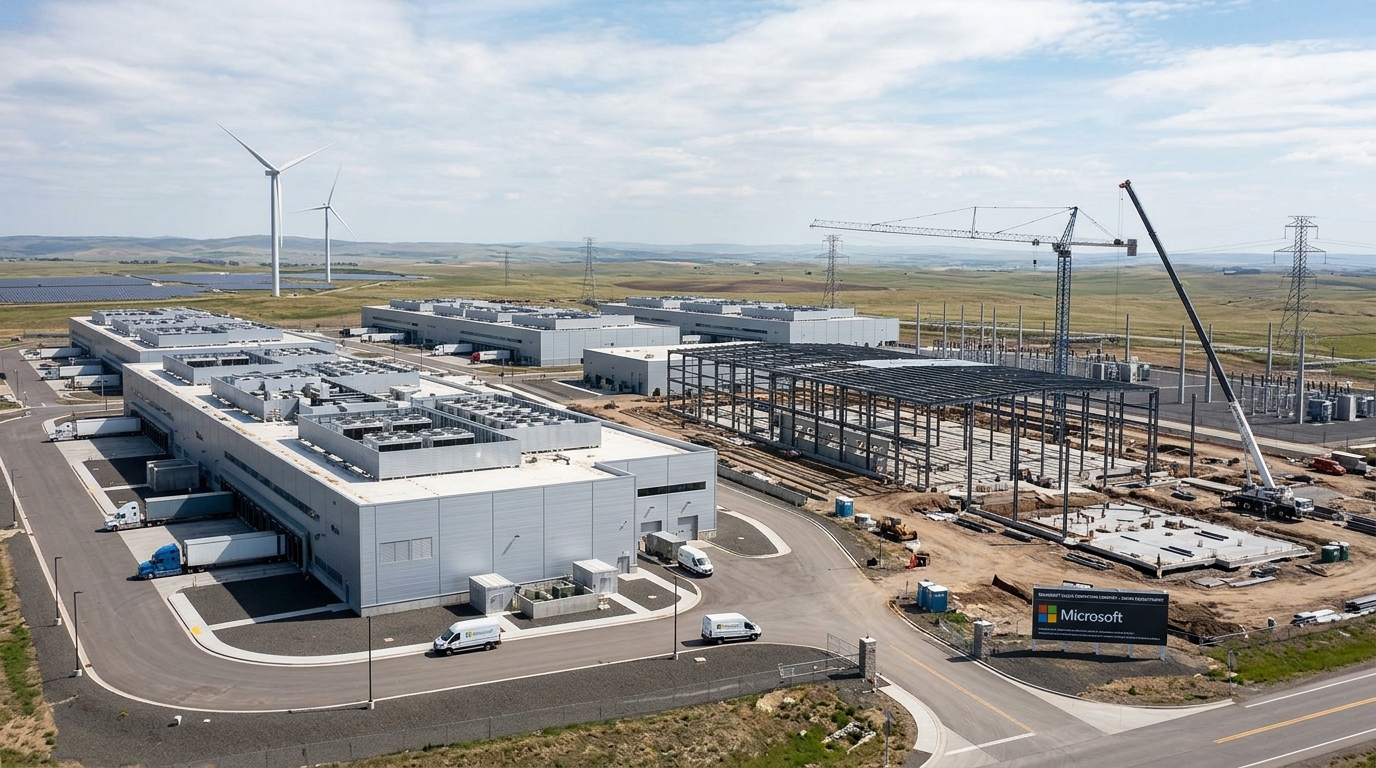
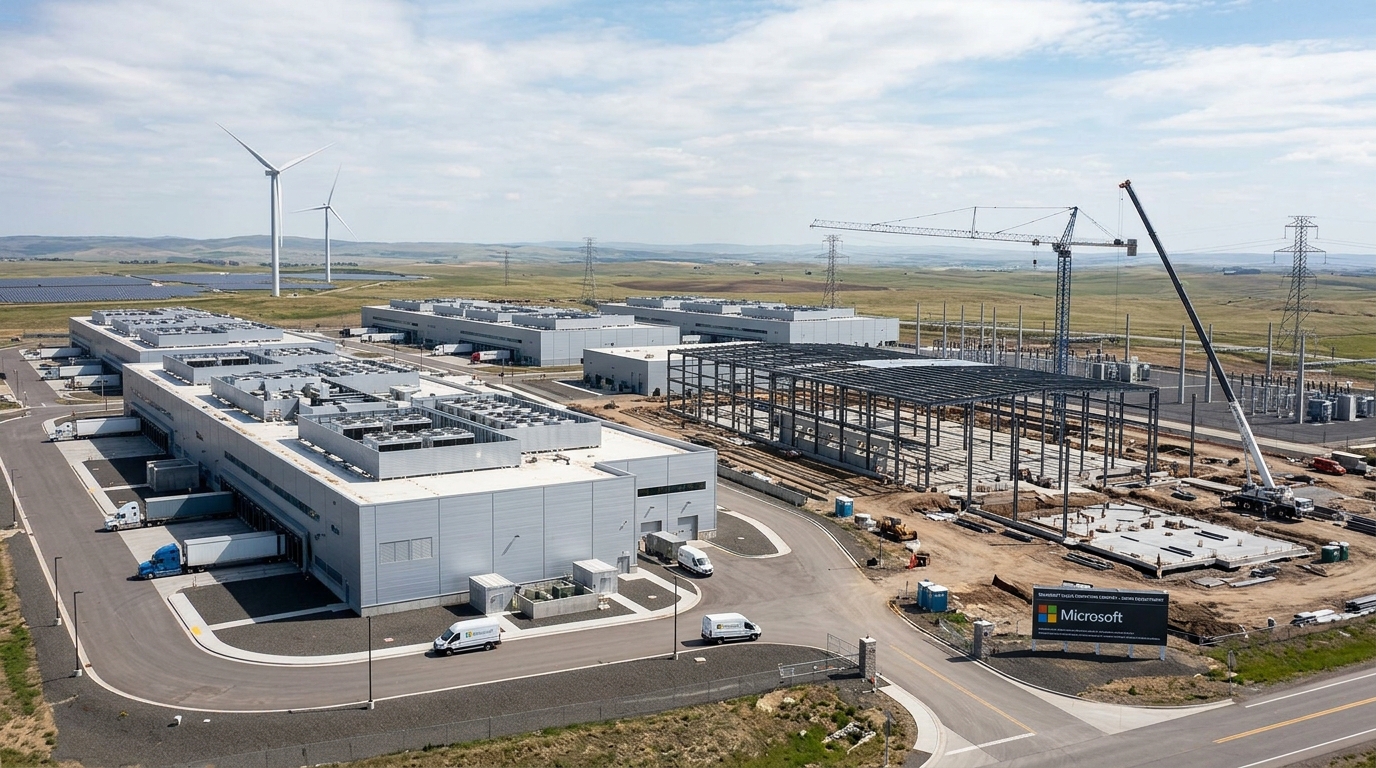
Microsoft does not need to announce a 38-gigawatt data center target to prove the build is real. The evidence is already sitting in its June 30 balance sheet: $329.1 billion of leases that have not yet commenced, up from $196.6 billion the prior quarter. That single line item tells active traders more about the commitment than any Bloomberg report citing unnamed sources.
The broad contours of the plan are clear enough. Microsoft currently operates about 12 gigawatts of data center capacity, according to reports citing people familiar with the plan. The reported 2032 target calls for more than 38 gigawatts total. Details like how much of the fleet is AI-dedicated are not disclosed in Microsoft’s filings, so traders should treat third-party estimates on AI-specific capacity as directional rather than definitive.
What the headline number obscures is the execution math. On July 29, CEO Satya Nadella told investors Microsoft remains on track to roughly double overall capacity within two years, implying a pace of approximately 6 gigawatts per year. The 38-gigawatt goal by 2032 requires only about 4.3 gigawatts per year on average. In other words, the near-term build rate already exceeds what the long-term target demands.
Capital expenditures were a key cash-flow drag in fiscal Q3: cash paid for property and equipment was $30.9 billion, and free cash flow fell 22% to $15.8 billion as a direct result. For calendar 2026, CFO Amy Hood guided to roughly $190 billion of capital expenditures. Azure and other cloud services revenue grew 43% in Q4, and Microsoft said Azure revenue surpassed $100 billion for the first time for the fiscal year. Commercial remaining performance obligations grew 84% to $678 billion, a backlog number that gives the spending trajectory its justification.
The margin read is nuanced. Gross margin dipped to 67% in Q4 as infrastructure costs rose. But operating income for full-year FY2026 still rose 21% to $155.2 billion on $331.8 billion in revenue, up 18%. The income statement is holding while the balance sheet absorbs the strain.
Technical and Positioning Framework
MSFT trades near $495 to $500, roughly 12% to 14% below the consensus analyst target of approximately $565 to $573 across about 52 analysts. The 200-day moving average sits near $435. The stock is extended above that level but has not yet challenged its 52-week high near $555. Watch the $490 level as near-term support; a clean hold there keeps the constructive technical picture intact. The 10-year Treasury yield near 4.9% to 5.0% is a live cost-of-capital input into a company financing a multi-decade physical buildout, and any rate volatility will reset the market’s implied discount rate for long-dated commitments.
Scenario Modeling
Bull Case: Azure demand continues to outpace supply into FY2027, revenue growth re-accelerates above 20%, and new capacity converts quickly to bookable product. MSFT tests $555 and analysts with targets at $625 find validation.
Base Case: Capacity comes online on schedule, Azure holds 40%-plus growth, and free cash flow begins recovering in the back half of FY2027 as Hood projected. The stock grinds toward $530 to $540 over six to nine months.
Bear Case: Grid connection delays, regulatory constraints, and a sustained rate environment above 5% stretch the timeline and inflate the effective cost of long-duration commitments. Free cash flow stays depressed, gross margin compresses further, and the stock revisits $455.
Active Trader Considerations
The $329.1 billion in uncommenced leases is a floor under the capital commitment, not a ceiling. Traders should treat any pullback toward $480 as a decision point, with position sizing calibrated to the reality that quarterly free cash flow will remain volatile for at least two more reporting periods. The energy procurement angle matters: Microsoft has secured long-term nuclear-linked power agreements, but grid queue timelines of four to seven years in key markets represent a genuine execution risk that valuation does not yet fully reflect. Preparation, not prediction, is the edge here.