October 9, 2026
Bonus Content: Hurricane Isaias Is Ashore Tonight. Diesel Cracks Are Already Moving.
Dear Reader,
For years…
The MAG7 have dominated the markets.
You know their names…
Apple, NVIDIA, Google, Amazon, Tesla, Meta and Microsoft.
They’re the biggest companies on earth.
With a combined market cap over $24 trillion.
But guess what?
ONE company could be worth more than all seven put together.
And it hasn’t even gone public yet.
Anthropic, the maker of Claude.
I know that sounds crazy…
But according to the Wall Street Journal, Anthropic is poised to tell investors the market for what it does could top $30 trillion. Per year!
In other words…
If it takes just a 10% market share in the years ahead, it could be worth $15 trillion.
And if it takes a 20% share? $30 trillion.
Bigger than all the Mag 7 stocks, combined.
And here’s the thing…
Right now? Anthropic’s market share is close to 40%.
That’s why it’s shaping up to be the hottest IPO in history.
But if you want the chance to profit from this explosive event…
Don’t just buy shares directly.
I’ve found a company that got in years ago, long before the crowd. If I’m right about Anthropic, what this company owns could be worth TRIPLE its current market cap in the years ahead.
I just sat down for an interview where I shared the whole story including this company’s name and ticker – totally free of charge.
For the time being, you can watch it right here.
Regards,
Matt McCall
Editor, McCall’s Innovation Report
P.S. At $15 trillion, I believe this company’s stake in Anthropic could be worth THREE TIMES what the whole company is worth today. Get the name and ticker here, free.
Hurricane Isaias Is Ashore Tonight. Diesel Cracks Are Already Moving.
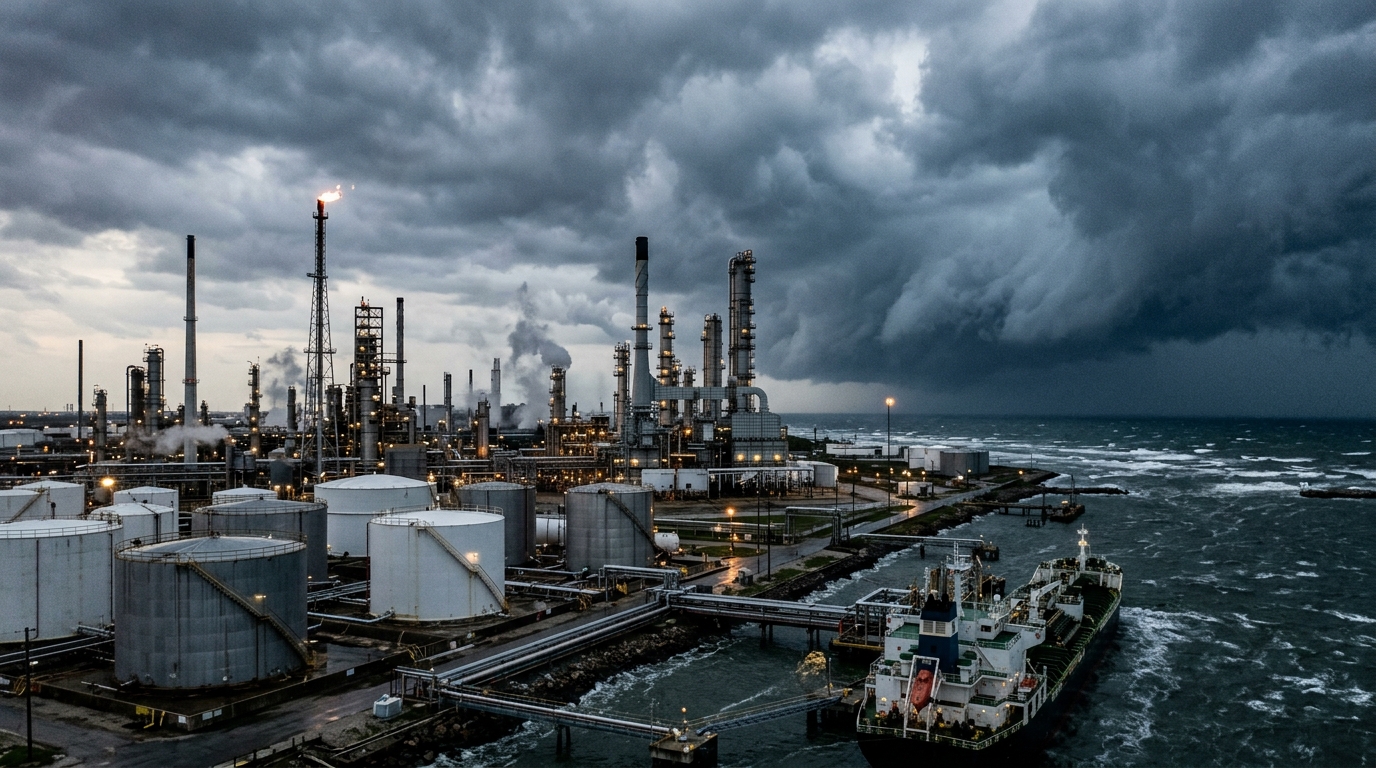
Hurricane Isaias is expected to make landfall late tonight or early Saturday between the Mississippi coast and the Florida Panhandle, most likely near the Alabama-Florida state line, as a Category 2 storm with sustained winds of 105 mph. The fuel-market damage is already accumulating before a single shingle lifts off a roof.
Market Context
Operators have halted an estimated 1,282,879 barrels of daily oil production, or 62.89% of Gulf output, and 1,127 million cubic feet of daily natural gas production, or 57.35%, according to the Marine Minerals Administration’s Thursday report. That escalation was swift: a day earlier, the shut-in was about 511,619 barrels of oil a day, or 25.08%. 121 production platforms have been evacuated, representing nearly one-third of the 371 manned platforms operating in the Gulf.
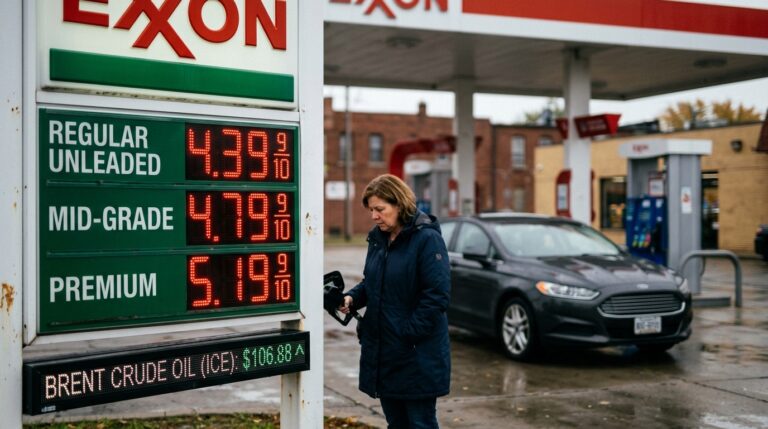
European gasoil jumped roughly 6% Wednesday, and prompt diesel cracks have been pushing back toward $80 a barrel. At the pump, AAA has diesel near $6.28 a gallon and regular gasoline around $4.36. That backdrop arrived before Isaias. US refineries, mostly located along the Gulf Coast, are running as hard as they can to offset war-driven outages overseas. Fuel inventories that act as shock absorbers have already been tapped, and America’s emergency oil stockpile is at its lowest level since 1982.
Sector Breakdown: Refiners Bear the Real Risk
US refineries ran at 92.5% of capacity in the week ended September 25, with Gulf Coast plants around the mid-to-high 90% range on a 4-week average basis. That utilization rate is the critical variable. Above 90%, there is little spare capacity elsewhere to pick up lost throughput, so barrels lost on the Gulf Coast are hard to replace quickly.
About 2.7 million barrels per day, or 14% of America’s refining capacity, lie within or near the projected path of the storm, according to Andy Lipow, president of Lipow Oil Associates. In the EIA’s list, six plants run by major operators sit on the eastern Louisiana and Mississippi coast: Marathon Garyville (617,000 b/d), Chevron Pascagoula (356,440 b/d), Shell Norco (231,153 b/d), Valero’s St. Charles plant (215,000 b/d), PBF Chalmette (190,000 b/d), and Valero Meraux (125,000 b/d).
Stock-Specific Financial Breakdown
The three pure-play refiners most exposed to this moment have had a historic year. The 3-2-1 crack spread stood around the mid-$60s per barrel in early September 2026, while diesel crack spreads topped $100 per barrel in mid-August, the first time that threshold had been crossed.
Marathon Petroleum (MPC) posted total revenues of $52.3 billion in Q2 2026 versus $34.1 billion a year earlier, with a refining and marketing margin of $36.33 per barrel serving as the key baseline: any diesel or crack-spread move shows up quickly in segment adjusted EBITDA. Valero’s (VLO) Q2 2026 profit surged more than fivefold year-over-year to $3.7 billion as refining margins nearly doubled. VLO’s Q2 refining margin per barrel of throughput of $24.42 is the starting point: each dollar of crack spread widening translates directly into throughput-weighted margin improvement. Phillips 66 (PSX) carries more diversification through midstream and chemicals, offering a partial buffer if refinery throughput slips.
On the insurance side, BMS Group estimated that Isaias could generate $3 billion to $5 billion in insurance-industry losses, based on current forecasts, catastrophe-model output and comparisons with historical storms including Hurricane Sally. Gallagher Re added that ample reinsurance-market capital meant the storm is unlikely to materially affect January reinsurance renewals. For Chubb (CB), Travelers (TRV), Everest Group (EG), and RenaissanceRe (RNR), the loss quantum sits well within a manageable single event. The more consequential question is whether energy-sector business interruption claims, contingent on covered physical damage, extend insured losses beyond initial wind and flood estimates.
Scenario Modeling
- Bull Case for Refiners: Isaias tracks slightly east, sparing Garyville and Pascagoula. Offshore production restarts within five to seven days. Diesel cracks spike to $90 or above briefly, MPC and VLO extend Q3 margin beats. Insurers absorb losses below $3 billion with minimal earnings impact.
- Base Case: One or two Gulf Coast refineries execute precautionary shutdowns lasting seven to ten days. Crack spreads widen $10 to $15 per barrel from current levels, supporting refiner margins through mid-October. Insured losses settle in the $3 billion to $4 billion range. Offshore production resumes within two weeks absent infrastructure damage.
- Bear Case: Flooding disables a major plant such as Marathon Garyville (617,000 b/d) for longer than ten days. Diesel retail prices push through $7.00 per gallon. Insured losses approach $5 billion, and business interruption claims surface across the energy supply chain, pressuring CB, TRV, and EG more than initial wind-damage models suggest.
Active Trader Strategy Framework
The sequence that matters is landfall track first, refinery damage reports second, MMA restart timelines third. Offshore shut-ins are temporary by design; oil shut in stays in the reservoir and flows again once crews return, but refinery damage can keep fuel prices elevated until the plant restarts. Traders monitoring MPC, VLO, and PSX should watch whether crack spread levels hold above $60 after the storm clears, or compress as production resumes and the storm premium fades. Volatility in energy names will likely peak Friday night through Saturday morning and shift again on the first post-storm refinery status updates.
Position sizing should account for rapid directional shifts: a clean landfall with no refinery damage deflates the storm premium quickly, while confirmed plant outages extend it. Risk management frameworks should treat the $80 diesel crack level and the $5 billion insured-loss figure as the two thresholds that would begin moving equity valuations materially rather than transiently.
Conclusion
Isaias is a fuel-market event dressed as a weather event. The offshore shut-in already represents more than 1% of global daily production. The refineries in the cone hold more than half a trillion dollars of annualized throughput value. Preparation here means tracking the refinery damage assessment that starts Saturday morning, not the wind speed at landfall. The storm surge and the insured-loss headlines will follow. The crack spread moves first.