

July 27, 2026
Chip Stocks Are Cracking the Market
The SOX is down 19% from its high and the broader market is feeling it.
First a note from Banyan Hill Research
Dear Reader,
America could be on the verge of making an abrupt energy shift.
To a clean, abundant resource that will revolutionize the entire economy.
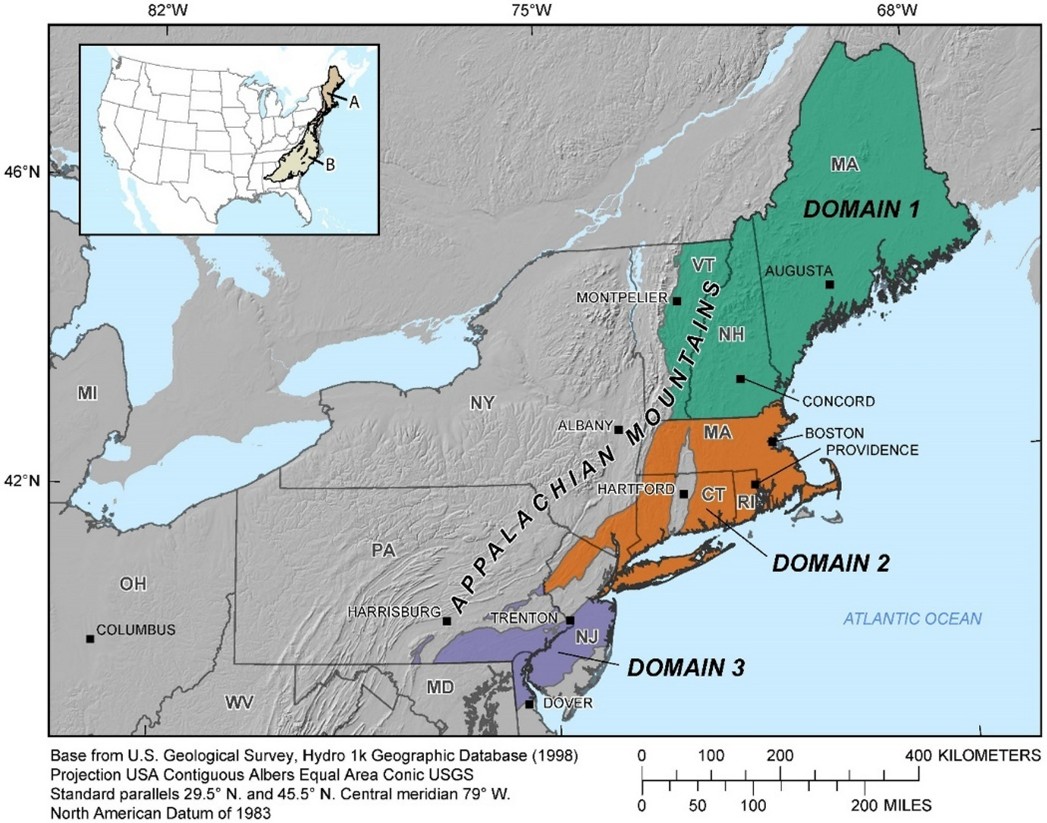
A 328-year supply was just confirmed beneath New England – the largest deposit ever found in modern American history.
The International Energy Agency projects global demand will grow fivefold by 2040.
Goldman Sachs projects data center power demand alone will jump 175% by 2030.
And the four richest men on Earth – Musk, Bezos, Gates, and Zuckerberg – are all racing to control the supply.
This isn’t oil. It’s not natural gas. It’s not radioactive.
But it’s beginning to power every AI data center, every electric vehicle, every modern weapons system the U.S. military operates.
President Trump has signed three executive orders to unleash it.
And I believe three small American companies sit at the heart of it all.
Click here for the full story.
To Your Profits,

Adam O’Dell
Chief Investment Strategist, Money & Markets
Chip Stocks Are Cracking the Market

ACTIVE TRADER DAILY | July 27, 2026
Key Takeaways
- The Philadelphia Semiconductor Index (SOX) has dropped approximately 19% from its June 22 high, with the index trading near the 12,000 level that served as critical support.
- The iShares Semiconductor ETF (SOXX) closed at roughly $527 on July 24, off its 52-week high of $655.95, with the 50-day moving average sitting near $541 acting as near-term resistance.
- Global chip stocks have erased approximately $3.3 trillion in market value since the June 22 peak, with memory names leading the decline: Micron fell as much as 13% in a single session, SK Hynix dropped 30% from its high, and Samsung is off more than 25%.
- TSMC reported Q2 2026 revenue of $40.2 billion, up 33.7% year over year, and raised its full-year capex guidance to $60-64 billion. Despite a strong report, shares fell more than 3% as investors focused on the elevated spending outlook.
- NVIDIA, reporting Q1 FY2027 EPS of $1.87 (beating estimates of $1.75) with revenue of $81.6 billion, has held up better than peers. Its next earnings date is August 26, 2026.
- The Federal Reserve holds its July 29 rate decision with the fed funds rate currently at 3.50%-3.75%. CPI ran at 4.2% year over year as of May 2026, keeping rate-hike risk alive and adding pressure to high-multiple tech names.
- A critical earnings week is unfolding: Microsoft, Meta, Amazon, AMD, Qualcomm, Lam Research, and Arm Holdings all report this week, making semiconductor positioning particularly volatile.
Market Snapshot
The S&P 500 closed at approximately 7,412 on July 24, essentially flat on the session as investors digested a complex mix of signals: a new U.S.-EU trade deal that failed to spark meaningful enthusiasm, a Fed meeting looming on July 29, and the busiest stretch of earnings season so far. The Nasdaq Composite, which added 0.33% Monday to settle at 24,975, has been the more telling story. Underneath the index-level calm is a sector under real pressure.
Semiconductors have been the fault line.
What started as a profit-taking event following a historic 130% rally in the SOX over the prior twelve months has evolved into something with more structural weight behind it. The Nasdaq 100 is back on a sell signal by several technical measures. The VIX, while not in panic territory, has been generating elevated readings as chip-driven volatility rippled across the broader market. Small caps, interestingly, have been quietly outperforming. The Russell 2000 is up nearly 6% over the last three months, outpacing the S&P 500 Equal Weight Index. That divergence matters. It suggests capital is moving rather than retreating entirely.
SpaceX ‘Dark Energy’ Replaces Foreign Oil
For years, we’ve been told SpaceX is a rocket company. But according to new satellite images from 300 miles above the Earth’s surface, there is something very strange going on at SpaceX right now that has nothing to do with space. It could soon replace our need for foreign oil forever and ignite a $10 trillion boom for the stocks involved.
The macro backdrop adds another layer. The federal funds rate sits at 3.50%-3.75% after four consecutive meetings without change. CPI was running at 4.2% year over year as of May, well above the Fed’s 2% target. New Fed Chair Kevin Warsh has adopted a more hawkish posture, and market pricing currently assigns a 25-30% probability of a rate hike at the July 29 meeting. That uncertainty is not a small thing for a sector that has been trading at elevated multiples tied to AI growth expectations. When rates stay high and stay uncertain, high-multiple stocks feel the math working against them.
Why Semiconductors Are in Focus
Here’s what makes the current chip selloff interesting rather than just painful: the fundamentals haven’t broken. That’s not a comfort — it’s a complexity.
TSMC just reported Q2 2026 revenue of $40.2 billion, up 33.7% year over year and 12% sequentially. Net income surged 77.4% year over year. The company raised its full-year revenue growth guidance to more than 40%, up from 30%. Chairman C.C. Wei stated that AI-related demand continues to be “extremely robust.” And yet, shares fell. TSMC also raised its 2026 capital expenditure guidance to $60-64 billion, up from $52-56 billion, and announced an additional $100 billion investment in Arizona. The market read that as more supply risk, more cost pressure, and an implicit acknowledgment that current capacity is insufficient to meet demand. That last part is actually bullish for the industry long-term. The market priced it as a near-term concern.
NVIDIA is a slightly different story. The company reported Q1 FY2027 earnings of $1.87 per share, beating estimates of $1.75, on revenue of $81.6 billion. Data center revenue hit $75.2 billion, up 92% year over year, now representing more than 92% of total company revenue. For fiscal year 2026, NVIDIA posted $215.9 billion in revenue, up 65% year over year. By almost any fundamental measure, the company is executing. Yet NVIDIA is currently trading near $206, having struggled to sustain levels above $213, and sits just above its 50-period EMA near $206.31. Goldman Sachs has pointed to NVIDIA’s forward P/E of 21.7 times as compelling, noting it is near the average S&P 500 P/E and well below the company’s five-year average of 72 times. The next earnings date is August 26.
The hardest-hit names have been in memory. Micron fell as much as 13% in a single session in late June, closing near $1,051 before a multi-week slide brought it to around $865 by July 20. That represents a decline of more than 28% from its late-June high near $1,213. Samsung is off more than 25% from its peak. SK Hynix has fallen roughly 30%. Morgan Stanley analyst Joseph Moore issued a note on July 20 calling the decline a compelling entry point, arguing that the fundamental case for data center memory demand never actually broke. Memory pricing has held during the selloff, which Moore cited as a sign that underlying demand is intact.
The disconnect between earnings and price action is the central tension for traders this week. Samsung reported preliminary Q2 operating profit that represented an 1,800%-plus jump year over year. Its stock still fell sharply. That kind of reaction to good news is a signal worth respecting. It suggests expectations had run ahead of reality, and the market is in the process of recalibrating.
Sector Breakdown and Capital Rotation
The selloff has not been evenly distributed. NVIDIA has held up better than most, essentially flat from June 22 when many peers fell 20-30%. The breakdown in the SOX is happening despite NVIDIA, not because of it. That is an important distinction. The pressure is concentrated in memory-linked names, equipment makers, and mid-tier chipmakers.
Applied Materials fell 10% in early July trading. Lam Research dropped more than 5% in a single session. SanDisk fell more than 11% on one particularly rough day. AMD declined 7-8% in the early-July leg of the selloff before attempting a partial recovery. Intel, which was already in its own transition story, fell more than 20% over seven trading sessions.
The capital flowing out of chips hasn’t evaporated. Some of it landed in defense names after Trump’s trade deal with the EU included large military procurement language. Financial stocks, which carry less AI-multiple risk, showed relative strength. Energy picked up a bid as geopolitical tensions pushed crude higher. The broader market isn’t collapsing. It’s rotating. That’s a different environment than a broad risk-off event, and it requires a different approach.
Slight tangent, but worth noting: Schwab’s head of macro research recently observed that the correlation between the SOX and hyperscalers — which was near 1.0 in early 2025 — has essentially broken down. The hyperscalers and chips used to move in lockstep. That relationship is fractured right now. It creates a situation where Microsoft or Meta can report strong AI capex guidance this week and the chips don’t necessarily benefit the way they once would have. Traders who assume the old playbook applies here may get caught offside.
Stock-Specific Financial Breakdown
NVIDIA (NVDA): Revenue of $81.6 billion in Q1 FY2027, up 85% year over year. Data center revenue of $75.2 billion, up 92%. EPS of $1.87 beat the $1.75 estimate by 6.8%. FY2026 full-year revenue was $215.9 billion, up 65%. Forward P/E near 21.7 times. Consensus analyst target: $302.83, representing roughly 46% upside from current levels. Next earnings: August 26. Current price: approximately $206.75. Key support: $204.90-$206.30 (50-period and 200-period EMA zone). RSI near 48, neutral.
TSMC (TSM): Q2 2026 revenue of $40.2 billion, up 33.7% year over year. Net income up 77.4% year over year. Full-year 2026 revenue growth guidance raised to more than 40%. Capex guidance raised to $60-64 billion. Q3 2026 revenue guidance: $44.6-$45.8 billion. Gross margin 67.7%. High-performance computing represents 66% of revenue. The stock has risen more than 58% year to date despite the recent pullback. ADR shares fell more than 3% following the earnings report as investors focused on the capex increase.
Micron (MU): Fell 13.3% on June 23 to close near $1,051, erasing two sessions of gains. Subsequently declined further to approximately $865 by July 20, a drawdown of more than 28% from the late-June high near $1,213. Still up more than 260% year to date as of late June. Morgan Stanley has called the current level a potential entry point, arguing the data center memory shortage is intact and concerns about 2027-2028 shortages remain “as strong as ever.”
AMD: Market cap stood at approximately $760 billion as of early June. Shares dropped 7-8% in the early July selling wave, with one session down to approximately $508. AMD reports earnings this week (July 29), which makes it a live event for the sector. Strong guidance from AMD on AI GPU demand could shift near-term sentiment for the broader chip complex.
SOXX (iShares Semiconductor ETF): Trading near $527 as of July 24, down from a 52-week high of $655.95. The 52-week low is $232.33, putting the current price roughly 19% off the high but still 127% above the trailing 12-month range low. A sell signal was issued from a pivot top on June 22. The short-term moving average sits near $541.60, acting as near-term resistance. A breakdown below $522 would be technically significant.
Technical Picture
The SOX broke the neckline of a head-and-shoulders top in mid-July, falling through the 12,000 level that had been defended twice previously. That structural break matters. The next downside technical target from that pattern is near 11,000, roughly 7% below recent closing levels. The 50-day moving average for the SOX sits near 11,713, which aligns with the level that would technically confirm a bear market for the index (a 20% decline from the June 22 high). The index closed the week of July 18-24 trading within a range of approximately 12,657 to 13,065, suggesting stabilization but not yet a decisive recovery.
For SOXX, the line that bulls need to defend on a closing basis is approximately $522. The short-term moving average at $541.60 is now overhead resistance. The long-term moving average at $581.21 represents the bigger wall above that. A sustained close above $541 would shift the short-term technical picture from negative to neutral. Below $522 and the path of least resistance points lower toward the $500 area.
NVIDIA’s chart is constructive relative to the sector. Price has been holding above the 50-period EMA near $206.31 and the 200-period EMA near $204.92. The RSI at 48 is neither oversold nor overbought. The resistance level that matters is $213.13. A close above that would suggest the stock is ready to break out of its current consolidation range. Below $204.90 on a closing basis would be the first meaningful technical warning.
Volume has confirmed the distribution. During the heaviest down sessions, participation was elevated. Bounces have come on lighter volume. That pattern is characteristic of a market still working through a correction rather than one building a base. Stochastics on the SOX are trying to recover from an oversold condition, which could support a near-term bounce. Whether that bounce is tradeable or just a temporary pause before another leg lower depends heavily on what earnings deliver this week.
The Catalyst Stack
This is what makes the next five sessions particularly high-stakes for semiconductor traders. The catalysts are stacking.
First: earnings. Microsoft, Meta, Amazon, AMD, Qualcomm, Lam Research, and Arm Holdings all report this week. Each of these companies, for different reasons, is a read-through for semiconductor demand. Meta’s AI infrastructure spending directly drives GPU demand. Microsoft’s Azure growth is a proxy for data center chip consumption. AMD’s guidance on AI GPU sales will be the most direct semiconductor data point of the week. A strong AMD report with upward guidance could put a floor under the sector. A miss or a cautious tone could accelerate the selling.
Second: the Federal Reserve. The July 29 meeting carries real uncertainty. With CPI at 4.2% year over year and the PCE inflation projection revised up to 3.6%, the Fed is not in a position to signal easing. Market pricing puts the odds of a rate hike at roughly 25-30%. Even if the Fed holds, the post-meeting statement and press conference will be scrutinized intensely for any hint of a future move. High-multiple AI names are sensitive to this. A more hawkish tone would likely pressure semiconductors further. A softer tone could support a relief bounce.
The Next Big Energy Play (It’s Not Oil)
In 1859, Edwin Drake drilled America’s first oil well in Pennsylvania. John D. Rockefeller turned that single discovery into Standard Oil – and one of the largest fortunes in history.
Today, one former hedge fund manager says a new American resource is about to do the same thing. The U.S. Geological Survey just confirmed enough of it buried beneath New England to power the United States for 328 years.
And three American companies could capture the lion’s share of this opportunity.
Third: the structural story. TSMC’s raised capex guidance and NVIDIA’s ongoing demand signal that AI infrastructure spending is not slowing. Hyperscaler AI capital expenditures are projected to rise from roughly $650 billion in 2026 to $1 trillion in 2027, according to Goldman Sachs. That is the long-term anchor for the sector. The short-term question is whether the market is willing to pay for that growth at current multiples while rates remain elevated. That tension is unlikely to resolve in a single week.
Risk Assessment
The risks here are real and worth taking seriously.
Valuation risk is the primary concern. The SOX rallied 130% over the prior twelve months before this correction. Even after a 19% drawdown, many names are not cheap on an absolute basis. If earnings guidance from AMD or Qualcomm disappoints this week, the sector does not have a valuation cushion to absorb the blow.
Rate risk is the secondary concern. A Fed rate hike on July 29, or even language that strongly signals one before year end, would hurt growth-oriented technology names disproportionately. The market has not fully priced in a hike. If one comes, the multiple compression in chips could extend well beyond current levels.
Geopolitical risk is the third dimension. Escalating U.S.-Iran tensions pushed crude oil above $85 per barrel in the most recent session, with Treasury yields following energy prices higher. Energy-driven inflation complicates the Fed’s position. Taiwan remains a persistent geopolitical variable for the entire semiconductor supply chain, given TSMC’s dominant role in advanced chip manufacturing.
There is also a competitive risk that emerged in early July. Meta announced plans to launch Meta Compute, a cloud business unit designed to sell surplus AI training and inference capacity, along with access to its Llama models, to enterprise customers. If hyperscalers are building excess capacity and beginning to monetize it externally, the incremental demand for new chip orders could be lower than the market assumed.
Scenario Modeling
Bull Case: AMD reports strong Q2 results on July 29 with upward AI GPU guidance. Meta and Microsoft signal continued aggressive AI capital spending in their earnings calls. The Fed holds rates on July 29 and adopts a neutral rather than hawkish tone. The SOX holds the 11,700-11,950 zone on a closing basis and begins to build a base. SOXX reclaims $541 on volume, triggering a potential recovery toward the $580-$600 area. NVIDIA clears $213 resistance and builds toward the 61-analyst consensus target of $302.83 ahead of its August 26 earnings.
Base Case: Earnings from AMD and Microsoft are solid but guidance is cautious, reflecting uncertainty around the second half of 2026. The Fed holds rates and delivers a balanced statement. The SOX stabilizes in the 11,700-12,300 range with elevated volatility. SOXX consolidates between $522 and $555 as the market waits for NVIDIA’s August 26 report to determine the next directional move. Individual stock reactions are wide and event-driven. Sector rotation continues, with capital moving toward financials, defense, and energy rather than returning to chips broadly.
Bear Case: AMD guidance disappoints, with AI GPU demand below expectations. The Fed hikes 25 basis points or delivers a hawkish statement signaling a near-term hike. The SOX breaks below 11,700 on a closing basis, confirming the technical bear market. SOXX loses $522 and slides toward the $490-$500 area. NVIDIA fails to hold the $204.90 EMA support zone and pulls back toward the $184-$190 area. Memory names extend their declines as institutional risk reduction continues heading into the summer slowdown.
Active Trader Strategy Framework
The environment right now is not one that rewards aggressive directional bets in semiconductors. The information gap is too large. Earnings from AMD, Qualcomm, and Lam Research, combined with the Fed decision, will collectively do more to determine near-term direction than any technical level alone. That means position sizing and patience matter more than conviction right now.
A few frameworks worth considering for the next one to five sessions:
- NVIDIA near support: The $204.90-$206.30 EMA cluster is the line to watch. As long as price holds above it on a closing basis, the longer-term trend remains intact. A break below that zone, particularly on elevated volume, would shift the risk profile materially. Resistance at $213.13 is the first meaningful upside level.
- SOXX range trade: The $522-$541 range defines the near-term trading band. A close below $522 with rising volume raises the risk of a further decline toward $500. A close above $541 on volume could support a bounce toward $555-$560. Neither side has a strong case until earnings and the Fed provide clarity.
- Memory names require patience: Micron, Samsung, and SK Hynix have fallen 25-30% from their highs. Morgan Stanley has called it a potential entry point for longer-term holders. But the risk-reward for active traders with a one-to-five-day horizon remains difficult to define precisely before AMD reports and the Fed speaks.
- Volatility management: Position sizes should account for elevated intraday swings. AMD, Qualcomm, and Lam Research earnings reactions could each move the sector 3-5% in either direction in a single session. Sizing accordingly and using defined-risk structures where possible reduces the cost of being early.
- Watch for rotation signals: The outperformance of small caps, financials, and defense names over recent weeks is meaningful. If chip earnings disappoint and the sector sells further, capital does not disappear. It continues rotating. Identifying where it goes next may matter as much as trading the chips themselves.
Trader’s Checklist
Before positioning in semiconductor-related names over the next one to five sessions, monitor these specific developments:
- AMD earnings report (July 29): Watch the AI GPU guidance figure. Analyst estimates are looking for continued strength. Any miss on forward guidance, particularly on data center revenue, will likely pressure the broader sector.
- Microsoft and Meta earnings calls (July 29): Listen for specific dollar amounts on AI capital spending plans for the second half of 2026. Vague or reduced guidance would be a negative for chips. Concrete, higher spending plans would support sentiment.
- Federal Reserve statement and press conference (July 29): Watch the specific language around inflation persistence and the path for rates. Any language suggesting a hike is imminent would be a headwind for high-multiple tech. A neutral-to-dovish tone could support a relief move.
- SOX closing level relative to 11,700-11,950: This is the technical line that separates a pullback from a confirmed bear market. Monitor on a closing basis, not intraday.
- SOXX volume on any bounce: Bounces on light volume are less trustworthy. A recovery on volume above the 9.23 million share average would be more meaningful.
- NVIDIA EMA support at $204.90-$206.30: Holding this zone keeps the longer-term technical structure intact. A sustained close below it changes the risk assessment materially.
- Qualcomm and Lam Research earnings (July 29-30): Both provide direct reads on smartphone chip demand and semiconductor equipment spending, respectively. Lam Research guidance on equipment orders is a leading indicator for where chip production capacity is heading over the next two to four quarters.
A Different Way to Structure a Trade
Many traders assume more capital = better results. But that’s not always how it plays out. In some cases, there’s a way to approach the same opportunity… With significantly less upfront cost… And clearly defined risk from the start. It’s not about taking bigger swings. It’s about structuring the trade differently. This free report walks through how that works – and where traders often go wrong.
Closing Thought
The chip selloff of July 2026 is not a story about AI demand collapsing. The data does not support that conclusion. TSMC raised guidance. NVIDIA beat estimates. Memory pricing held even as stocks fell 25-30%. What the market is doing is something more nuanced: it is reassessing how much it is willing to pay for that demand in a world where the Fed is holding rates above 3.5% with inflation running well above target.
That is a valuation question, not a fundamental one. And valuation questions can stay unresolved longer than most traders expect.
The next five sessions will not answer everything. But AMD’s guidance, the Fed’s tone on July 29, and whether SOXX can hold the $522 floor will tell traders a lot about whether this is a correction building a base or a correction with more work to do. Preparation over prediction. That is the job.
For informational and educational purposes only. Not investment advice. Trading involves risk, including loss of principal.