October 26, 2026
Bonus Content: FedEx Pilot Pay Jump: Autonomous Freight Is the Exit Ramp
Hey,
Have questions about the stocks you own? Want to know what opportunities you could be missing?
Now’s your chance to ask a professional trader LIVE for just $5!
Meet Ross Givens, a market analyst and professional trader with over 20 years of experience navigating Wall Street.
Every Monday at 9 AM ET, Ross goes LIVE to break down the market, uncover potential trading opportunities, and answer YOUR questions about the stocks you’re watching or already own.
And you’re invited!
For just $5, you’ll unlock:
- LIVE Access to Ross – Ask questions and get his perspective on YOUR stocks.
- Trading Alerts – Stay informed about potential market opportunities.
- Exclusive Research & Training – Learn the strategies Ross uses to find promising setups.
Your next chance to join Ross LIVE is coming up. Don’t miss it!
YES! Get My LIVE Access for Just $5 >>
Stop trying to figure out the market alone. Get inside the Black Ops Trading Club and learn directly from a pro.
To your success,
The Traders Agency Team
FedEx Pilot Pay Jump: Autonomous Freight Is the Exit Ramp
FedEx Corporation (NYSE: FDX) spent more than five years at the bargaining table with its pilots. The bill arrived June 29, 2026.
The Pilot Cost Problem Is Now Permanent
All FedEx Express pilot rates increased about 39.8% on June 29, 2026 under the newly ratified collective bargaining agreement. The agreement covers about 5,000 pilots and becomes amendable in December 2030. That is four and a half years of baked-in labor inflation that yield improvement and Network 2.0 efficiencies must outrun. In its FY2026 annual report, FedEx explicitly flagged “higher costs associated with the newly ratified pilot CBA” as a headwind to revenue and operating profit growth through calendar 2026.
The underlying industry context makes that cost sticky. According to a U.S. Government Accountability Office review of FAA data, an average of about 4,300 ATP holders under age 65 will reach mandatory retirement age each year from 2022 through 2042. The 1,500-hour ATP standard remains a structural constraint on the pace of new supply. A market that tight does not reset quickly.
What the Autonomous Corridor Offers
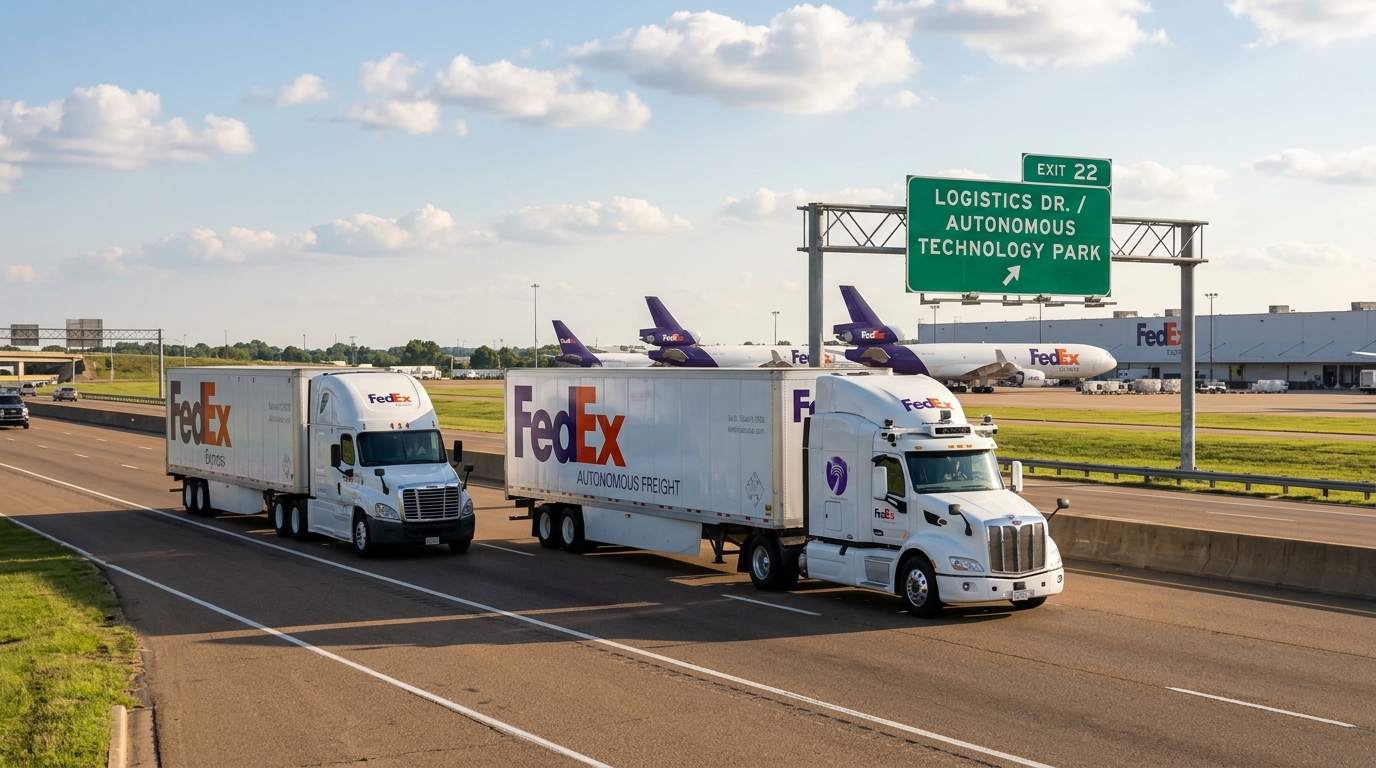
FedEx’s response to this cost structure is already in the field, if not yet at scale. FedEx Express has said it is teaming up with Bay Area-based Elroy Air and developing plans to test the Chaparral autonomous air cargo system within its middle-mile logistics operations, moving shipments between sortation locations. Elroy describes Chaparral as using cargo pods in the roughly 300 to 500 pound range and targeting missions measured in the hundreds of miles, with minimal fixed infrastructure needs.
A more dramatic benchmark arrived in September 2026. Joby Aviation completed what it described as the first autonomous flight across the United States, using a Cessna Grand Caravan platform equipped with Joby’s autonomy technology on a 3,199-mile trip completed in stages. Reporting on the demonstration described zero control inputs from the onboard safety pilot, with remote supervision from as far as 2,323 miles away.
Joby’s autonomy milestone is the headline, but the certification and commercial timeline beneath it is what determines whether the technology becomes a deployable cost tool. Joby’s earnings and certification progress drove a move far larger than the retail narrative suggested, and that gap between story and fundamentals is exactly the risk FedEx is managing.
Market-size claims in this space vary widely by definition. One widely circulated industry report pegged the autonomous cargo aircraft market at $1.72 billion in 2026, projecting $4.15 billion by 2030 (24.6% CAGR). For FedEx, this is not a moonshot. It is a labor arbitrage.
What the Numbers Must Deliver
For the fiscal year ended May 31, 2026, FedEx reported revenue of $94.7 billion, up from $87.9 billion the prior year. FedEx has also guided to $2 billion in Network 2.0 and associated One FedEx savings by the end of calendar 2027. The critical question for positioning is whether autonomous middle-mile deployment accelerates inside that savings window or lands as a post-2027 catalyst.
The Constraint That Still Matters
Joby’s September demonstration was not a regulatory green light for pilotless commercial operations. Any commercial deployment path still runs through FAA certification and operational approvals, including how regulators address detect-and-avoid, communications links, cybersecurity, and emergency procedures. Until that framework firms up, FedEx’s autonomous corridor remains a cost-reduction option rather than a deployed asset.
Disciplined traders watch the Q1 FY2027 earnings call, scheduled for October 28, 2026, for any commentary on pilot cost run-rate versus autonomous program timelines. That gap is where the trade lives.