August 27, 2026
Bonus Content: Warsh Takes the Podium. The Silence Has a Cost.
Below is an important message from one of our highly valued sponsors. Please read it carefully as they have some special information to share with you.
37.411° N, 122.148° W
If you punch in these coordinates…
You’ll find an unassuming office building where Elon Musk laid the groundwork for a project I’m calling “A.R.M”
A world-changing innovation that Elon says will be “The biggest product ever of any kind”…
NVIDIA’s CEO Jensen Huang is calling this industry the next “Trillion dollar industry”…
Bill Gates says “It’s almost limitless”…
And Elon himself says it’ll be worth $25 trillion…
In short, this is shaping up to be a massive profit opportunity…
The likes of which could give regular folks a chance to make fortunes…
I’ve put together this video to break down how you too can position yourself while it’s still under the radar…
Based on my research, Elon is set to launch “A.R.M” by October 22nd…
You’ll want to be positioned before then.
>>>Click here for all the info.
James Altucher
Editor, Paradigm Press
EP.S Inside this video, you’ll find a live demo of Elon’s “A.R.M”. You need to see it for yourself because It’s genuinely mindblowing.
Warsh Takes the Podium. The Silence Has a Cost.
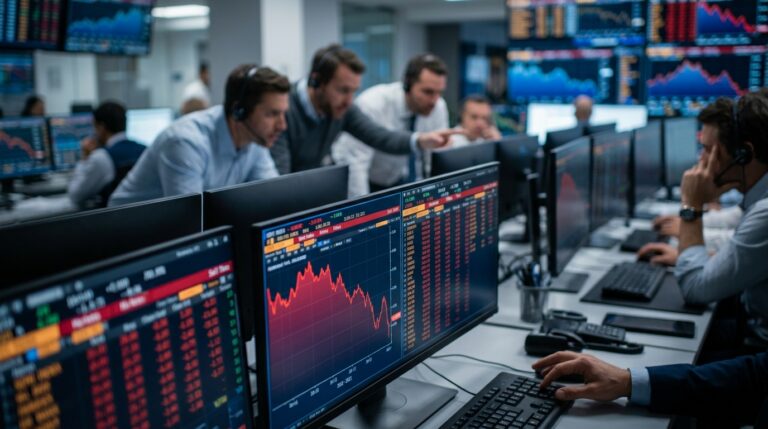
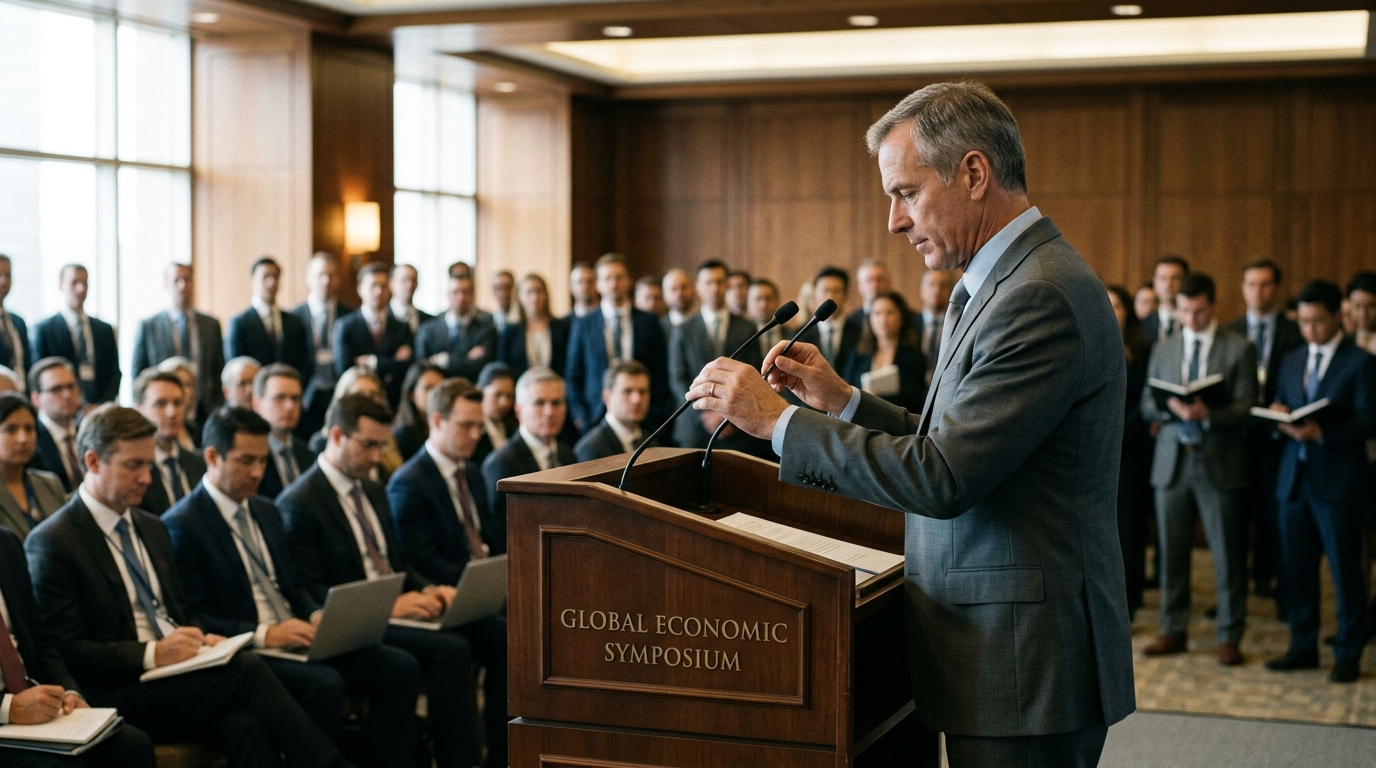
Every trading desk knows Warsh speaks at 10 a.m. ET Friday. Fewer have priced in the possibility that he says nothing actionable. That asymmetry is the trade.
Why the Silence Has Already Mattered
Warsh is under intense pressure to give a clearer message at Jackson Hole than he has offered so far on the inflation landscape, the prospects for near-term rate increases, and the Fed-Treasury relationship. Markets are skittish, and investors have grown restless with Warsh’s tendency toward vague, high-altitude rhetoric. That restlessness has a price tag: the S&P 500 fell 1.2% following his first FOMC meeting in June, after the communication overhaul landed without a policy anchor.
Warsh has rejected traditional forward guidance, preferring markets to interpret incoming data rather than telling investors where policy is headed. The intentional ambiguity has a philosophical basis. As Global Finance noted regarding the June FOMC statement, Warsh explained: “That statement just gives you the facts as best as we can judge it. Absent also is so-called ‘forward guidance,’ which we agreed was not well suited to the current policy conjuncture.”
What the Data Is Telling the Hawks
Three FOMC members already wanted higher rates in July, and a 3.7% headline PCE and 3.3% core PCE reading give hawks another piece of ammunition. On Thursday, before Warsh even stepped to the lectern, Kansas City Fed President Jeffrey Schmid warned that inflation remains too high and questioned whether holding the policy rate at 3.5% to 3.75% is exerting any meaningful brake on economic activity, saying, “I don’t know what we’re restricting currently with the rate policy that we’re at today.”
Cleveland Fed President Beth Hammack has also been pointed, noting in earlier reporting that inflation has run above the Fed’s 2% target for more than five years. In an interview earlier this year, she said a rate hike could be needed if inflation stayed elevated.
The Risk Is Asymmetric, Not Balanced
Fed funds futures imply roughly a low-40% probability of a September rate hike. With hike or hold odds for the September 16 decision sitting close to even and only 19 days separating the symposium from that meeting, traders looking for genuine directional information may get more value from tracking the committee’s own divisions than from parsing whatever careful, deliberately unrevealing language Warsh chooses in Wyoming.
One additional variable sits inside this speech that prior Warsh communications have avoided: the AI-inflation debate. Warsh has argued that AI-driven productivity gains could be disinflationary over time, a view that, if developed at Jackson Hole, would suggest the Fed can tolerate current inflation levels without hiking. The argument is contested inside the committee. Whether he develops it publicly at an event whose academic theme centers on financial innovation and payments would carry real signal value for both rate markets and tech sector valuations.
Trading Framework for Friday Morning
- Hawkish read: Warsh acknowledges inflation’s persistence, validates dissenter logic, or signals data-dependence tilting toward September action. Watch 2-year yields above 4.60% and rate-sensitive equities including regional banks and utilities for accelerated selling. The 30-year, around 5.27% this week, could extend sharply.
- Base case (neutral): Warsh focuses on the symposium’s formal theme of financial innovation, avoids near-term rate commentary, and reiterates the 2% mandate without conviction. Limited market reaction. Implied vol compresses through the session.
- Dovish read: Warsh leans into the AI-disinflation thesis, implicitly pushing back on the Hammack camp. Equity futures rally, dollar weakens, and the September hike probability drops toward 25%. This is the lowest-probability scenario given the tone of recent commentary.
The Strategic Frame
Warsh’s silence has worked as a communications strategy only if markets assume the next move is a hold. Inflation is running at 3.7% on the headline PCE measure, above the Fed’s 2% target, while the labor market has begun to soften. A chair who dwells on inflation is signaling rates stay high. A chair who dwells on jobs is signaling cuts. Whichever gets more airtime is the closest thing to an answer. Disciplined traders do not need a verdict from Warsh. They need a positioning framework built before 10 a.m. Friday, with defined exit levels for each scenario.