August 31, 2026
Bonus Content: VLCC Rates Hit WS570. The Real Trade Is Hormuz Risk.
Dear Reader,
Mitt Romney turned $450,000 into as much as $100 million in 15 years.
Peter Thiel turned $2,000 into $5 billion between 1999 and 2021.
Both inside their retirement accounts.
They both used the same trick – a type of investment that regular Americans weren’t allowed to touch.
For decades, it was locked away. Reserved for the ultra-wealthy.
But Trump just signed an executive order that opened it up to everyone.
And there’s one fund that gives you direct access.
Trump himself has up to $25 million in it.
My colleague Alexander Green says it could be the best opportunity he’s seen in his entire career.
Click here to see his full presentation – and learn how you can get in for less than $20.
Good investing,
Rachel Gearhart
Publisher,The Oxford Club
VLCC Rates Hit WS570. The Real Trade Is Hormuz Risk.
VLCC Rates Hit WS570. The Real Trade Is Hormuz Risk.
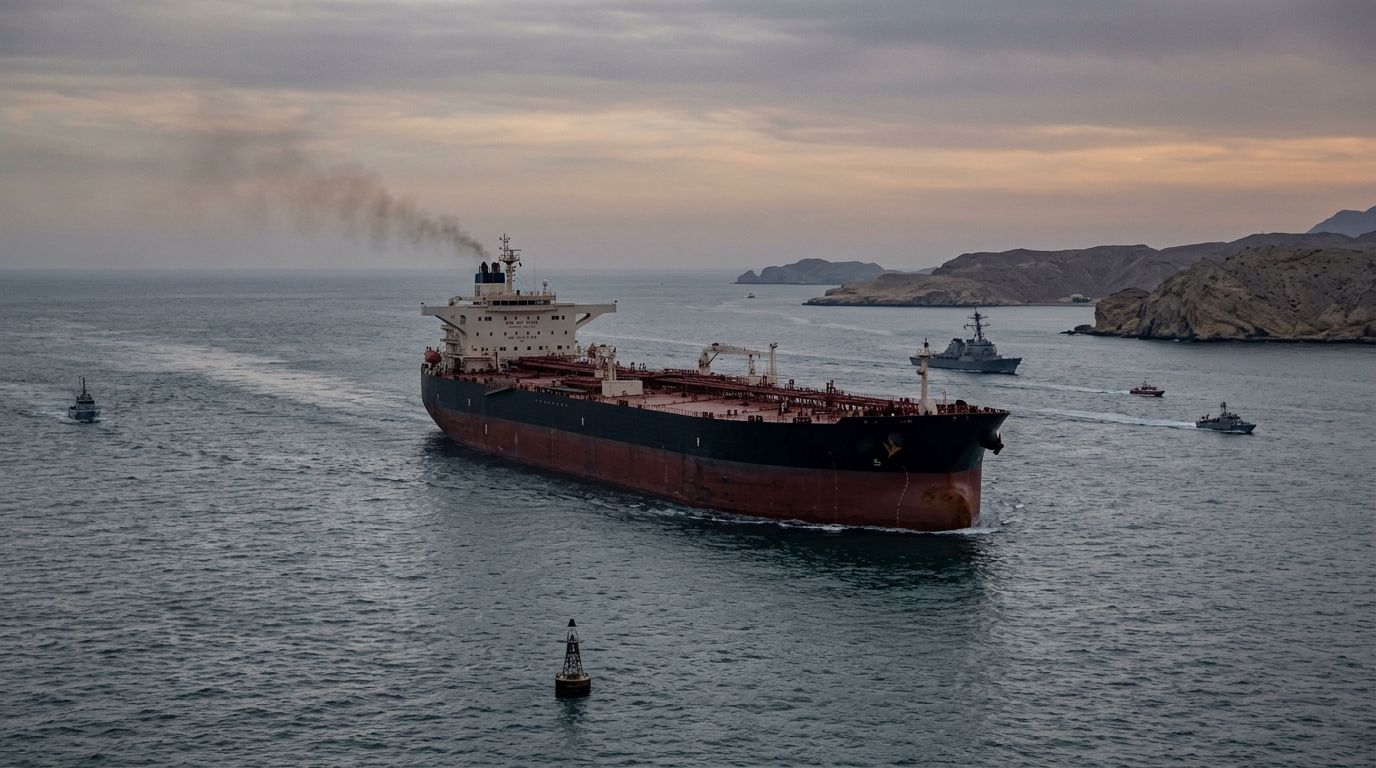
The Baltic Exchange’s Week 34 tanker report put the numbers on the table plainly. TD3C, the benchmark 270,000mt Middle East Gulf-to-China VLCC route, is now assessed at WS570, corresponding to a round-trip time charter equivalent of close to $585,000 per day. That is not a data error. It is what happens when the Strait of Hormuz has been largely closed since late February 2026, war-risk insurance costs remain punishing, and clean modern tonnage is genuinely scarce.
The gap between that spot reading and what charterers will pay for a one-year fixed charter, roughly $120,000 per day, is the number that matters most for equity positioning right now. That spread is the market’s volatility premium, and it is the central risk to every tanker equity book headed into September.
The Geopolitical Pivot Approaching
As of August 28, Iran and Oman have unveiled a Hormuz management framework involving a temporary corridor and joint mine-clearing procedures. Iran’s foreign minister has publicly conditioned any full reopening on Washington easing sanctions and paying war reparations, meaning a clean resolution remains far from certain. Oman describes negotiations as “positive and constructive,” while simultaneously warning that continued Iranian targeting of vessels puts progress at risk. Preliminary Lloyd’s List Intelligence data showed just 73 weekly transits through Hormuz for the period ending August 16, down from 91 the week prior, against a pre-conflict weekly average near 130. Every vessel that crosses is doing so at a VLCC transit cost that has been quoted in trade press at up to around $10 million for war-risk cover alone, depending on hull value and terms.
The Breakwave August 25 report flags that the East-of-Suez risk premium identified in late July remains embedded in the current VLCC market, not deflated. Steady private fixture activity and a thinning tonnage list in the Arabian Gulf have progressively reinforced owners’ positions. The final week of August, per Breakwave, presents a materially different picture from the reopening optimism that dominated June and July. Spot momentum is still with owners.
What the Earnings Confirm
Frontline’s Q2 results, released August 28, are the cleanest read on where shipowner economics stand. The company posted a record $659 million quarterly profit on revenues of $943 million, up 96.5% year over year, with VLCC spot TCE averaging $152,700 per day for the quarter. For Q3, Frontline has already contracted 86% of available VLCC days at $156,900 per day. The company’s cash break-even is approximately $23,900 per day, meaning every dollar of the current WS570 reading above that level drops almost entirely to free cash flow. Frontline holds $1.2 billion in liquidity with no meaningful debt maturities until 2030.
DHT, the pure-play VLCC operator, reported record Q2 2026 shipping revenues of $284.8 million and profit of $198.3 million, with spot VLCC rates of $162,600 per day. First-half 2026 profit of $362.9 million already exceeds the company’s prior full-year record. International Seaways reported Q2 shipping revenue of $467.3 million, up from $195.6 million a year earlier, with diluted EPS rising to $5.91. The board declared a record quarterly dividend of $5.05 per share. Teekay Tankers generated near-record free cash flows in the first half of 2026 on a free cash flow break-even of approximately $9,700 per day. Scorpio Tankers, covering the product tanker side, posted adjusted EBITDA of $300.5 million and reported a $1.3 billion net cash position.
The WS570-vs.-$120k Underwriting Problem
The one-year charter market at $120,000 per day is pricing roughly 20 cents on the current spot dollar. Charterers paying that rate are buying certainty against the scenario where a Hormuz framework holds and TD3C mean-reverts toward $100,000-$150,000 per day. Owners accepting $120,000 per day are accepting a cap on upside in exchange for eliminating volatility risk. The positioning choice for tanker equity holders is analogous: concentrated spot exposure earns the full WS570 but absorbs the full drawdown if a credible reopening announcement compresses WS levels by 60% or more overnight, as energy futures demonstrated when ceasefire talks briefly moved markets in April.
Scenario Modeling
Bull Case: Iran-Oman negotiations collapse again, US sanctions escalate, and the August 28 framework produces no operational improvement in transit volumes. TD3C holds above WS500 through Q4. FRO, DHT, and INSW continue to generate cash at multiples of their break-even rates, supporting further special dividends. Target zone for FRO: prior highs.
Base Case: A partial Hormuz corridor opens by October, allowing limited commercial transit under Iranian coordination. TD3C compresses toward WS300-WS350, producing round-trip TCE of roughly $250,000-$300,000 per day. Still enormously profitable relative to break-even costs across the sector, but equity prices likely pre-trade the move lower before rates confirm.
Bear Case: A durable US-Iran agreement produces rapid normalization. Weekly transits recover toward 100 per week within 60 days. TD3C falls toward WS150-WS200, squeezing spot exposure and triggering re-rating of fleet asset values. STNG and the product tanker complex face added pressure if refinery dislocation premiums also unwind.
Active Trader Framework
The structural question is whether tanker equities are pricing spot rates, forward rates, or asset values. At current earnings, most names trade at low single-digit price-to-earnings multiples. That provides a fundamental floor, but it does not insulate against a rapid volatility compression. Traders monitoring this theme should watch weekly Hormuz transit counts from Lloyd’s List Intelligence as the lead indicator, ahead of any Baltic assessment move. A sustained recovery above 100 transits per week would be the first credible signal that the war premium is deflating structurally rather than tactically. Position sizing that accounts for a potential 40-50% rate compression scenario is the disciplined starting point. The pair against refiners, which would benefit from normalized crude access and lower feedstock freight costs, offers a way to maintain exposure to the macro theme without carrying the full one-directional rate risk.
Preparation, not prediction. The data is as clean as it has ever been. The geopolitical resolution timeline is not.