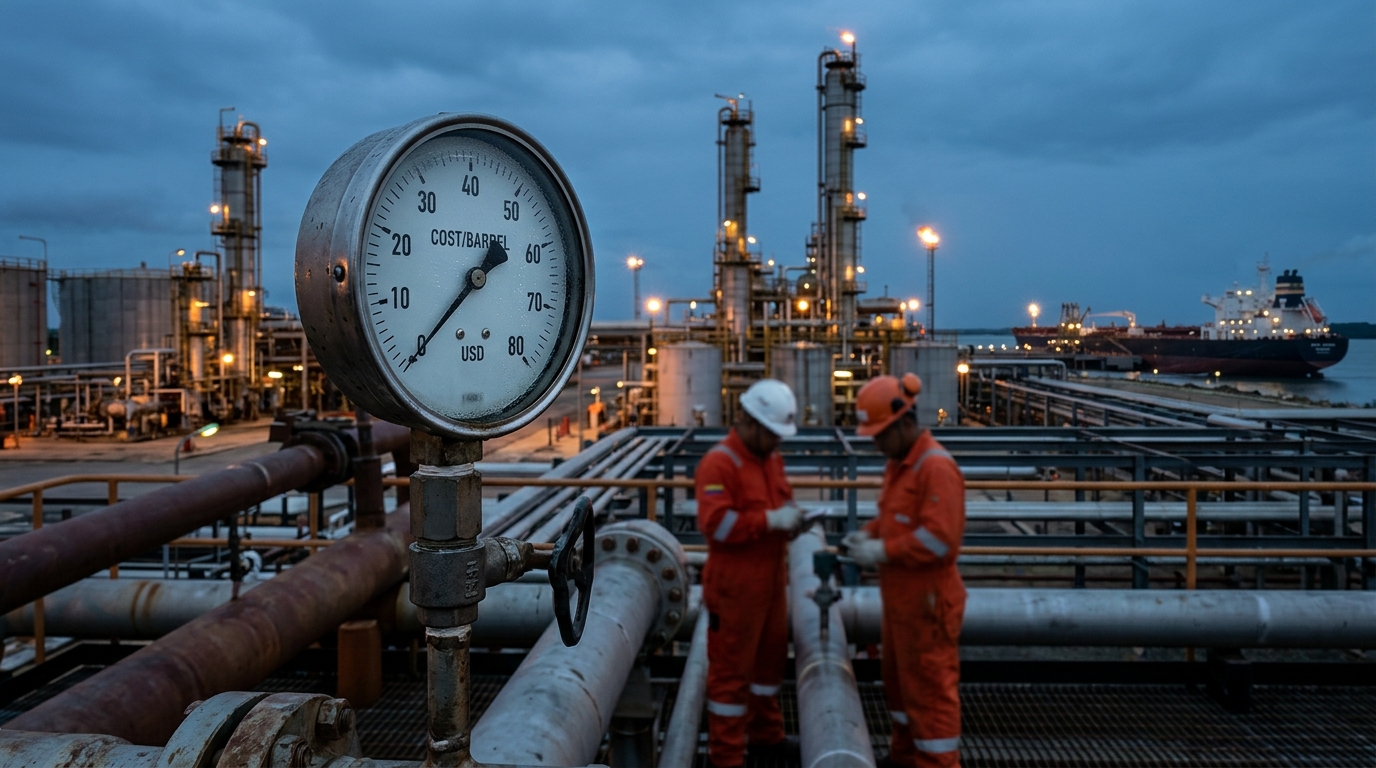
Here is a number worth sitting with: $20 per barrel. That is the total production cost Chevron says it is targeting across its Venezuelan joint ventures, at a moment when Brent crude has spent much of 2026 at elevated levels amid disruptions tied to the Strait of Hormuz. The gap between those two figures is what makes this week’s announcement worth understanding before the geopolitical noise does the thinking for you.
Chevron plans to invest more than $7 billion in Venezuela over the next five years and more than double production to approximately 600,000 barrels per day after securing additional acreage in the Orinoco Belt. The company is framing the 600,000 bpd level as a target “compared to 2026,” with the ramp tied to the updated terms it announced on September 2. Energy Secretary Chris Wright was in Caracas for the announcement, underscoring how directly the White House is tied to this deal.
Why This Matters Beyond the War Premium
The conflict in the Middle East has sharply reduced tanker movements through the Strait of Hormuz, a chokepoint that handles roughly one-fifth of the world’s traded oil. In March, the IEA said the war was creating the largest supply disruption in the history of the global oil market. That shock has elevated energy prices and helped CVX along with them. Chevron stock was little changed after the September 2 announcement. Venezuela is the reason CVX could keep earning even after any war premium deflates.
Chevron puts its Venezuelan production cost at about $20 per barrel. Locking in volume at that cost structure means the joint ventures can stay cash-generative across a wide range of oil prices, not just in a supply crisis. That is the earnings driver the market may still be underestimating.
What Chevron Is Actually Getting
One of the biggest expansions comes through Petroindependencia, where a Chevron subsidiary holds a 49% interest. Earlier this year, Chevron said it agreed to an asset swap with PDVSA that increased its working interest in Petroindependencia to 49% and assigned Petropiar the rights to develop the adjacent Ayacucho 8 area in the Orinoco Belt. Chevron is not starting from scratch. CEO Mike Wirth has emphasized that the company’s ability to grow at low cost in Venezuela differs sharply from entering a greenfield area that lacks roads, water, and power.
The underlying balance sheet supports the commitment. In Q2 2026, Chevron reported adjusted earnings of $6.06 per share and $15.4 billion in adjusted free cash flow. The company is also recovering debt Venezuela owes it, and CFO Eimear Bonner said on the Q2 results call that Chevron expects that debt to be fully recovered by early 2027. Once that debt clears, the joint ventures could operate with cleaner economics.
The Risks Are Real
Venezuela has a long history of punishing optimism. Unlocking the country’s oil potential will not be easy. Years of political turmoil, sanctions and infrastructure decay mean U.S. energy companies face steep risks, and any production rebound takes time, capital and sustained political stability. Output in Venezuela has fallen dramatically from the more than 3 million barrels per day produced in the late 1990s to under 1 million bpd in recent years. A reversal of U.S. policy toward Caracas, or renewed instability within Venezuela’s government, could stall the plan entirely.
There is also a price risk running in the other direction. If a Gulf peace deal restores more normal flows through the Strait of Hormuz and oil falls sharply, the political will in Washington to stay engaged in Venezuela could weaken alongside revenues. The $7 billion is planned over five years, not all at once, which gives Chevron optionality but also means the 600,000 bpd target is years away.
What Investors Should Watch
Three things will tell you whether this thesis is working: the pace of debt recovery from PDVSA through early 2027; quarterly production figures from the three joint ventures, which Chevron says have already grown output by 15% year to date; and any change in U.S. sanctions posture toward Venezuela. According to data compiled from 25 analysts, the average rating for CVX stock is “Buy,” with an average 12-month price target of $218.29.
The bull case on Chevron has always rested on cost discipline and portfolio depth. Venezuela, done right, adds a third pillar: volume growth that does not depend on a geopolitical crisis to look attractive. At around $20 production costs, the math can still work in a calmer world.